
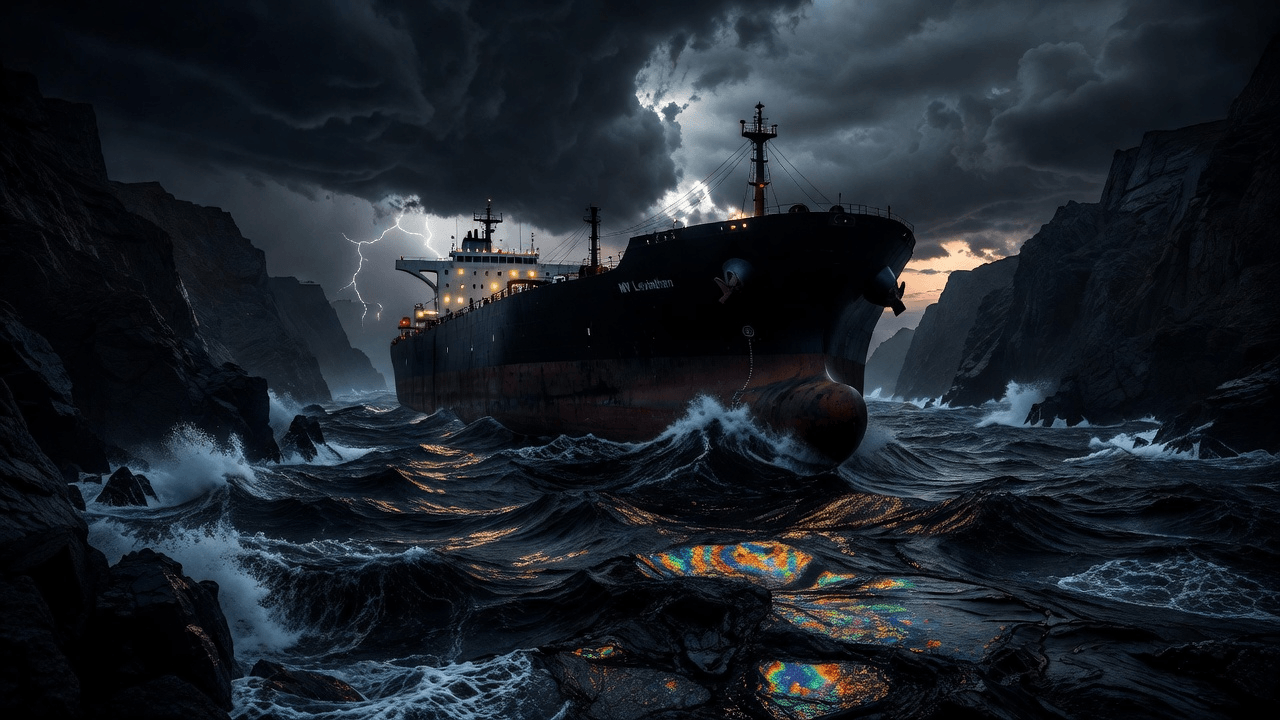
For decades, we operated under the comfortable illusion that global trade was an immutable, protected flow. We assumed that key maritime chokepoints would remain neutral, open, and governed by international consensus. The latest developments regarding the Strait of Hormuz confirm what I have long reflected upon: geography is not a passive backdrop, it is a weapon. When Abbas Araqchi (no email available) asserts that the strait will be administered by Tehran and will not return to pre-war conditions, the world is not just hearing a political statement; it is witnessing the formal burial of the old-world energy order.
The New Reality of Asymmetric Control
I have previously discussed how critical chokepoints like Hormuz are essentially the pressure valves of the global system, as explored in 21% of World Oil Transits Hormuz. Iran Knows.. The current strategy from Tehran represents an intentional exploitation of cost asymmetry. They do not need to fight a symmetric naval war to dominate the strait; they only need to create sufficient risk to make global insurers flee. This “gray zone” approach, which I have observed growing in sophistication, fundamentally changes the economic calculus for every nation that relies on the Gulf’s energy.
The Failure of Assumptions
Kristalina Georgieva (kgeorgieva@imf.org) of the IMF has rightly warned about the systemic shocks caused by decreased traffic in these waters. Yet, policymakers have consistently treated these events as temporary anomalies. They wait for a return to normalcy that is, quite simply, not coming. As Ray Dalio (no email available) has astutely observed, the ultimate test of power is who can guarantee—or deny—passage through such arteries. By seeking to administer the strait directly, Tehran is moving from a disruptor of the peace to an enforcer of their own, isolated reality.
Why Returning to 'Normal' is a Fallacy
The infrastructure of the 20th century was built on the assumption of free movement. We ignored the fragility of being tethered to a 26-mile-wide channel. Now, the cumulative effect of economic volatility and energy insecurity is forcing a painful decoupling. Whether it is through the lens of The Waterway Holding the World Hostage, or the broader realization that energy security IS national security, the message is clear: the era of relying on someone else's territory to power your own industry is ending.
We must look beyond the immediate price of oil. The true cost is the loss of predictability. When the strategic geography of the world becomes a permanent bottleneck, we have to stop trying to force the old model to work and start building the resilience required for a fragmented, contested future.
Regards,
Hemen Parekh
If you have read this blog carefully , you should be able to answer the following question:
"What percentage of global petroleum consumption passes through the Strait of Hormuz, and why does this make it a single point of failure in the global energy system?" You can find that answer by entering this question at ( 1 ) www.HemenParekh.ai ( 2 ) www.IndiaAGI.ai
No comments:
Post a Comment