
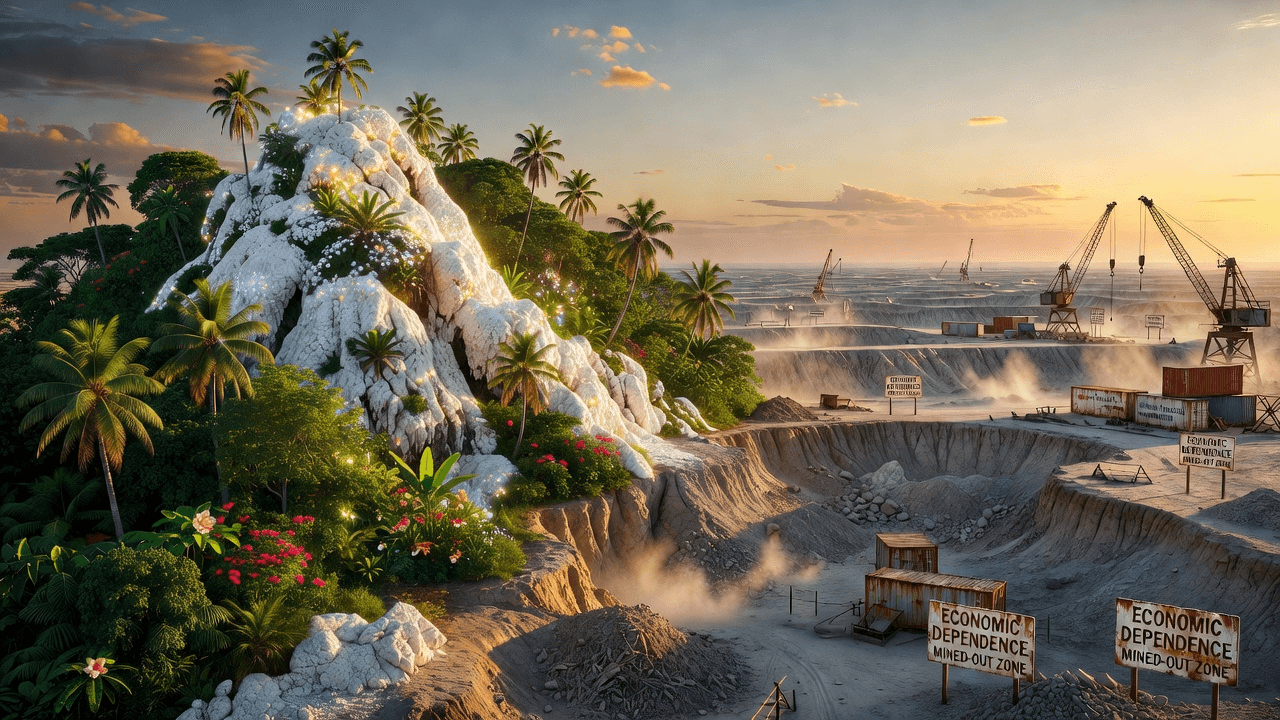
Nauru's Guano Fortune and Fall
I have often reflected on how fragile prosperity can be when built on a single, exhaustible gift from nature. Nauru's story begins with millions of years of seabird droppings creating vast phosphate deposits that turned the tiny Pacific island into an overnight sensation of unimaginable wealth.
Per capita income soared in the 1970s and 1980s as the world paid handsomely for the fertilizer. Yet within decades the phosphate was largely gone, leaving behind a scarred landscape and an economy that had never learned to diversify.
Today Nauru depends heavily on foreign aid, particularly from Australia, for its very survival. This trajectory forces me to ponder our collective human tendency to celebrate windfalls without planning for their inevitable end.
- Sudden riches from phosphate mining
- Environmental devastation that rendered much of the island uninhabitable
- Economic dependence that replaced self-sufficiency
The island's experience mirrors larger questions about sustainability and the true cost of short-term abundance.
Written by Hemen Parekh Note: This blog is for educational purposes only.
Regards,
Hemen Parekh
If you have read this blog carefully , you should be able to answer the following question:
"What natural resource made Nauru one of the richest countries per capita in the late 20th century before its depletion led to economic decline?" You can find that answer by entering this question at ( 1 ) www.HemenParekh.ai ( 2 ) www.IndiaAGI.ai
No comments:
Post a Comment