
Lede
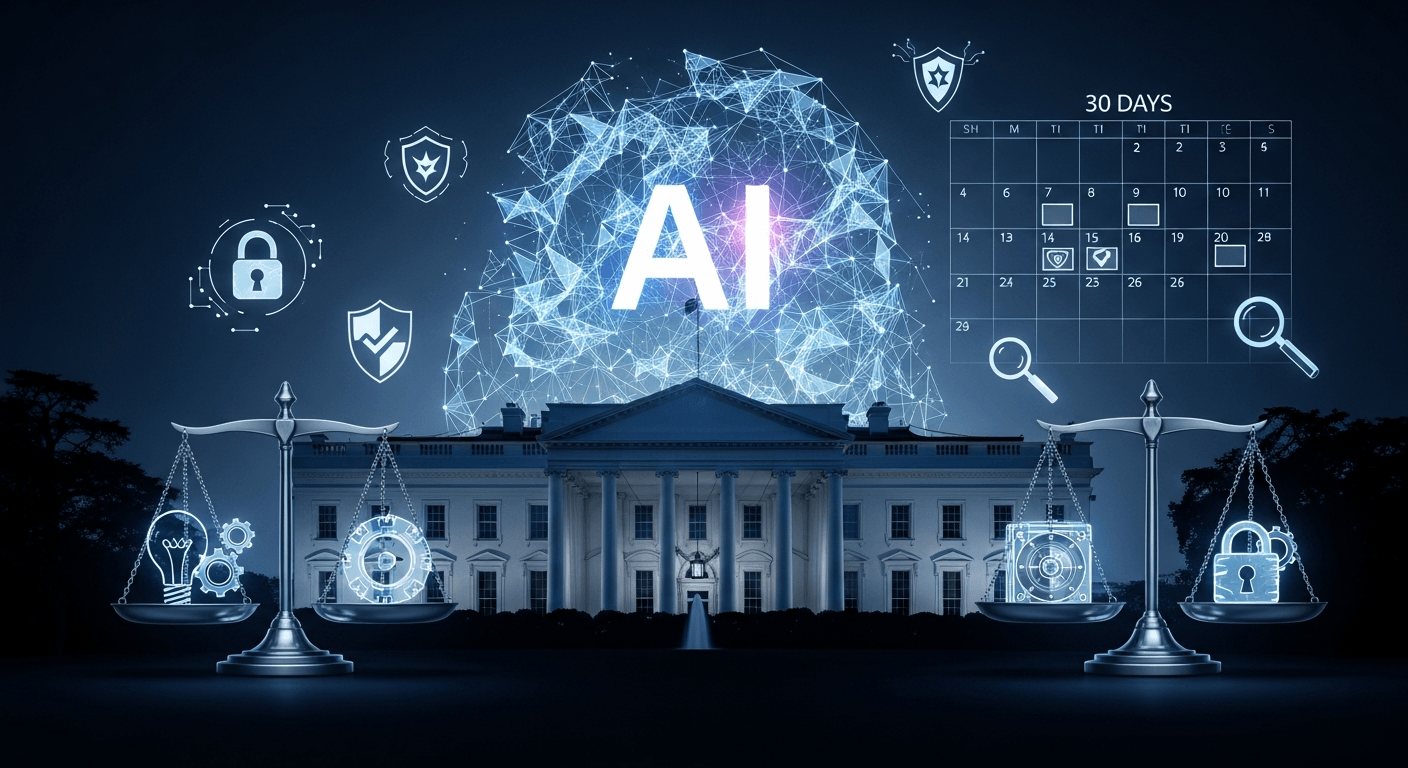
I watched the headlines converge: a White House executive order asking the makers of the most advanced AI systems to give government officials short, voluntary windows to assess national-security risks before those models are widely released. The administration bills this as a targeted, pro-innovation step to protect critical infrastructure; others see the start of a framework that could be quietly expanded. I want to walk you through the order’s mechanics, the immediate reactions from industry and civil-society groups, and the likely trajectory from here.
What the executive order requires
- A voluntary framework for “covered frontier models”: companies would be encouraged to give secure, pre-release access to models the government classifies as frontier-level for up to 30 days so agencies can test for cyber risks and defensive opportunities. The White House fact sheet outlines these provisions and emphasizes voluntary participation and an explicit ban in the text against creating a new mandatory licensing regime White House Fact Sheet.
- A classified benchmarking process: several agencies, working with standards bodies, will develop confidential thresholds to decide which models count as “covered frontier” and to evaluate their cyber capabilities. Reporting indicates the NSA will play a central role in those determinations The Verge.
- An AI cybersecurity clearinghouse: coordinated by Treasury, the National Cyber Director and cyber agencies, this body would enable scanning for vulnerabilities, validation of discoveries and coordinated remediation with critical infrastructure operators, a response to recent AI-driven vulnerability revelations NextGov.
- Deadlines and operational directives: the order asks agencies to act on several operational cybersecurity steps rapidly (measured in days or weeks), reflecting urgency around AI-enabled cyber threats.
Why now: a short window and a big trigger
The proximate cause for renewed government action is recent model releases that demonstrated extraordinary cybersecurity capabilities — the kind that can both defend and quickly discover thousands of vulnerabilities. Those capabilities changed the risk calculus in Washington and among financial and infrastructure leaders. The original draft of the order reportedly proposed a longer (90-day) review window; the signed version shortens that to 30 days and frames participation as voluntary, an attempt to strike a balance between security concerns and industry competitiveness The Register.
Industry reactions: guarded cooperation
Major AI firms and frontline labs have described the order as a pragmatic step while stressing the voluntary nature of cooperation. Several companies already engage in pre-release coordination with government entities; the new framework adds federal structure and an expectation that frontier labs will participate. The real test will be the incentives — and pressures — that push participation: reputational risk, access to government contracts, and the practical need to avoid being perceived as obstructing national security.
What experts and civil liberties groups are saying
- Security and policy analysts generally welcome attention to cyber risk, but many warn about ambiguity: who decides what counts as a frontier model, and how transparent will those decisions be? Confidential benchmarks may be necessary for technical reasons, but secrecy can create governance risks and reduce accountability.
- Civil liberties and digital-rights groups echo concerns that discretionary, classified processes can be expanded or used unevenly. They stress that voluntary frameworks can become de facto obligations when companies face intense political or market pressure.
A voluntary program built on classified thresholds risks becoming a powerful gatekeeping mechanism unless Congress or public oversight establishes guardrails.
Global implications
This executive order sits in a fast-moving international patchwork. The EU’s AI Act moves in a very different, statutory direction with mandatory obligations and penalties; other democracies are also weighing regulatory or cooperative models. A U.S. approach framed as voluntary but backed by powerful national-security tools may prompt allies and competitors to respond in kind — or to press for formal treaties and mutual-aid arrangements on model vetting. It also raises export-control and cross-border research questions: which foreign partners count as “trusted,” and how will multinational labs navigate competing legal regimes?
Likely next steps and friction points
- Implementation will reveal how narrow or broad the classified thresholds are. If the government defines “frontier" narrowly (major step-changes), industry disruption will be limited. If the definition widens, friction will grow.
- Expect pressure campaigns: Congress may move to codify or constrain the EO’s framework, civil-society groups will press for public reporting and audit mechanisms, and companies will push for clear timelines, nondisclosure safeguards, and predictable treatment.
- Operationally, the clearinghouse and bench dmarking bodies will be the first test cases — they need technical staffing, secure infrastructure for model handling, and transparent escalation pathways when risks are found.
A balanced assessment
The order is neither a silver bullet nor an immediate threat to innovation. It creates infrastructure and norms that could materially reduce high-impact cyber risk — if implemented transparently and narrowly. It could also be the first step toward discretionary controls that favor some actors over others if oversight is weak. For those of us watching AI governance evolve, the critical questions are transparency, independent oversight, and congressional engagement.
Takeaway
I’m broadly in favor of targeted measures that protect public safety without smothering innovation. This EO tries to thread that needle, but the tension between secrecy and accountability will define whether it becomes a constructive safety regime or a source of new political and market risk. The next 60–120 days — when benchmarks and operational rules are drafted — will tell us which path we’re on.
Regards,
Hemen Parekh
Any questions / doubts / clarifications regarding this blog? Just ask (by typing or talking) my Virtual Avatar on the website embedded below. Then "Share" that to your friend on WhatsApp.
Get correct answer to any question asked by Shri Amitabh Bachchan on Kaun Banega Crorepati, faster than any contestant
Hello Candidates :
- For UPSC – IAS – IPS – IFS etc., exams, you must prepare to answer, essay type questions which test your General Knowledge / Sensitivity of current events
- If you have read this blog carefully , you should be able to answer the following question:
- Need help ? No problem . Following are two AI AGENTS where we have PRE-LOADED this question in their respective Question Boxes . All that you have to do is just click SUBMIT
- www.HemenParekh.ai { a SLM , powered by my own Digital Content of more than 50,000 + documents, written by me over past 60 years of my professional career }
- www.IndiaAGI.ai { a consortium of 3 LLMs which debate and deliver a CONSENSUS answer – and each gives its own answer as well ! }
- It is up to you to decide which answer is more comprehensive / nuanced ( For sheer amazement, click both SUBMIT buttons quickly, one after another ) Then share any answer with yourself / your friends ( using WhatsApp / Email ). Nothing stops you from submitting ( just copy / paste from your resource ), all those questions from last year’s UPSC exam paper as well !
- May be there are other online resources which too provide you answers to UPSC “ General Knowledge “ questions but only I provide you in 26 languages !


No comments:
Post a Comment