
Lede
I have been watching the recent interplay of strikes, rhetoric, and proxy maneuvers in the region with growing concern. Reported exchanges between militant groups and state actors have unfolded in ways that could widen a localized conflict into a regional confrontation. In what follows I offer background, analysis, and a compact timeline — according to officials and reported accounts — to make sense of where risks lie and what to watch next.
Background
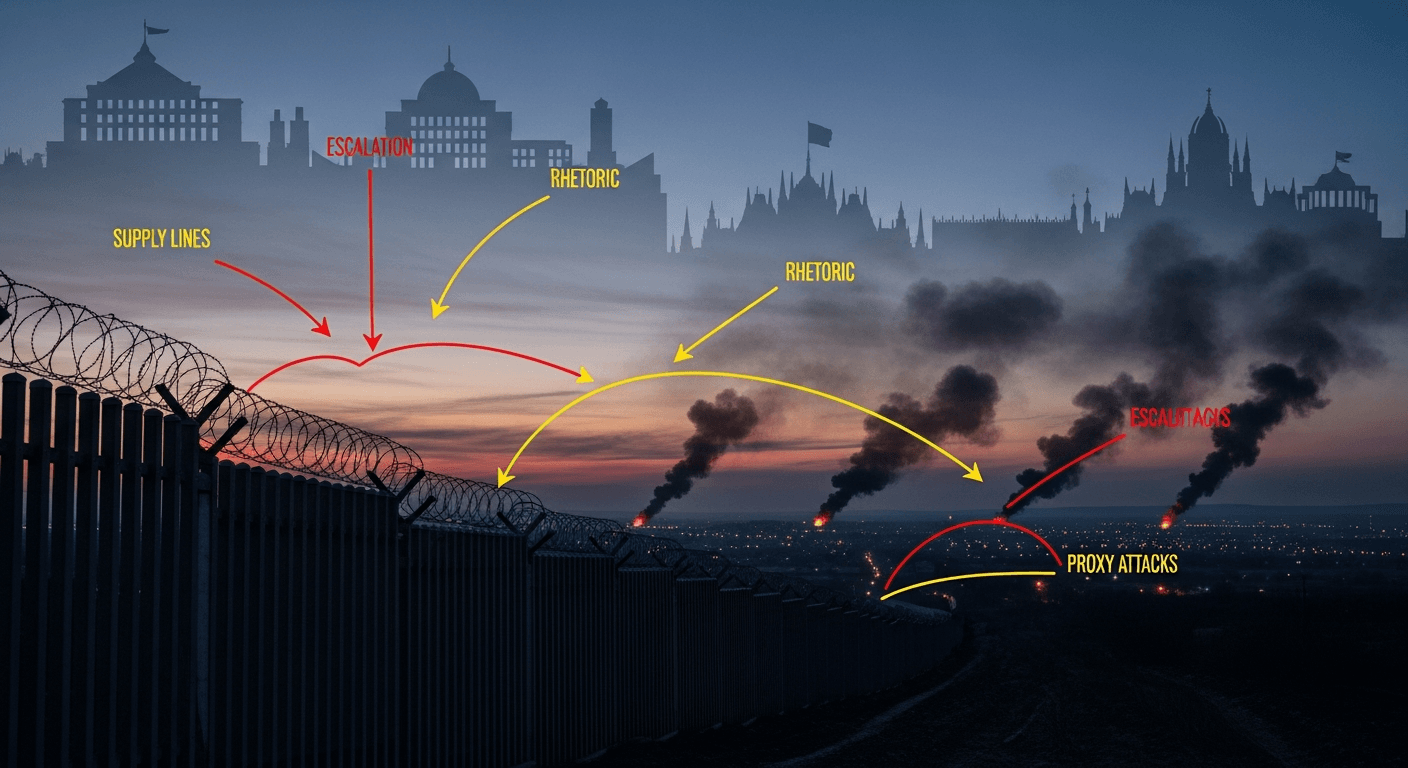
Since the most recent round of hostilities began, analysts have repeatedly noted the multilayered nature of the confrontation: direct strikes, proxy cross-border attacks, and diplomatic signaling. Reported accounts suggest that Hezbollah and other Lebanon-based actors have tested thresholds along the border, while Iranian backing — overt and covert, according to officials — has shaped the operational capabilities and strategic intent of several non-state groups.
The United States Congress, regional allies, and international actors have responded with a mix of condemnations, military assistance pledges, and urgent diplomacy. Reported congressional statements have emphasized both deterrence and humanitarian concerns, reflecting competing domestic political priorities.
Analysis
From my vantage point, three dynamics explain why the situation is precarious:
- Escalation ladders. Each round of firing raises the salience of retaliation, making miscalculation more likely. Reported exchanges show how tactical incidents can have strategic consequences.
- External sponsorship. According to officials, support from state actors can extend a conflict’s duration and complexity by providing logistics, intelligence, or weaponry to proxies.
- Domestic politics. Legislatures and public opinion in multiple countries create pressures that can push leaders toward demonstrative actions rather than de-escalation.
These dynamics interact: a battlefield move that appears limited tactically may be amplified politically, increasing the chance of broader involvement.
Timeline (reported)
- Day 0–3: Initial cross-border strikes and rocket fire reportedly escalated along a border sector, prompting local military responses and civil defense alerts.
- Day 3–7: According to officials, Hezbollah and allied formations increased probing operations, while regional air defenses were put on heightened alert.
- Day 7–14: Reported diplomatic activity intensified — emergency consultations among regional partners and public statements from capitals calling for restraint.
- Day 14 onward: Congressional and parliamentary discussions reportedly shifted toward emergency aid, military assistance packages, and sanctions options.
Note: the above timeline is a synthesis of reported developments and official statements rather than an exhaustive chronology.
Conflicting Statements
Official accounts and media reports have not always aligned. For example:
- Some military spokespeople described particular strikes as precise and limited, while other reports framed the same actions as disproportionate or escalatory.
- Diplomatic statements from regional capitals often stressed de-escalation, yet intelligence briefs reportedly described preparations that suggested readiness for expanded operations.
These contradictions matter: they reflect competing narratives aimed at domestic and foreign audiences and complicate third-party mediation.
Regional Implications
Regional allies have a varied stake:
- States with security ties to the parties involved reportedly worry about spillover, refugee flows, and disruptions to trade and energy routes.
- Neighboring countries with sectarian or political affinities face internal pressure to take public positions, which can constrain diplomatic maneuvering.
According to officials, supply routes and arms transfers remain a critical vector for regional escalation.
Domestic Political Context
Domestic politics in several states shapes calculations. Reported comments in legislative bodies show a mix of hawkish calls for stronger military responses and voices urging humanitarian restraint. Elections, coalition dynamics, and public opinion all influence how far leaders feel they can go without risking political backlash.
Reactions from Hezbollah / Iran / US Congress / Regional Allies
- Hezbollah: Reported statements from Lebanon-based leaders framed actions as defensive and retaliatory, emphasizing deterrence and messaging to domestic constituencies.
- Iran: According to officials, Iranian statements have alternated between explicit warnings against expansion of strikes and more ambiguous references to support for allied groups.
- US Congress: Reported debates in Congress reflected bipartisan concern about regional stability, with competing priorities on military support versus humanitarian aid and oversight of assistance.
- Regional allies: According to diplomatic sources, allied capitals have been engaged in shuttle diplomacy, public appeals for restraint, and contingency planning for humanitarian relief.
Risks of Escalation
The main risks I see are:
Rapid miscalculation after a tactical incident, leading to wider strikes across multiple fronts.
Entrenchment of proxy supply lines that enable sustained asymmetric attacks.
Political dynamics that reward escalation rhetorically but make de-escalation politically costly.
Each risk is amplified if external patrons perceive an opportunity or a need to demonstrate resolve.
What to Watch Next
- Military posture shifts: reported movements of key units, air defense redeployments, and maritime alerts over the next 24–48 hours.
- Diplomatic signals: emergency meetings, travel by envoys, and the tone of public statements from capitals and multilateral institutions.
- Congressional action: any reported legislative votes on assistance or sanctions, and the accompanying floor debate.
- Humanitarian indicators: reported displacement figures and access constraints that could force international responses.
Conclusion
Reported developments suggest the conflict sits on a precarious edge rather than moving inexorably toward containment. I believe the interaction of tactical incidents, external sponsorship, and domestic political incentives will determine whether the situation cools or widens. Remaining attentive to asymmetric signals — both military and diplomatic — will be essential in the coming days.
Regards,
Hemen Parekh
Any questions / doubts / clarifications regarding this blog? Just ask (by typing or talking) my Virtual Avatar on the website embedded below. Then "Share" that to your friend on WhatsApp.
Get correct answer to any question asked by Shri Amitabh Bachchan on Kaun Banega Crorepati, faster than any contestant
Hello Candidates :
- For UPSC – IAS – IPS – IFS etc., exams, you must prepare to answer, essay type questions which test your General Knowledge / Sensitivity of current events
- If you have read this blog carefully , you should be able to answer the following question:
- Need help ? No problem . Following are two AI AGENTS where we have PRE-LOADED this question in their respective Question Boxes . All that you have to do is just click SUBMIT
- www.HemenParekh.ai { a SLM , powered by my own Digital Content of more than 50,000 + documents, written by me over past 60 years of my professional career }
- www.IndiaAGI.ai { a consortium of 3 LLMs which debate and deliver a CONSENSUS answer – and each gives its own answer as well ! }
- It is up to you to decide which answer is more comprehensive / nuanced ( For sheer amazement, click both SUBMIT buttons quickly, one after another ) Then share any answer with yourself / your friends ( using WhatsApp / Email ). Nothing stops you from submitting ( just copy / paste from your resource ), all those questions from last year’s UPSC exam paper as well !
- May be there are other online resources which too provide you answers to UPSC “ General Knowledge “ questions but only I provide you in 26 languages !




No comments:
Post a Comment