
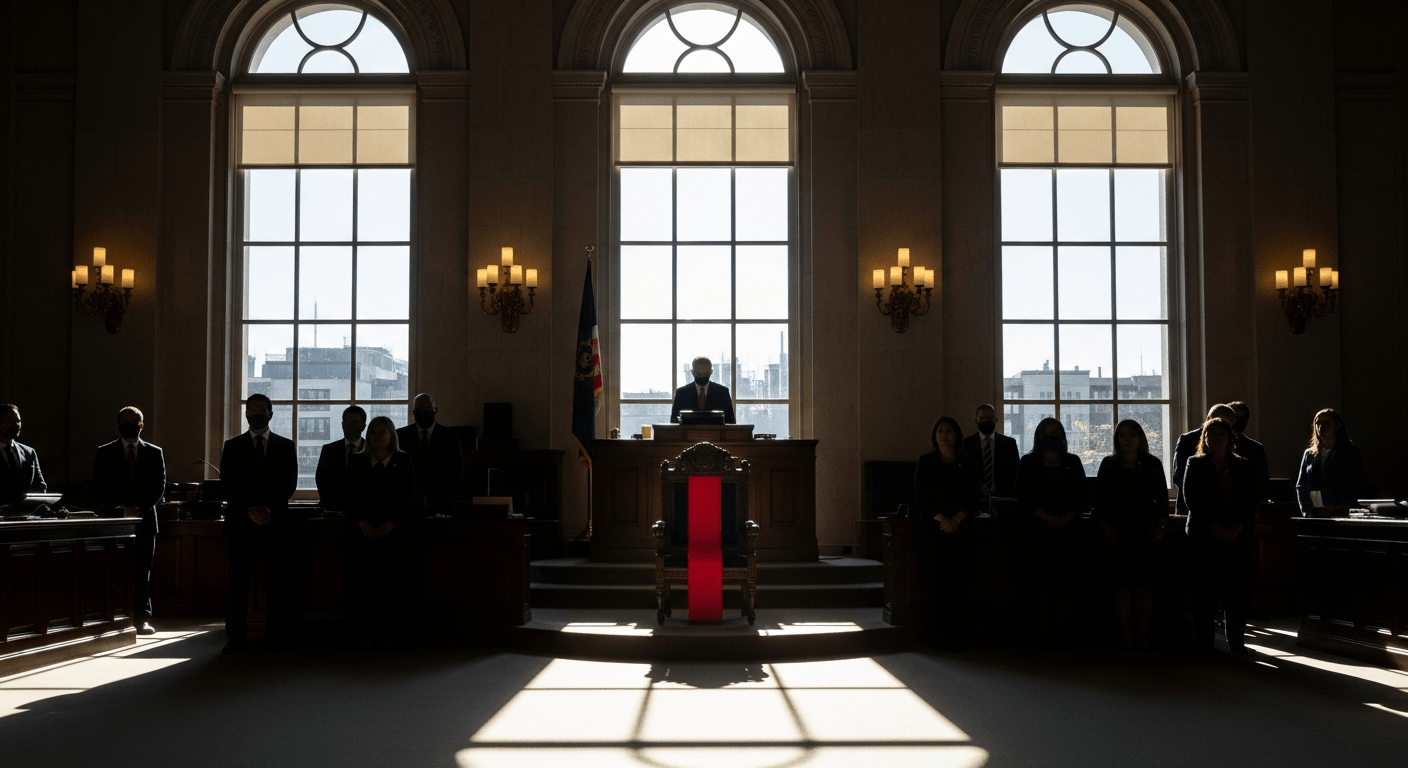
I watched the headlines the day Karnataka’s new ministry was sworn in and felt the familiar, uneasy tug of a pattern: a high-profile political shuffle that immediately raised questions about representation.
What happened — the facts
On June 3, 2026, the Chief Minister-led first batch of ministers in Karnataka was sworn in. The initial list comprised 13 ministers sworn in alongside the chief minister (reports vary between 13–14 in early lists) even though the state allows a full-strength ministry of up to 34. The most notable detail for observers and activists alike: not one woman was included in that first batch, despite the Congress having elected women to the legislature (widely reported as four women MLAs and five women MLCs — nine women legislators in total in the state legislature at the time of formation).
Across multiple reports the omission was described as striking because several experienced women legislators — some with prior ministerial experience — were widely discussed as possible appointees. The news cycle moved quickly from lists and regional balances to the simple, stark headline: an all-male first cabinet.
Timeline of the criticism and public reaction
- Within hours of the swearing-in, senior party figures and commentators expressed disappointment publicly. A number of voices highlighted the symbolic gap between the party’s stated commitments to gender empowerment and the reality of ministerial appointments.
- Media outlets and editorial writers questioned why at least one woman was not accommodated in the first round, especially when this was a phased cabinet expansion and the high command had the option to include women from the outset.
- Analysts and opposition voices used the omission to make broader points about the party’s handling of social and regional balances.
How the Chief Minister responded
In public remarks ahead of and around the swearing-in, the chief minister emphasised process and party procedure. I note two recurring elements in his responses across press briefings and reporting:
- He repeatedly pointed to the role of the party high command in finalising ministerial names and cautioned against treating media lists as definitive. As one statement put it, "The names appearing in the media regarding the selection of ministers are not official. The high command leaders will release the list." (reported statements and press briefings around the oath-taking day.)
- He framed the initial cabinet as a deliberate, limited first phase, with further expansion expected after other political processes (notably Legislative Council and Rajya Sabha elections) were completed. Paraphrasing his position: the choices were the outcome of consultations and sequencing — a first tranche now, more appointments later.
Taken together, these responses place emphasis on process (high-command decisions, phased expansion) rather than an explicit rebuttal to the gender-criticism itself.
Political calculations and constraints behind the choices
Reading the coverage and the background that emerged publicly, several factors likely shaped the first list:
- Factional and regional balancing: The incoming chief minister was reported to be walking a tightrope between competing regional, caste and factional demands within the state Congress. Many seats in the ministry were used to hold together those balances.
- Limited first-phase size: With a full ministry possible but only a small tranche announced, the leadership appears to have prioritised placating key power centres in the first round and reserved remaining slots for later bargaining.
- Timing around other electoral processes: With Legislative Council and Rajya Sabha contests scheduled, the party signalled that further ministerial slots would be filled after those processes — an operational constraint that became a political explanation.
Those calculations are familiar in coalition and party politics: every open ministerial slot is a bargaining chip. But the politics of omission (in this case, women’s representation) often generates more lasting reputational effects than the short-term factional allocations a leader tries to manage.
Implications for women’s representation
- Symbolic cost: Leaving women out in the first round undercuts public claims of commitment to gender inclusion. Perception matters: the first list is the political statement.
- Practical cost: Ministerial berths confer visibility, resources and the ability to shape policy. Delaying women’s inclusion reduces their short-term influence on agenda-setting.
- Political remedy exists but is conditional: the party can still correct course in the second phase. Reports already flagged that cabinet expansion was expected, which offers a path for inclusion — but delayed accommodation rarely erases the initial political cost.
Party dynamics and public reaction
- Internal pressures: The omission is likely to increase pressure within the party from women leaders and their supporters, and from those who see this as a test of the leadership’s seriousness on inclusion.
- Opposition and media framing: Critics use the omission to paint a narrative of tokenism or performative inclusion, while some party allies argue the choices were tactical and will be adjusted.
- Voter perception: For women voters — who often turn out in large numbers — the absence of women in visible leadership roles can feel like a disconnection between promises and appointments. That matters politically, particularly when gender-sensitive policies require champions inside government.
What this means for the future
There are two distinct trajectories the government can follow:
- Corrective expansion: Use the second phase of appointments to include experienced women legislators and send a clear signal that the first list was an incomplete snapshot shaped by timing.
- Entrenched pattern: If the second phase also underrepresents women, the omission may settle into a pattern that will be harder politically to reverse, with implications for both party unity and public credibility.
Which path the leadership chooses will depend on internal calculations — balancing community representation, factional demands and the reputational cost of the current omission.
My read — neutral and pragmatic
As someone who watches institutions more than personalities, I see this as a moment that will be judged by what comes next. The chief minister has framed the first list as a procedural first phase, and there is space to make amends. But political leaders should remember that representation is both procedural and symbolic: future appointments will matter as much for governance as for the party’s broader claims on gender equality.
What to watch next
- Will the second phase of cabinet expansion (expected after the Council/Rajya Sabha processes) include at least one senior woman minister?
- Which portfolios, if any, are offered to women leaders — symbolic departments or ones with real policy clout?
- How will senior party figures and grassroots women voters respond: will internal pressure push faster inclusion, or will factional bargaining continue to dominate?
Regards,
Hemen Parekh
Any questions / doubts / clarifications regarding this blog? Just ask (by typing or talking) my Virtual Avatar on the website embedded below. Then "Share" that to your friend on WhatsApp.
Get correct answer to any question asked by Shri Amitabh Bachchan on Kaun Banega Crorepati, faster than any contestant
Hello Candidates :
- For UPSC – IAS – IPS – IFS etc., exams, you must prepare to answer, essay type questions which test your General Knowledge / Sensitivity of current events
- If you have read this blog carefully , you should be able to answer the following question:
- Need help ? No problem . Following are two AI AGENTS where we have PRE-LOADED this question in their respective Question Boxes . All that you have to do is just click SUBMIT
- www.HemenParekh.ai { a SLM , powered by my own Digital Content of more than 50,000 + documents, written by me over past 60 years of my professional career }
- www.IndiaAGI.ai { a consortium of 3 LLMs which debate and deliver a CONSENSUS answer – and each gives its own answer as well ! }
- It is up to you to decide which answer is more comprehensive / nuanced ( For sheer amazement, click both SUBMIT buttons quickly, one after another ) Then share any answer with yourself / your friends ( using WhatsApp / Email ). Nothing stops you from submitting ( just copy / paste from your resource ), all those questions from last year’s UPSC exam paper as well !
- May be there are other online resources which too provide you answers to UPSC “ General Knowledge “ questions but only I provide you in 26 languages !



No comments:
Post a Comment