
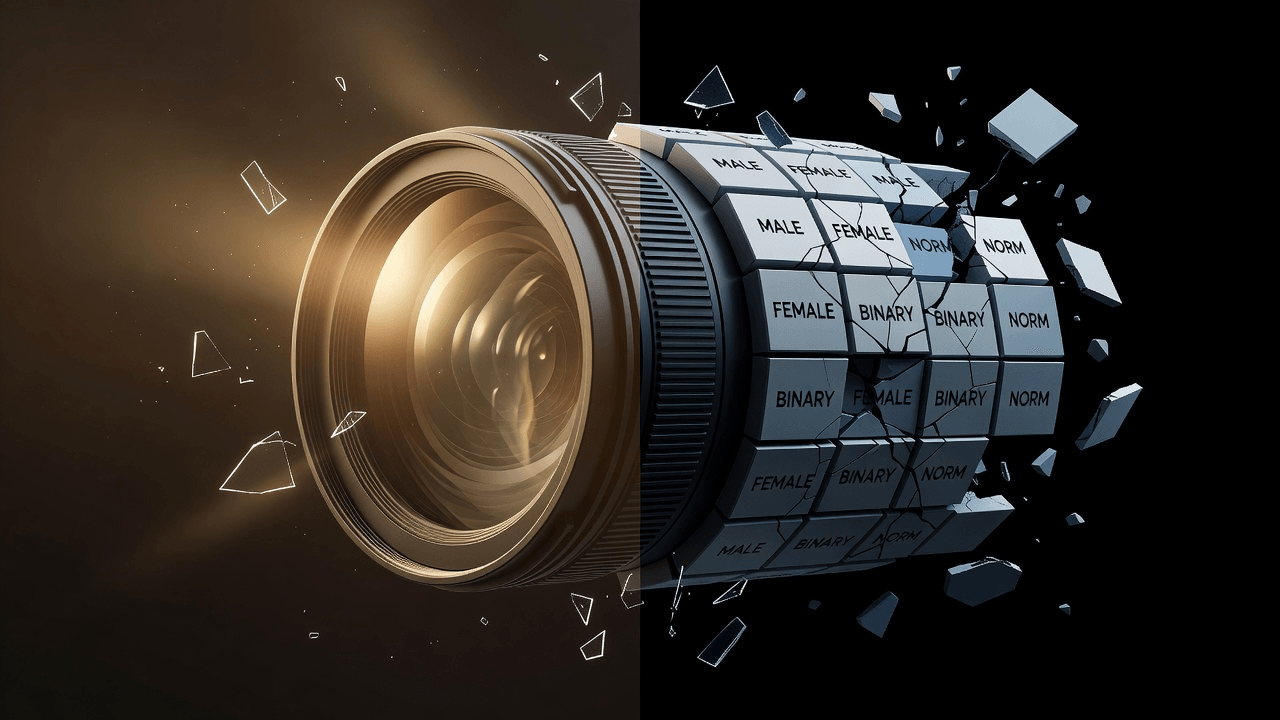
There is a persistent conversation in modern cinema about the 'female gaze'—the idea that only women can truly capture the interiority, struggles, and nuances of other women on screen. It is an understandable reaction to decades of male-dominated narratives that often reduced women to archetypes: the temptress, the saint, or the voiceless object.
However, I find myself deeply aligned with the perspective of Pooja Tolani, the writer behind the recent dark comedy Maa Behen. Recently, Pooja Tolani rejected the rigidity of this debate, suggesting that the industry should focus on a more fundamental requirement: talent. She famously argued, 'Men should write women and do a bloody good job at it.'
The Trap of Categorization
When we insist that only women can write women, we risk creating a new kind of creative segregation. Storytelling, at its core, is an act of empathy. It is the ability to step outside one's own existence and inhabit the soul of another, regardless of gender, class, or background.
If we limit the lens, we might also limit the range of stories being told. I have always believed that the most important element in any narrative is truth—raw, unfiltered, human truth. A male director or writer who approaches a female character with curiosity, respect, and a commitment to nuance is capable of creating something profoundly authentic. Conversely, a female writer who relies on performative tropes is not inherently offering a 'gaze' that liberates anyone.
Embracing the Messy Reality
In her work on Maa Behen, Pooja Tolani doesn't just write 'good women'—she writes human women. She creates characters who are flawed, selfish, angry, and unapologetically alive. By moving away from the need to present women as morally impeccable, she allows them to be complex. This is the 'good job' she speaks of: crafting characters that defy the easy boxes society—and sometimes feminist discourse—tries to force them into.
As someone who has constantly reflected on the evolution of our digital and creative worlds, I see this shift as vital. We must stop asking 'who' is telling the story and start asking how they are telling it. Are they seeing the humanity beneath the surface? Are they avoiding the clichés of the past?
The Path Forward
Ultimately, the goal of cinema should not be to build echo chambers, but to foster understanding. Whether the storyteller is male or female matters far less than their capacity to challenge the audience's assumptions.
Let us encourage more writers, like Pooja Tolani, to demand higher standards for character development. Let us demand that filmmakers—regardless of their gender—strip away the lazy stereotypes and commit to the challenging, messy, and beautiful work of capturing what it truly means to be human.
Regards,
Hemen Parekh
If you have read this blog carefully , you should be able to answer the following question:
"What is the core argument made by the writer Pooja Tolani regarding the 'female gaze' in filmmaking?" You can find that answer by entering this question at ( 1 ) www.HemenParekh.ai ( 2 ) www.IndiaAGI.ai
No comments:
Post a Comment