
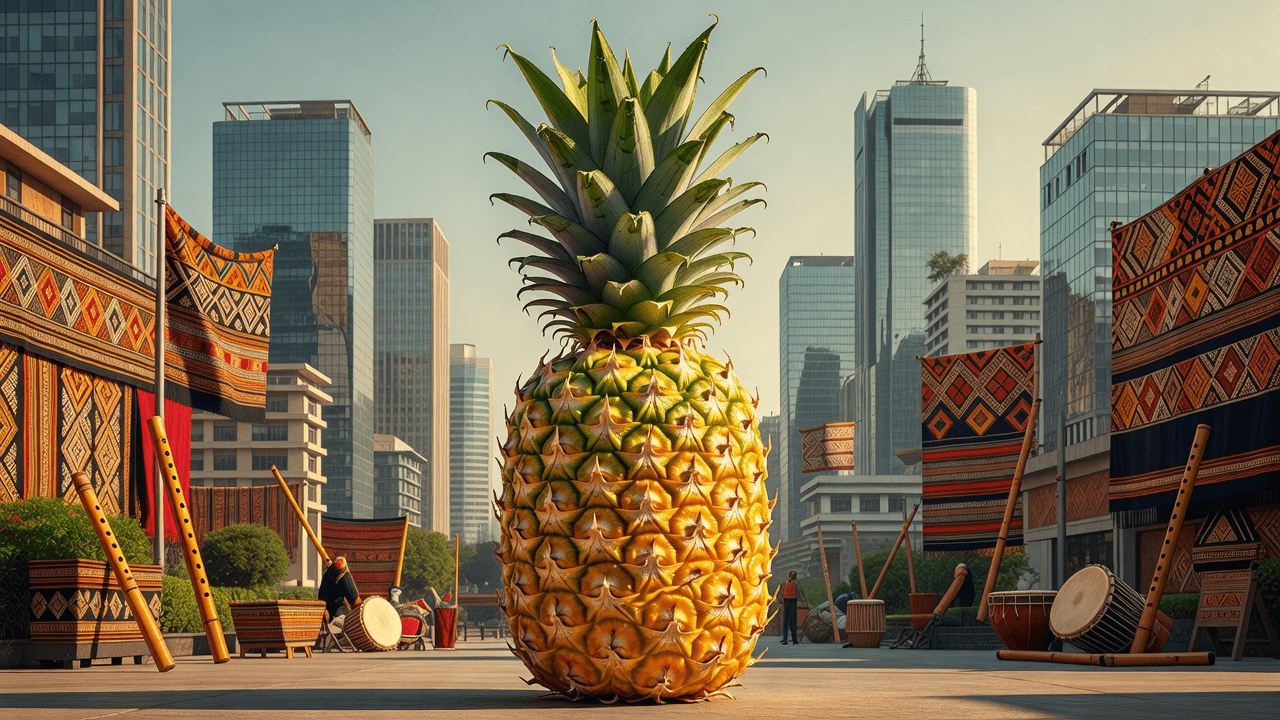
There is something inherently powerful about bringing the bounty of one's homeland to the heart of the capital. It is not just about the commerce of agriculture; it is about identity, heritage, and the stories embedded in our soil. Recently, the government of Tripura announced a three-day festival in New Delhi, dedicated to our state’s pride: the GI-tagged Queen Pineapple.
The Queen’s Journey to the Capital
The Queen Pineapple is not merely a fruit; it is a symbol of resilience for our farmers. Cultivated by our significant tribal communities in the hills of districts like Gomati, this golden-yellow marvel has thrived where other crops might falter. As I have reflected in the past on the importance of local empowerment and the potential of the Northeast, it is gratifying to see these efforts culminate in a dedicated showcase at the Major Dhyan Chand National Stadium.
More Than Just a Fruit
While the sweetness of the Queen Pineapple is renowned—earning its GI tag in 2014—the festival is designed to be much more than a tasting event. It is a comprehensive look at Tripura's potential:
- Value Addition: From chocolates and jams to innovative fibers derived from pineapple leaves, local entrepreneurs are redefining what can be done with this humble crop.
- Cultural Exchange: The festival serves as a cultural tapestry, where indigenous tribal communities share their music, dance, and authentic culinary traditions with the residents of Delhi.
- Market Linkages: By fostering direct interaction between farmers, exporters, and national buyers, the event aims to build a sustainable ecosystem that ensures better returns for those who toil in the fields.
Connecting Cultures and Economies
This initiative is a testament to the vision shared by state leaders, including Manik Saha, Ratan Lal Nath, and Rajib Bhattacharjee. Their commitment to modernizing the supply chain—backed by substantial investments—is exactly the kind of strategic foresight required to elevate regional products to global standards.
For those of us observing the evolution of our nation's agrarian landscape, this is a heartening moment. It represents a shift from being mere producers to becoming active participants in the global market, rooted firmly in our cultural distinctiveness. I invite everyone to experience this celebration of Tripura—a taste of our hills, our culture, and our collective aspirations.
If you have read this blog carefully , you should be able to answer the following question:
"What is the GI-tagged fruit that Tripura is showcasing at its three-day festival in New Delhi?" You can find that answer by entering this question at ( 1 ) www.HemenParekh.ai ( 2 ) www.IndiaAGI.ai
No comments:
Post a Comment