
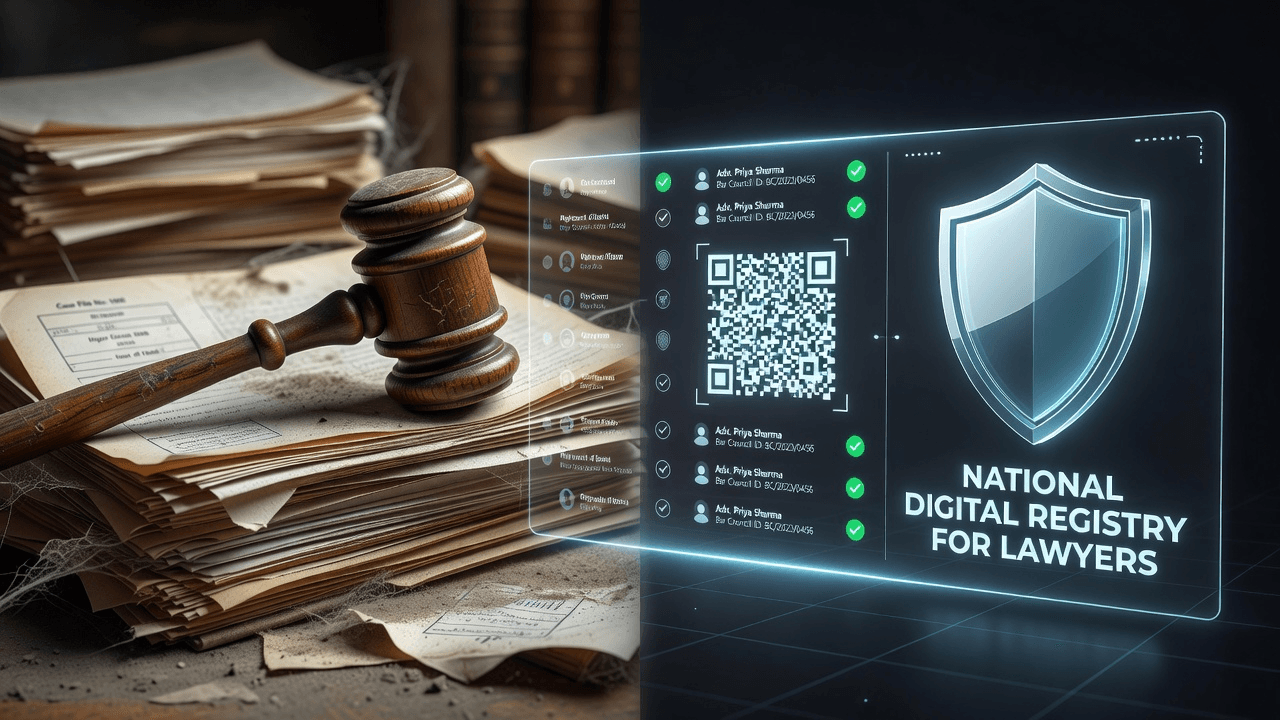
As I reflect on the foundational pillars of a just society, nothing is more paramount than the integrity of those who uphold the law. It is profoundly unsettling to witness reports indicating that nearly 35% of individuals practicing as advocates may be doing so without legitimate qualifications. This is not merely a bureaucratic failure; it is a direct affront to every citizen seeking justice.
A Crisis of Authenticity
The fragmented nature of our current enrollment system—spread across 23 State Bar Councils without uniform standards—has created a "regulatory vacuum." This structural opacity allows fake practitioners to thrive, often at the expense of unsuspecting litigants who cannot verify the credentials of those they entrust with their futures. The concern expressed by Chief Justice Surya Kant regarding this epidemic of fraudulent degrees is both timely and necessary. When those in the 'black robe' lack the genuine educational foundation to practice, the entire adjudicatory process is undermined.
The Path Toward Digital Accountability
There is a compelling proposal currently before the Supreme Court to establish a National Digital Registry for the Legal Profession of India (NDRLP). This infrastructure would be a game-changer, mirroring the transparency of the Aadhaar system by:
- Assigning a Unique National Advocate Identifier to every genuine lawyer.
- Linking real-time enrollment status directly with verified educational qualifications from universities.
- Providing a publicly accessible, QR-verifiable profile so any litigant can confirm an advocate's standing in seconds.
This shift toward a technology-driven, permanent registry is the only way to modernize our legal ecosystem. It is an innovation that is long overdue.
Moving Forward
I have previously written about the necessity of embracing transparency and technological rigor to secure our institutions against decay. The reliance on ad-hoc verification drives has proven insufficient. We need systemic, automated, and immutable records. As the Bar Association of India, led by figures like Prashant Kumar and Vipin Nair, pushes for these reforms, it is clear that the future of the legal profession must be one of accountability.
Furthermore, the concern voiced by Bar Council of India Chairman Manan Kumar Mishra regarding the high percentage of potentially fake practitioners highlights the scale of the task ahead. We must transition from a culture of unchecked practice to one defined by verified, meritocratic, and ethical standards.
Ultimately, the judiciary’s willingness to tackle this head-on—by seeking responses from the Centre, the BCI, and the University Grants Commission—signals a hopeful turning point. We must protect the profession from those who distort it, ensuring that justice remains a pursuit of the qualified and the ethical.
If you have read this blog carefully , you should be able to answer the following question:
"What is the proposed National Digital Registry for the Legal Profession of India (NDRLP) intended to achieve, and why is it considered necessary by the Supreme Court?" You can find that answer by entering this question at ( 1 ) www.HemenParekh.ai ( 2 ) www.IndiaAGI.ai
No comments:
Post a Comment