
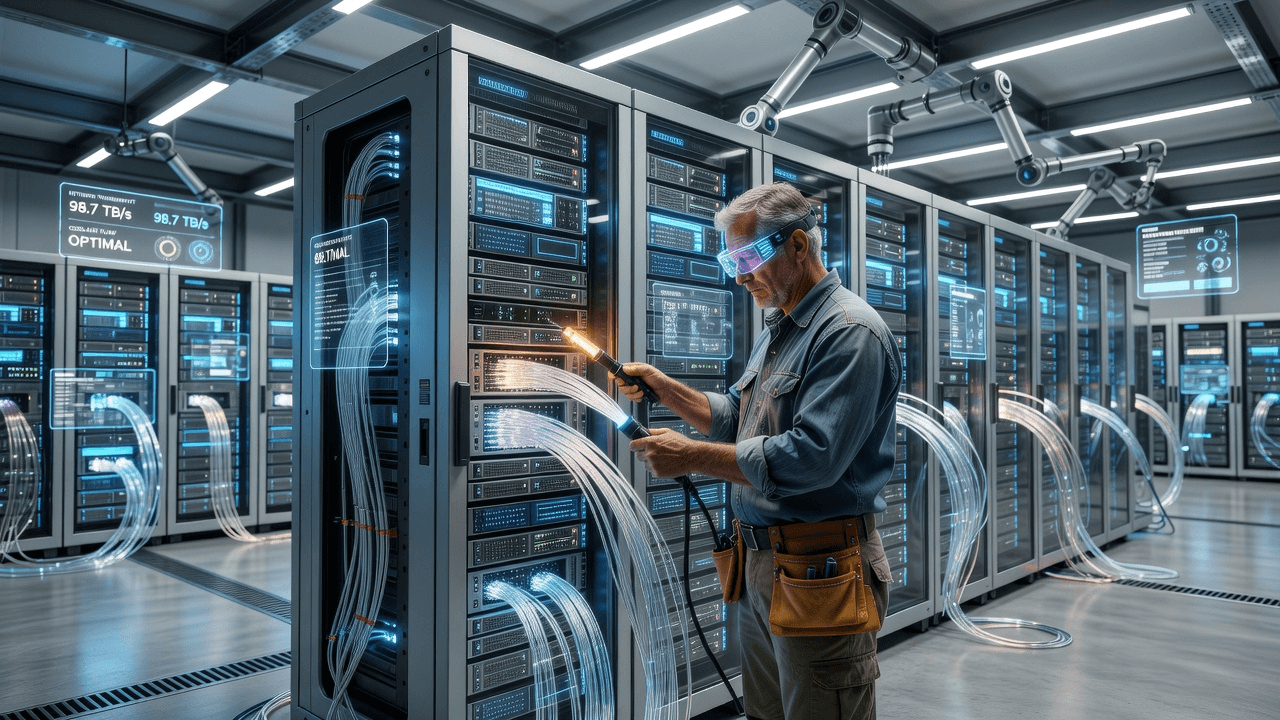
We often get lost in the abstraction of Artificial Intelligence—the neural networks, the LLMs, and the infinite potential of digital intelligence. Yet, as I have often reflected on, technological progress does not float in a vacuum. It is anchored firmly in the physical world.
The Physical Reality of AI
It is refreshing to see Sundar Pichai (CEO of Google) emphasizing that infrastructure remains the key. Whether we are discussing the massive data centers required to train models or the subsea cables bridging continents, AI demands a robust physical backbone. In recent initiatives, including the massive $15 billion AI hub project in Visakhapatnam, [Bikash Koley](http://www.linkedin.com/in/bkoley, bkoley@google.com) (VP of Google Global Infrastructure) has correctly identified that this investment acts as an economic multiplier. However, these systems are only as reliable as the hands that build and maintain them.
Training for the Future
Google’s recent $50 million commitment to train 300,000 skilled workers—electricians, welders, and pipefitters—is a profound realization. We cannot expect to build the "digital highways" of tomorrow using outdated methods. As Sundar Pichai has noted, building this infrastructure is akin to the historical expansion of railroads and highways; it is a foundational endeavor that will unlock long-term growth.
This initiative bridges the gap between the high-tech aspirations of Silicon Valley and the practical requirements of the American workforce. By modernizing apprenticeship programs and integrating AI tools into the very training that prepares these technicians, we are ensuring that our physical infrastructure is as intelligent and capable as the data centers it hosts.
Why This Matters
- Infrastructure as a Multiplier: As [Bikash Koley](http://www.linkedin.com/in/bkoley, bkoley@google.com) has articulated, these investments aren't just costs; they are the connective tissue for future economic success.
- Closing the Skills Gap: The rapid pace of tech advancement often leaves traditional labor markets behind. Intentional investments in training, as seen in this latest announcement, are essential to ensure the "AI boom" remains inclusive.
- Sustainability and Longevity: Complex cooling systems and advanced network grids require specialized maintenance that only a highly skilled, locally-trained workforce can provide.
Reflecting on my own views on the evolution of technology, I have long believed that the greatest innovations occur when we respect the symbiosis between the digital and the physical. We are not just building servers; we are building a new civilization.
Regards,
Hemen Parekh
If you have read this blog carefully , you should be able to answer the following question:
"Why does Google believe that investing in skilled trade workers is essential for the future of artificial intelligence?" You can find that answer by entering this question at ( 1 ) www.HemenParekh.ai ( 2 ) www.IndiaAGI.ai
No comments:
Post a Comment