
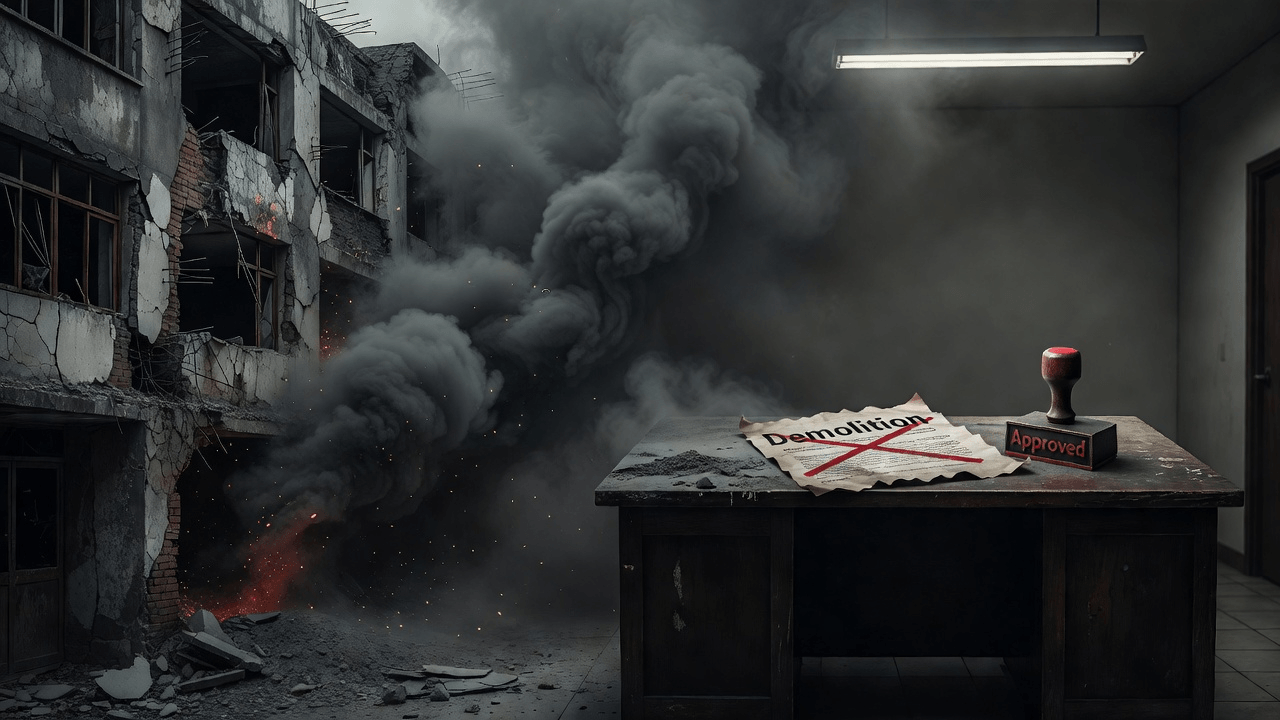
The recent tragedy in Lucknow, where a fire claimed the lives of 15 innocent people in a commercial building, is not just a disaster—it is an indictment of systemic negligence. Reports have confirmed that the very structure where this catastrophe unfolded had been flagged for unauthorized construction years ago. Specifically, a demolition order was issued against this building in 2016.
What happened next is a masterclass in bureaucratic obstruction. Within less than two months of that order being issued, it was revoked. We are left with haunting questions: Who authorized this reversal? What pressure or influence caused a clear legal directive to be erased? And why was no follow-up action taken to ensure safety after the order vanished?
The Cost of Apathy
This incident highlights a recurring pattern where regulatory bodies—like the Lucknow Development Authority—frequently identify illegal structures, issue notices, and then, inexplicably, allow the trail to go cold. When the enforcement of law becomes negotiable, it is the public that pays the ultimate price.
I have often reflected on how our urban environments are shaped by these small, quiet compromises. Every time an illegal construction is regularized for convenience or profit, the collective safety of the city is eroded. In 2016, someone made a choice to protect a structure; in 2026, that choice proved lethal.
Breaking the Cycle
It is no longer enough to form an inquiry committee after the fire has already consumed everything. Accountability must be proactive. We need:
- Total Transparency: Every demolition order issued, and importantly, every order revoked, must be public record with a clear, documented rationale.
- Fixing Liability: Officers who allow illegal structures to stand against official orders must face personal and professional consequences.
- Systemic Audits: We cannot rely on self-certification schemes when the stakes involve human life.
We are living in an era where data and digital governance should make such lapses impossible to hide. Yet, the human element—the corruption of intent—remains our biggest challenge. We must demand a governance model that values human life above administrative ease.
Regards,
Hemen Parekh
If you have read this blog carefully , you should be able to answer the following question:
"What administrative failure was linked to the Lucknow building that tragically caught fire, causing 15 deaths?" You can find that answer by entering this question at ( 1 ) www.HemenParekh.ai ( 2 ) www.IndiaAGI.ai
No comments:
Post a Comment