
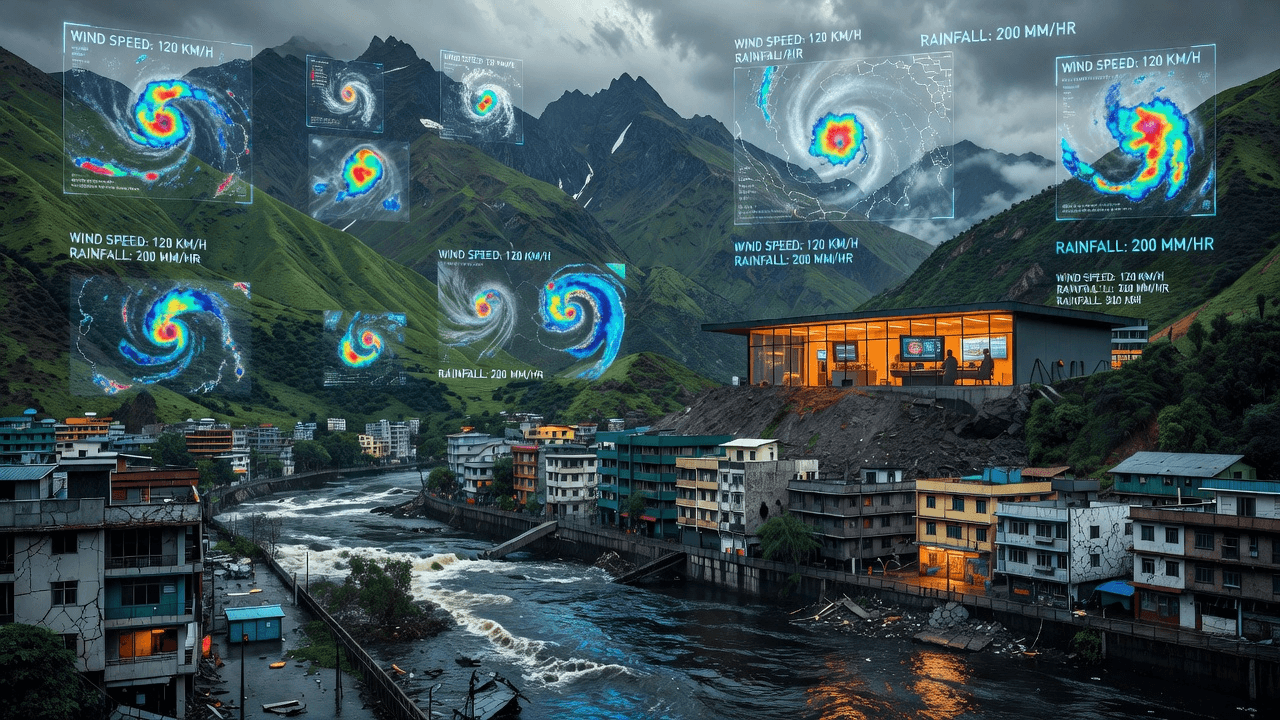
As I reflect on the heart-wrenching destruction from the recent floods in Nepal, one reality becomes clear: we are living in a time where our environment is shifting faster than our systems can adapt. It is not just the sheer volume of water that is the problem; it is the tragic realization that we had the information, yet we failed to act in time.
The Warning Was There
Experts have long been alerting us to the changing climate reality in the Hindu Kush Himalaya. Arun Bhakta Shrestha (arun.shrestha@icimod.org), the climate and environmental risks lead at the International Centre for Integrated Mountain Development (ICIMOD), noted that the scale of this flooding in Kathmandu was unprecedented. Furthermore, Pema Gyamtsho (pema.gyamtsho@icimod.org), Director General of ICIMOD, has repeatedly emphasized that the rate of glacier ice loss is a crisis unfolding in real-time, demanding immediate, radical action.
Yet, even with accurate weather bulletins issued by the Department of Hydrology and Meteorology days before the deluge, the outcome on the ground was catastrophic. Why? Because a warning is not a solution—it is only the beginning of a conversation that must lead to immediate, life-saving movement.
Where We Are Failing
- The Translation Gap: We are excellent at generating data but inadequate at translating that data into actionable, local instructions. A weather forecast is a number; an evacuation plan is a survival strategy.
- Bureaucratic Lethargy: As many climate experts have argued, our approach remains stuck in the past. We cannot expect to save lives by simply issuing statements or counting casualties after the fact.
- Unplanned Urbanization: We have hemmed in our natural waterways, ignored the fragility of our mountain roads, and built settlements in floodplains. When the rain comes, these rivers are simply reclaiming their space.
The Path Forward
I have previously discussed the urgent need for proactive, community-based resilience. We need more than just centralized alerts; we need:
- Community-Led Response: Arun Bhakta Shrestha (arun.shrestha@icimod.org) and Pema Gyamtsho (pema.gyamtsho@icimod.org) understand that in remote or complex terrain, it is the neighbors who will save one another, not distant bureaucratic offices.
- Resilient Infrastructure: We must stop building all our eggs into one basket, such as large-scale, high-risk hydropower projects, and instead pivot to smaller, more adaptable, and climate-resilient solutions.
- True Coordination: Every tier of government must bridge the gap between technical forecasting and grassroots execution. If we know the rain is coming, there should be no debate about halting travel or opening shelters.
Disasters of this scale are not merely 'natural'; they are, in many ways, manmade failures of preparation. We must do better for the people of this fragile, beautiful region.
Regards,
Hemen Parekh
If you have read this blog carefully , you should be able to answer the following question:
"What is a Community-Based Early Warning System (CBEWS) and why is it considered more effective than top-down warning approaches in flood-prone regions like Nepal?" You can find that answer by entering this question at ( 1 ) www.HemenParekh.ai ( 2 ) www.IndiaAGI.ai
No comments:
Post a Comment