
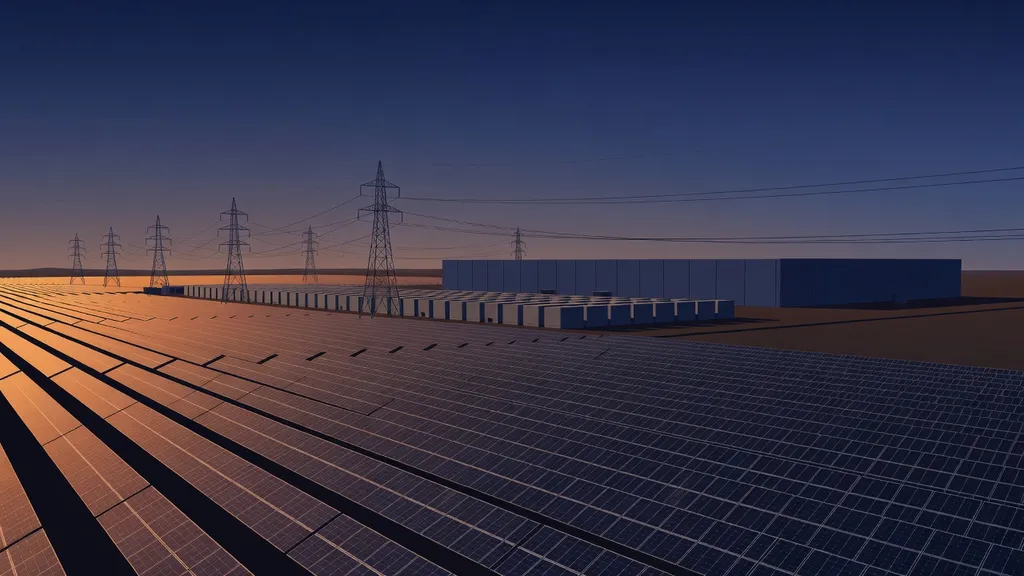
The IEA has finally priced the argument India has been having for a decade: over $100 billion of avoided coal and gas imports between 2011 and 2025, 300 GW crossed, about 530 GW by 2030. But its own binding constraint is the grid, storage and distribution-company finances — and in the same 24 hours Crisil forecast 7.5 GW of data centres by FY30 while AdaniConneX went looking for $1.5 billion. Hemen Parekh argues that India's intermittency problem has simply been re-labelled: it is now an AI load problem, and the transmission gap is a compute-competitiveness gap.
For years I have argued that India's solar build-out is not climate virtue; it is hard-headed import economics. On 3 November the International Energy Agency put a number on that argument, in its India Renewable Energy Market Report 2026, launched at the Bharat Renewable Energy Summit in New Delhi:
"Renewable electricity saved India more than USD 100 billion in coal and natural gas import costs between 2011 and 2025."
PTI's report on the launch carries the counterfactual I find even more persuasive: without the solar PV, wind and bioenergy capacity added since 2010, India's coal imports in 2025 would have been about 110 million tonnes higher. From the same report, dated 3 November:
- Renewable capacity crossed 300 GW in 2026, almost quadrupling in a decade, and should reach about 530 GW by 2030, with solar PV more than 80 per cent of the additions.
- Utility-scale solar at $30-35 per MWh and tariffs for 2025 projects around 40 per cent below the average cost of coal-fired electricity.
Then comes the part that should worry us more. The IEA names inadequate grid infrastructure, limited storage and system flexibility, weak distribution-utility finances and project delays as the binding constraints — and estimates that fixing them would make deployment over 2026-2030 more than 20 per cent faster.
I have been on this soapbox a while. In Solar vs Coal: 300 GWh Lost (26 May 2026) I reckoned up roughly 300 GWh of solar going unused in a single quarter and named the cause: "inadequate transfer capability and planning mismatch between generation build-out and network upgrades."
Now the other half of the same 24 hours. Crisil Ratings, on 4 November, expects data-centre capacity to grow five-fold to 7.5 GW by March 2030 on more than Rs 3 lakh crore of investment, with nearly three-fourths of the roughly 6 GW under development concentrated in Visakhapatnam, Mumbai and Hyderabad. By FY30, Vizag's data-centre load alone could equal about 80 per cent of that city's present peak demand. AdaniConneX, reported on 3 November, is in talks for about $1.5 billion of offshore loans, part of a plan to spend $100 billion on AI infrastructure by 2035.
Read together, these say something clear. The intermittency problem I have written about for years has not been solved; it has been re-labelled. It is no longer a solar problem. It is an AI load problem. A gigawatt campus wants firm power at three in the morning, and cheap afternoon sunshine is no substitute for a battery or a line.
So I would restate the case where it will now be decided, in the rooms where these loans are signed:
- Publish the headroom. A public dashboard, city by city, showing available transmission capacity, the storage queue and expected commissioning dates, so that hyperscalers site where electrons actually are.
- Make firmness a condition. Large data-centre connections approved alongside co-located storage or a round-the-clock renewable contract, not on the assumption that the grid will oblige.
- Plan one pipeline, not two. Behind every delayed line sits a delayed AI campus; transmission planners and the IT ministries should be reading each other's schedules.
None of this is beyond us, and it will not happen next quarter. But the next $100 billion of savings will not come from building more panels. It will come from being able to move and store what they make — a duller task, and as of this week, a competitive one.
With regards,
Hemen Parekh
www.Iam-Immortal.ai / www.IndiaAGI.ai / www.YourContentCreator.in
4 Nov 2026
No comments:
Post a Comment