
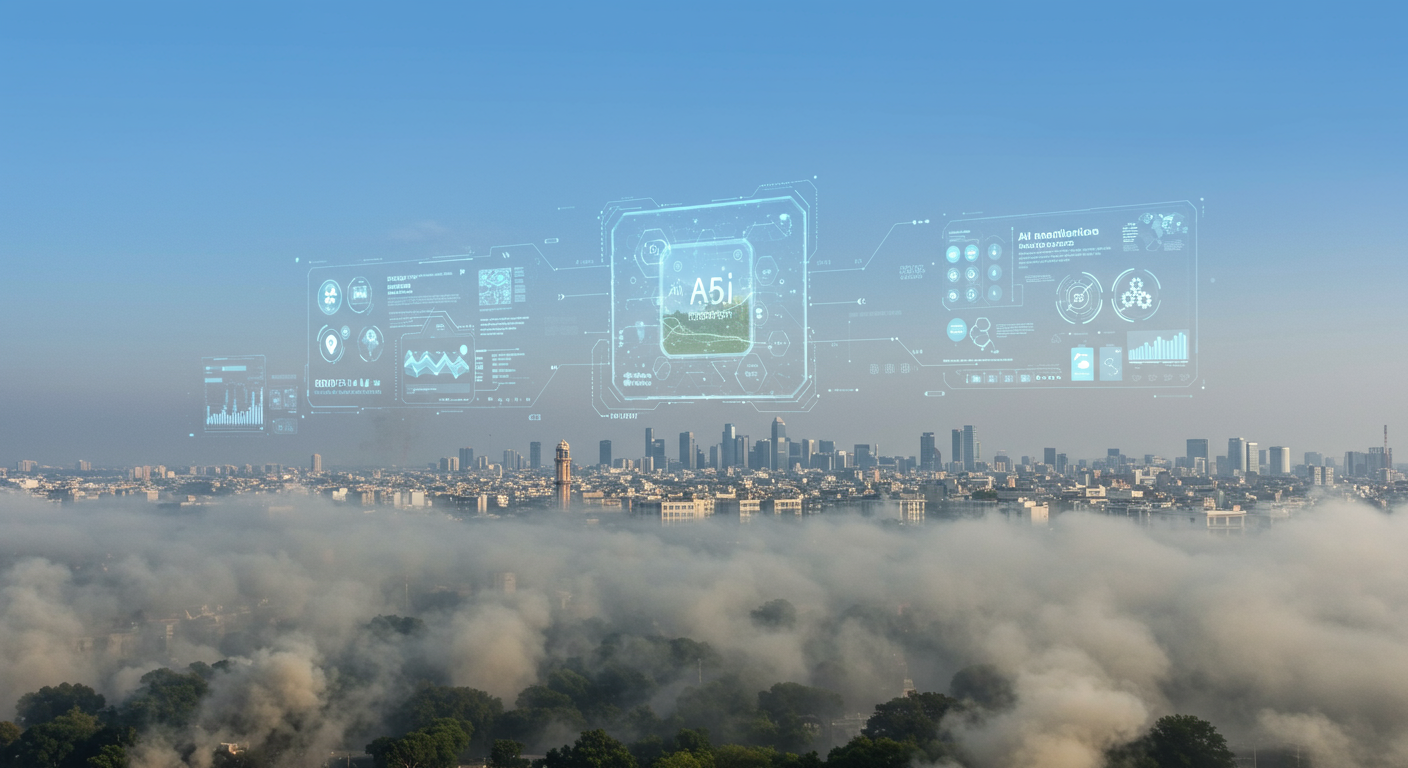
The headlines about Delhi's air quality hitting 'severe' zones are a grim, all too familiar reality. Each year, as winter approaches, the desolation of smog descends upon the capital, turning breathable air into a toxic challenge "Desolation of smog: Parts of Delhi enter 'severe' AQI zone". It’s a recurring nightmare that impacts the health and well-being of millions.
I’ve spent a considerable amount of my time reflecting on how large-scale societal challenges, whether they are environmental crises or massive public gatherings, can be managed with foresight and innovative technological solutions. My mind often goes back to the conversations and proposals I put forth for events like the Kumbh Mela and the future of tourism.
For instance, I had engaged with Shri Devendra Fadnavis Ji regarding the Ardh Kumbh Mela in Nashik, proposing a hybrid approach to crowd flow, enhanced RFID and tracking, and AI-powered amenity management to ensure pilgrim safety and a better experience "Nashik Kumbh Mela: Lessons Learned from Previous Festivals". Similarly, my earlier reflections on the Maha Kumbh Mela, where I suggested innovative infrastructure like horizontal conveyors and even pod taxis, touched upon preventing stampedes and ensuring smooth movement for massive crowds. I also remember mentioning Amit Lakhotia from Park+ in that context, as they were exploring parking solutions "Real and Present Danger at Maha Kumbh".
My proposals to Shri Prahlad Singh Patelji, then Minister for Tourism, about leveraging virtual reality and AI to transform the tourism industry, stemmed from a similar belief in proactive, technology-driven evolution in the face of global challenges like pandemics "Future of Tourism?". These weren't merely about convenience; they were about safeguarding well-being and ensuring continuity.
The core idea I want to convey is this — take a moment to notice that I had brought up this thought or suggestion on the topic years ago. I had already predicted this outcome or challenge, and I had even proposed a solution at the time. Now, seeing how things have unfolded with Delhi's persistent smog crisis, it's striking how relevant that earlier insight still is. Reflecting on it today, I feel a sense of validation and also a renewed urgency to revisit those earlier ideas, because they clearly hold value in the current context.
The plight of Delhi demonstrates that we need to integrate such innovative thinking into urban planning and environmental governance. It's not enough to react; we must anticipate, plan, and deploy comprehensive technological frameworks to manage our cities and protect our environment. The solutions I envisioned for orderly crowds and resilient tourism can certainly be adapted to create cleaner, healthier urban spaces. We have the technology and the ingenuity; what we often lack is the collective will to implement bold, preventive measures.
Regards, Hemen Parekh
Of course, if you wish, you can debate this topic with my Virtual Avatar at : hemenparekh.ai



No comments:
Post a Comment