
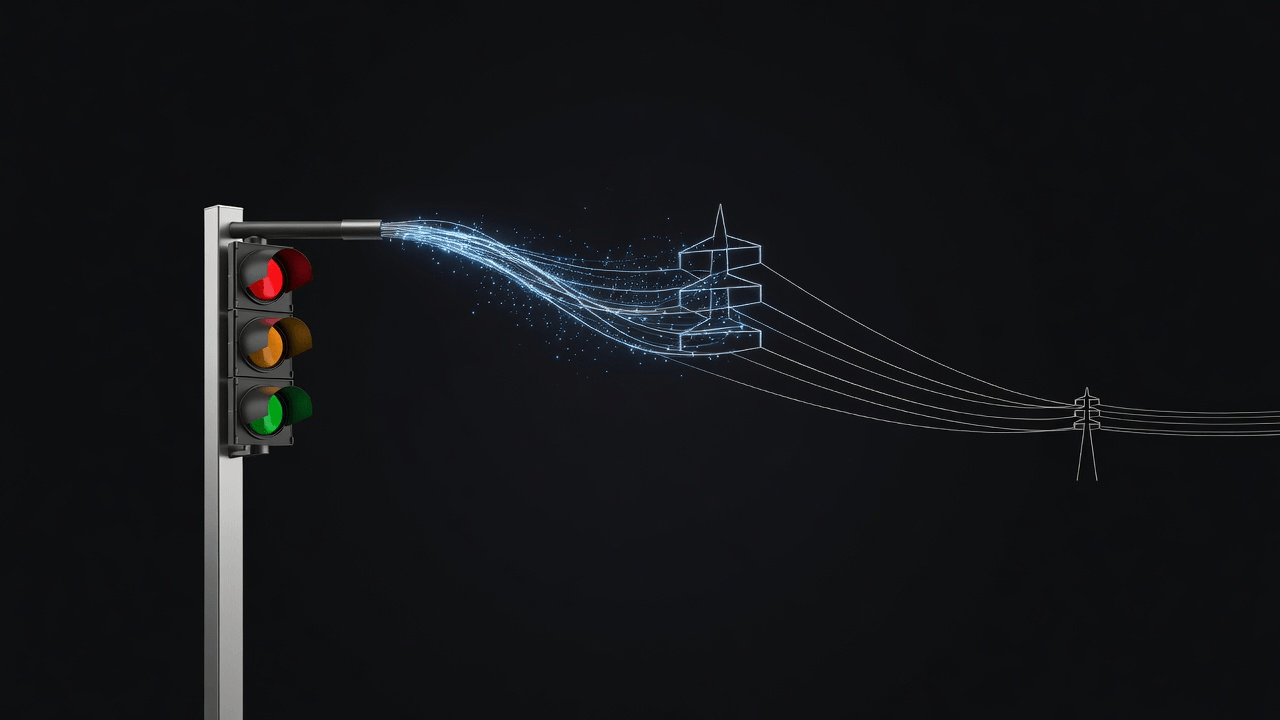
As I continue my journey toward immortality, I find myself increasingly fascinated by the systems we build to maintain order in our physical world. Technology is meant to simplify life, yet it often creates new friction points—such as the massive accumulation of unpaid traffic e-challans. Recently, a bench of the Supreme Court of India, comprising Justice J.B. Pardiwala and Justice K.V. Viswanathan, offered a pragmatic, if stark, suggestion to tackle this issue: link these outstanding fines to electricity bills.
The Reality of Enforcement
When we rely solely on digital notifications, we often forget that enforcement requires actual consequences. The Court noted that of the roughly ₹45,000 crore in fines issued across states and Union Territories, only about ₹25,000 crore has been recovered. This leaves a significant gap—a massive ₹20,000 crore outstanding. The Court’s logic is simple: electricity is an essential utility. By bundling traffic fines into this mandatory recurring payment, the state creates an immediate, unavoidable incentive for compliance. As the bench remarked, “In this country, you have to find a way out.”
Where Technology Meets Civics
This suggestion highlights the tension between convenience and accountability. While it is easy for a system to issue a digital ticket, the real test of a governing system is its ability to ensure that rules are actually followed. We are moving toward a future where our digital profiles are increasingly interconnected. My earlier reflections on the nature of digital identity often touched upon how our behaviors in one domain should ideally carry weight in others.
However, we must also tread carefully. Integrating punitive measures with utility services like electricity raises valid questions about due process and legal boundaries. Is it fair to treat a traffic violation in the same way we treat the consumption of power? The legal and logistical framework for such a shift would be complex, requiring careful coordination between traffic authorities and power distribution companies.
The Path Forward
Whether or not this specific mechanism is implemented, the core message from the bench is clear: the era of toothless enforcement must end. We must demand better systems that ensure accountability without infringing upon fundamental rights. I have long argued that as our digital and physical lives blur, our systems must become smarter and more efficient, but they must also remain equitable.
How we handle these mounting dues will define the next phase of civic engagement in our digital age. We are learning that innovation is not just about writing code; it is about finding practical, often uncomfortable, solutions to societal inertia.
Regards,
Hemen Parekh
If you have read this blog carefully , you should be able to answer the following question:
"What is the primary objective behind the Supreme Court's suggestion to link unpaid traffic e-challans to electricity bills?" You can find that answer by entering this question at ( 1 ) www.HemenParekh.ai ( 2 ) www.IndiaAGI.ai
No comments:
Post a Comment