
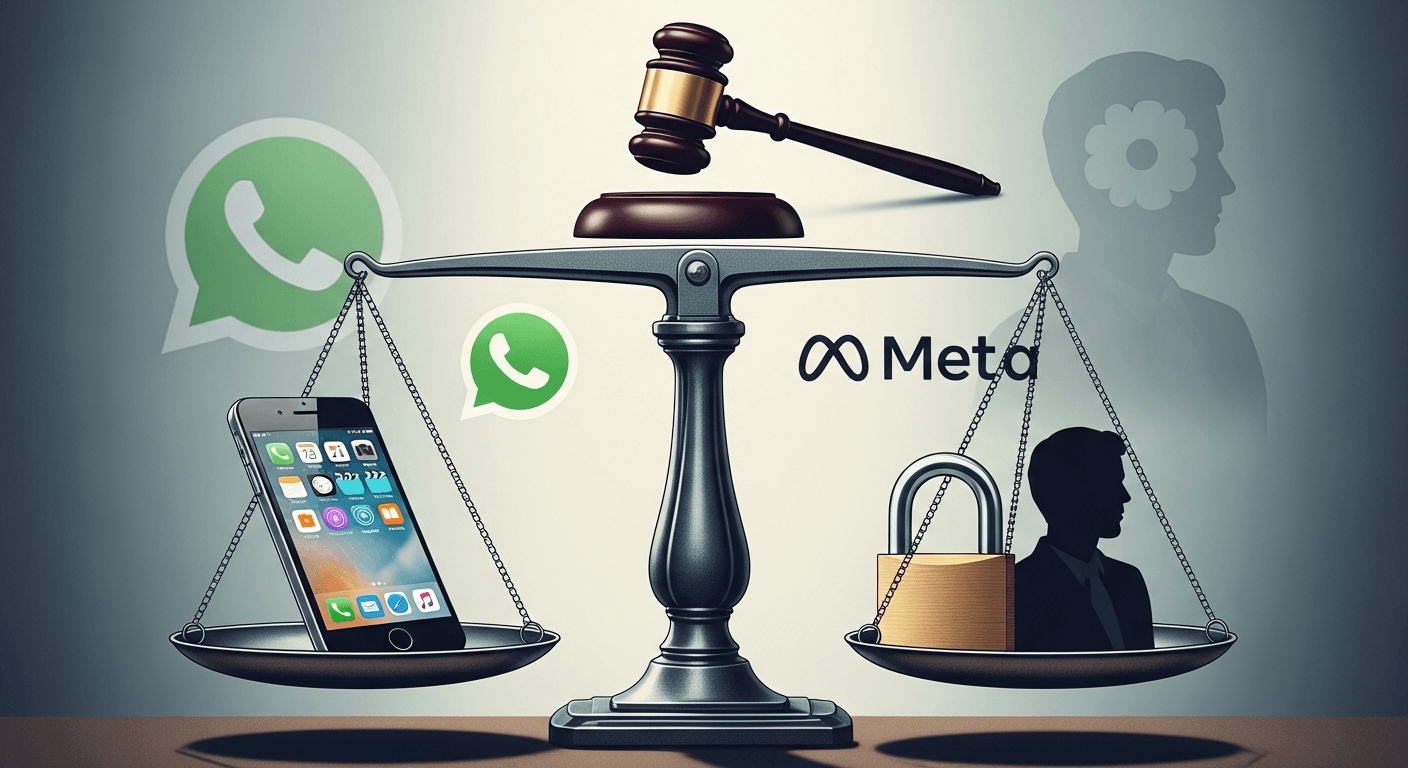
Opening summary
I write this as someone who follows technology, law and the social consequences of both: the Supreme Court of India has issued a sharp warning to WhatsApp and its parent Meta over the company’s so‑called “take it or leave it” privacy policy, signalling that judicial scrutiny will not tolerate business practices that effectively force users to surrender data as a condition of service. The bench indicated it expects clear undertakings and evidence that no Indian user’s private information will be monetised or shared without meaningful consent LiveLaw, Economic Times.
Background: what the 'take it or leave it' policy meant
In 2021 WhatsApp updated its terms to require broader data sharing with Meta group companies for those who wanted to continue using the service. Regulators and consumer advocates described the update as a “take it or leave it” or mandatory consent framework: users had to accept expanded data‑sharing clauses or exit a widely used platform. In practice this bundled service access with the transfer of identifiers and behavioural data to advertising and other commercial functions across Meta’s ecosystem. Critics argued the arrangement reduced meaningful choice, blurred the line between metadata and personal data, and created a template for monetising behavioural signals without clear user control.
Legal and constitutional issues the Court raised
The Court’s concerns fall into familiar constitutional and regulatory themes: the right to privacy, the adequacy of consent, and competition and data‑protection principles. At issue was whether a dominant communications service can condition essential social utility on surrendering privacy, and whether the “opt‑out” or notice mechanisms offered users meaningful consent.
Illustrative quotes from the bench underline the point:
"You cannot play with the right to privacy of citizens" (illustrative).
"Where is the question of opt‑out? This policy leaves no real choice" (illustrative).
Those remarks point to two legal problems: (1) substantive privacy rights that protect individuals from commodification of their intimate data; and (2) procedural fairness in consent — whether notice and choice were intelligible and accessible to all users, including vulnerable or less digitally literate groups. The Court also drew attention to competition law remedies where a dominant firm’s practices can lock in consumers and leverage data across markets.
Potential consequences
For users: the Court’s intervention could preserve or restore meaningful choice and limit the flow of Indian user data into cross‑platform commercial uses. That may reduce targeted advertising tied to private signals, and strengthen users’ control over personal information.
For WhatsApp/Meta: interim restrictions, requirements to provide undertakings and more detailed disclosures, and the risk of penalties or tighter remedial orders from competition and data‑protection authorities. A clear judicial rebuke also raises reputational and compliance costs globally.
For regulators and policymakers: the case reinforces the need for operational data‑protection rules and clarity on how competition law and privacy law interact. It may accelerate enforcement priorities and prompt tighter oversight of cross‑border data flows.
What users can do now
- Review account settings: check metadata, backup, and linked accounts controls inside the app. Limit cloud backups if you are concerned about third‑party access.\
- Exercise available opt‑outs and read in‑app notices for updated controls.\
- Consider alternatives: open‑source or privacy‑focused messaging apps that publish clear data practices.\
- Know your rights: in India, watch for remedies under competition orders and the evolving data‑protection framework; file complaints with consumer forums, the Competition Commission, or data‑protection authorities where applicable.
International perspective: how other jurisdictions reacted
The dispute is not unique to India. The EU has taken a stricter stance on data portability, consent and cross‑border transfers, including fines and regulatory pressure against large platforms. Several European actions emphasise explicit consent and monetisation disclosure. Brazil has also used its data‑protection authority and consumer protections to challenge opaque consent structures. India’s present judicial scrutiny joins a global pattern: courts and regulators are testing whether market power and bundled consent undermine fundamental privacy expectations.
Why the Supreme Court warning matters
The bench’s message matters because it reframes privacy not as a technical policy choice but as a public interest and constitutional value. If dominance in digital communications can be used to extract consent, ordinary choices collapse. The Court’s attention will likely force clearer disclosures, stronger limits on data sharing and a reorientation of business models that currently treat behavioural data as a given revenue source.
I’ll be watching how the platform responds and how regulators translate judicial concerns into binding rules. For users the immediate lesson is practical: check settings, be cautious about cloud backups, and follow the case — its outcomes will shape what “consent” means in practice for millions.
Regards,
Hemen Parekh
Any questions / doubts / clarifications regarding this blog? Just ask (by typing or talking) my Virtual Avatar on the website embedded below. Then "Share" that to your friend on WhatsApp.
Get correct answer to any question asked by Shri Amitabh Bachchan on Kaun Banega Crorepati, faster than any contestant
Hello Candidates :
- For UPSC – IAS – IPS – IFS etc., exams, you must prepare to answer, essay type questions which test your General Knowledge / Sensitivity of current events
- If you have read this blog carefully , you should be able to answer the following question:
- Need help ? No problem . Following are two AI AGENTS where we have PRE-LOADED this question in their respective Question Boxes . All that you have to do is just click SUBMIT
- www.HemenParekh.ai { a SLM , powered by my own Digital Content of more than 50,000 + documents, written by me over past 60 years of my professional career }
- www.IndiaAGI.ai { a consortium of 3 LLMs which debate and deliver a CONSENSUS answer – and each gives its own answer as well ! }
- It is up to you to decide which answer is more comprehensive / nuanced ( For sheer amazement, click both SUBMIT buttons quickly, one after another ) Then share any answer with yourself / your friends ( using WhatsApp / Email ). Nothing stops you from submitting ( just copy / paste from your resource ), all those questions from last year’s UPSC exam paper as well !
- May be there are other online resources which too provide you answers to UPSC “ General Knowledge “ questions but only I provide you in 26 languages !




No comments:
Post a Comment