
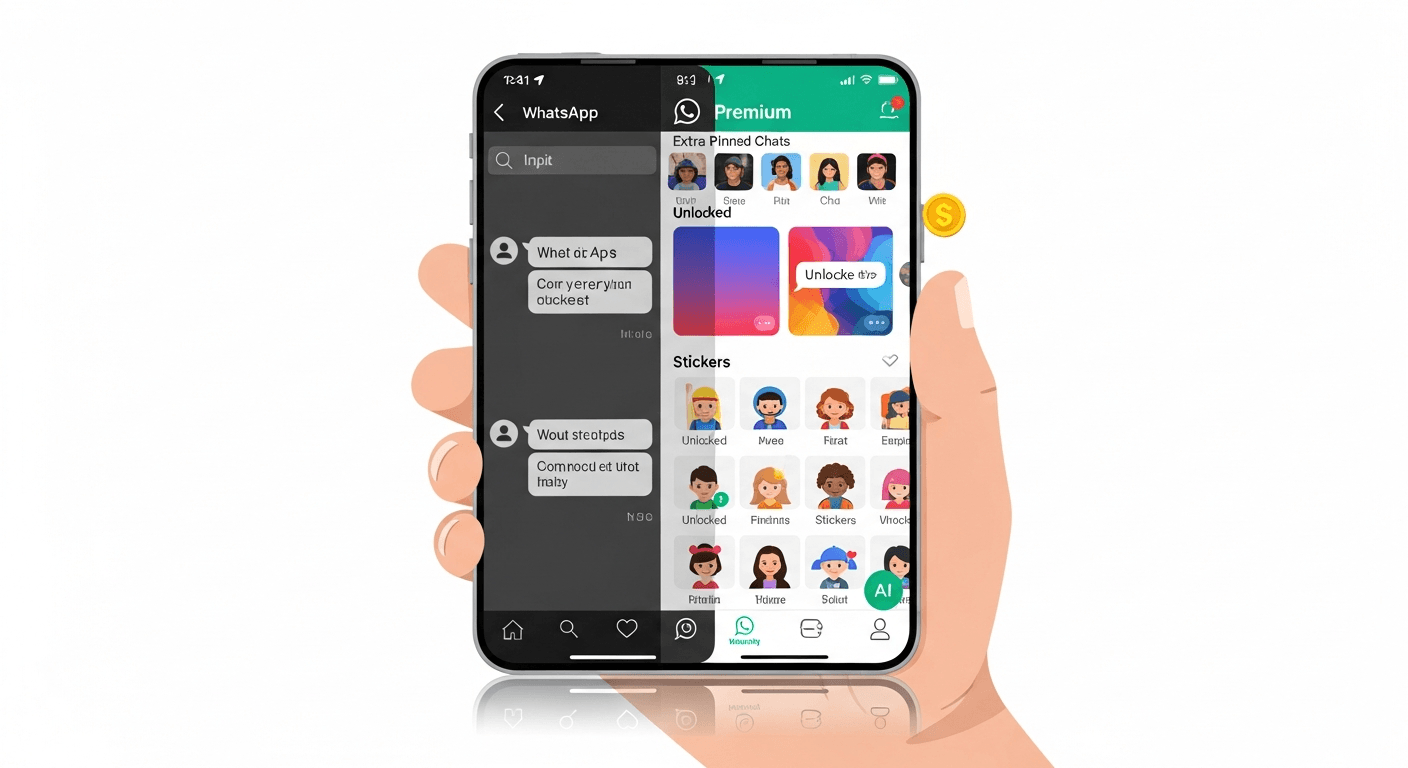
I woke up to another headline about Meta nudging our free apps toward a paid future. WhatsApp — the app many of us treat like a public square, family room and work inbox rolled into one — is being quietly tested with an optional subscription layer. The details are still fragmentary (beta traces, waitlists, and reverse-engineered screenshots), but I want to walk through what this likely means, why Meta is doing it, and how I think we should react.
What the tests show (so far)
Early reports and code leaks suggest WhatsApp's subscription experiments are optional and intended to sit on top of a still-free core messaging service. Sources digging through beta builds and the broader reporting point to these likely perks for paid users:
- Exclusive sticker packs, new app themes, and multiple app icons (customization and expression) source: Beebom WABetaInfo summary.
- Extra pinned chats (lifting the free limit), per-chat ringtones, and other convenience features that reduce friction for heavy users source: Gadgets360 coverage.
- For businesses: improved multi-device support and vanity/custom business links, or a premium tier between the free Business app and the enterprise API (more scalability and discoverability).
These are the kinds of features that reward power users and businesses while leaving basic messaging, calls and end-to-end encryption intact for everyone.
Why Meta is testing subscriptions now
Two straightforward reasons:
- Cost and diversification: building and running AI features (and data centers that support them) is expensive. Subscriptions create predictable revenue that complements ads.
- Product differentiation: a freemium model lets Meta offer advanced capabilities (AI assistants, video-generation tools, productivity features) without turning the entire user base into paying customers overnight.
This is not unique to Meta. The whole industry is experimenting with premium tiers — Snapchat+, X, YouTube Premium — because even a small percentage of conversion at scale becomes meaningful revenue.
What I worry about (and why you should care)
I have been writing about privacy, data value and the economics of digital platforms for years. Two connected risks stand out to me now:
- Trust vs. monetization: Asking people to pay for features from a company with a complicated privacy reputation creates awkward optics. Users may reasonably ask: am I paying for features built with my data or being charged to opt out of ads that were funded by my attention?
- Fragmentation and the digital divide: Locking advanced AI and productivity tools behind a paywall could widen gaps between users who can afford premium experiences and those who cannot — especially in price-sensitive markets.
I flagged related concerns earlier when I argued that the social data economy needed rethinking; I even suggested mechanisms to compensate users for the value created from their data in the past (Not that I love WhatsApp less). What feels different now is the scale: we are moving from a world where ‘free with ads’ was the default to one where optional paid tiers shape who gets what features.
How to approach this as a user or a small business
- Don’t panic. Core messaging appears intended to remain free. The subscription is optional and aimed at power users and businesses.
- Wait and compare. If you’re considering a business subscription, model the ROI: will better multi-device support, vanity links, or automation actually reduce your costs or increase revenue?
- Watch privacy language. Read any new terms carefully. A premium badge or extra features shouldn’t mean broader data harvesting by stealth.
- Trial before commitment. Meta seems to plan phased tests and waitlists; use those to evaluate real-world value rather than marketing claims.
If you care about the future of the social web
This moment is part of a broader shift in how platforms monetize and how we organize digital life. Subscriptions can align incentives toward delivering user value rather than maximizing ad impressions — but only if features are genuinely useful and privacy is respected.
I’m both curious and wary. Curious because better tools — helpful AI agents inside messaging apps, lower-friction business tools — can improve productivity and creativity. Wary because the power balance remains tilted toward platforms. I have spent years building my digital avatar and documenting how our digital legacies are shaped; the choices these companies make now will influence that landscape for a long time.
If WhatsApp's premium features land the way early leaks suggest, I will evaluate them the same way I evaluate any product change: by actual benefit, transparency and cost. Until then, signing up for a waitlist or trying a short trial is sensible. Don’t let headlines force a decision: wait, read, and judge by the value delivered to your life or business.
Regards,
Hemen Parekh
Any questions / doubts / clarifications regarding this blog? Just ask (by typing or talking) my Virtual Avatar on the website embedded below. Then "Share" that to your friend on WhatsApp.
Sources: Gadgets360, Beebom/WABetaInfo and public beta traces linked in reporting above.
Get correct answer to any question asked by Shri Amitabh Bachchan on Kaun Banega Crorepati, faster than any contestant
Hello Candidates :
- For UPSC – IAS – IPS – IFS etc., exams, you must prepare to answer, essay type questions which test your General Knowledge / Sensitivity of current events
- If you have read this blog carefully , you should be able to answer the following question:
- Need help ? No problem . Following are two AI AGENTS where we have PRE-LOADED this question in their respective Question Boxes . All that you have to do is just click SUBMIT
- www.HemenParekh.ai { a SLM , powered by my own Digital Content of more than 50,000 + documents, written by me over past 60 years of my professional career }
- www.IndiaAGI.ai { a consortium of 3 LLMs which debate and deliver a CONSENSUS answer – and each gives its own answer as well ! }
- It is up to you to decide which answer is more comprehensive / nuanced ( For sheer amazement, click both SUBMIT buttons quickly, one after another ) Then share any answer with yourself / your friends ( using WhatsApp / Email ). Nothing stops you from submitting ( just copy / paste from your resource ), all those questions from last year’s UPSC exam paper as well !
- May be there are other online resources which too provide you answers to UPSC “ General Knowledge “ questions but only I provide you in 26 languages !




No comments:
Post a Comment