
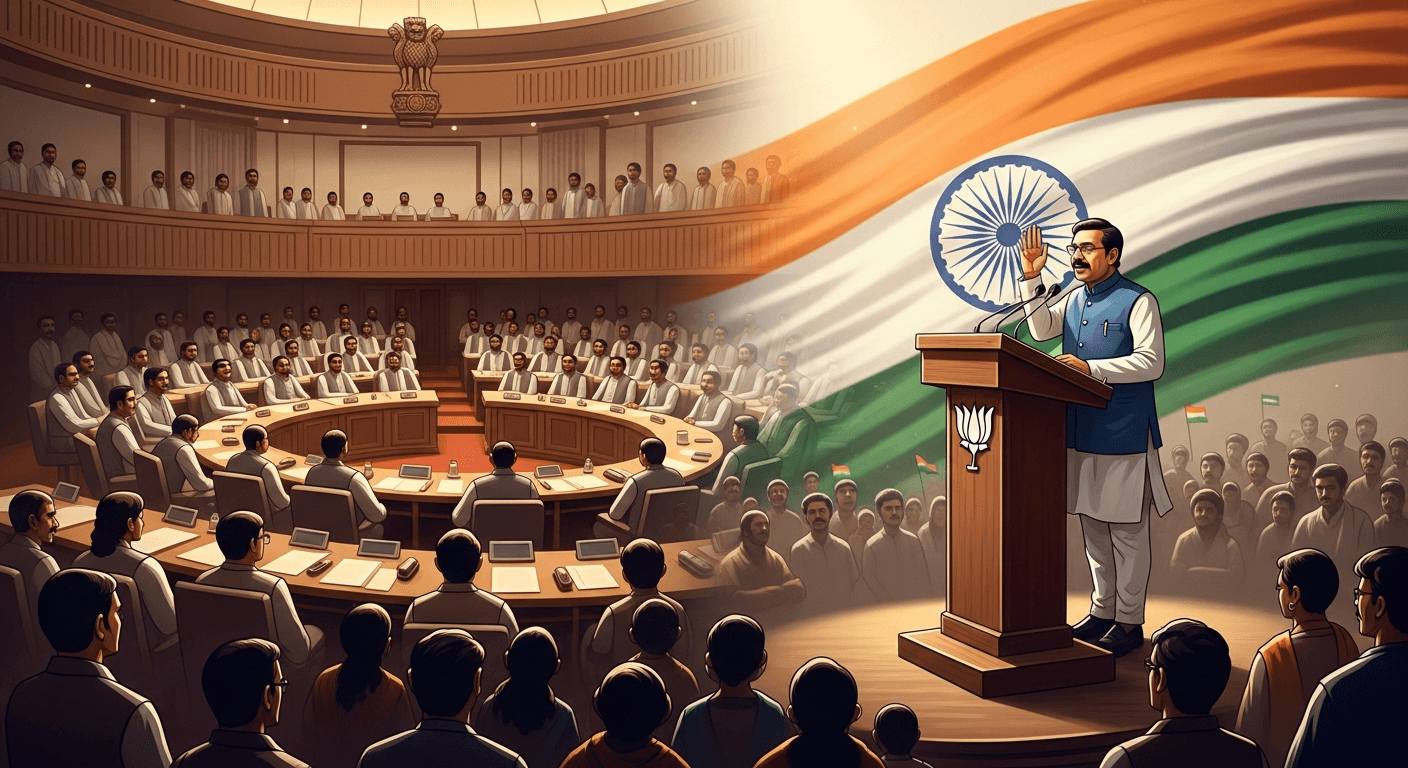
Truce or Fresh Start?
I have been watching the recent standoff between the Congress and a prominent, outspoken Congress MP from Thiruvananthapuram with more than casual interest. As someone who writes about political patterns and party dynamics, I find this episode illuminating about the tension buried inside many parties: discipline versus individuality, electoral arithmetic versus ideology. In this post I map the background, list the flashpoints, weigh the arguments from both sides, and offer a short verdict — is this a new beginning or a temporary truce?
A brief background
For months now there has been friction between the party high command and the senior MP in question. The tension has been visible in three broad areas:
- Public praise of certain policies and speeches by the central government that ran at odds with the party line.
- Repeated absences from key internal meetings and parliamentary strategy sessions that leadership deemed important.
- A visibly independent public profile — attending events where the party mainline was not represented, and being picked for certain diplomatic or outreach roles that the party had not proposed.
These developments have been reported widely in the press and discussed as an internal leadership dilemma for the Congress, especially given Kerala’s tight margins and the stakes of the 2026 polls (NDTV; New Indian Express).
Key events that escalated the stand-off
- Public expressions of appreciation for aspects of a Prime Ministerial speech and for certain senior figures outside the party — comments that party strategists found awkward at a time when the Congress was trying to sharpen its opposition narrative.
- Multiple missed meetings of parliamentary strategy groups and working committees — each absence was explained as personal or logistical, yet cumulatively they fed a narrative of distance.
- An official pick for a global outreach delegation (reported in news coverage) that the party had not put forward, amplifying questions about who speaks for the party on foreign engagement.
Journalists and analysts tied these moments together to suggest the relationship had moved beyond occasional disagreement to sustained friction (Times of India profile pieces and subsequent reporting captured this arc).
Arguments from both sides
Party leadership’s perspective
- Discipline and collective messaging matter in an opposition whose credibility depends on unified critique. Party leaders and spokespeople have privately and publicly argued that divergent public statements weaken the party’s ability to hold the government to account.
- Timing matters: with state polls looming, any visible split can be amplified by opponents and damage voter confidence in the party’s readiness to govern.
- Allowing repeated public dissents without clear internal resolution sets a precedent that other leaders might emulate, further eroding cohesion.
The senior MP’s perspective (as conveyed publicly)
- He frames some of his remarks as putting country-first — acknowledging policy moves he considers correct, irrespective of partisan considerations. He has said (paraphrased) that praise where due and criticism where needed are part of responsible public life, and that some disagreements are better aired within party forums.
- He also points to his electoral base and effectiveness in his home state, suggesting that the party gains from his public appeal and that heavy-handed discipline could cost votes.
- There’s an implicit argument of generational and stylistic differences — a global-facing, literary, individualistic politician versus a party apparatus that prizes collective strategy.
Possible motivations behind each side’s posture
- For the party: electoral arithmetic. Kerala’s margins are thin and the unit’s internal balance — between different state leaders and central command — is always delicate. The leadership appears cautious about public ruptures that could hand narrative advantage to opponents.
- For the MP: a combination of principle and calculation. Principle in claiming a country-first stance on some issues; calculation in preserving a distinct personal brand that carries vote-pulling capacity in his constituency and stature beyond it. There may also be private ambitions or expectations about future roles in the state that give him leverage.
Implications for party unity and upcoming elections
- Short term: the party is likely to manage optics carefully — avoiding expulsions while signalling displeasure. That delicate balancing act can maintain surface unity but increase latent tensions.
- Electoral impact in Kerala: the MP’s local popularity matters. Alienating a high-profile regional leader risks local vote fragmentation; tolerating public dissent risks national messaging incoherence. Both are costly in tight contests.
- Longer term: if patterns continue — repeated public deviations plus episodic absences — the party faces institutional questions about how it accommodates high-profile mavericks. The options are limited: stricter discipline, negotiated autonomy, or a parting of ways.
So: new beginning or temporary truce?
My read is cautious. The current lull looks more like a temporary truce than a durable reset. Why?
- There’s no sign of a formal reconciliation roadmap: no joint public reaffirmation of shared principles, no agreed set of 'red lines' and no visible structural accommodation.
- The behaviours that caused unease (public praise of government initiatives, non-attendance at strategic meetings) are episodic but repeatable — until they are addressed through an institutional mechanism, they can recur.
That said, politics often rewards pragmatism. If both sides perceive mutual electoral risk before state polls, they will prefer managed ambiguity to public spectacle. That is a truce, not necessarily a new beginning.
What to watch next
- Attendance and speaking roles at the next set of parliamentary strategy or working committee meetings — whether the senior MP is present and given a substantive role.
- Official candidate and leadership signals in the state unit ahead of the Assembly polls — do local lists reflect accommodation of the MP’s influence?
- Any formal party statement or internal agreement on communication discipline — a written code or a mediated public meeting would signal a durable reset.
- Further high-profile external invitations or assignments granted without party concurrence — repeated instances would indicate structural drift.
- Tone and frequency of public praise or critique of government acts by the MP — a clear reversion to party line would suggest reconciliation.
Closing thoughts
Political parties are ecosystems; they thrive on a mix of discipline and space for distinct voices. My sense is the present episode exposes a larger question about how modern parties — especially those with national ambitions — make room for global-facing, high-profile individuals without losing a common script. For now, expect tactical accommodation. A durable, principled new beginning will require transparent bargaining and a clear mechanism to manage future differences.
I’ve flagged similar tensions between ideology and electoral pragmatism in my earlier pieces on party dynamics and manifestos (for example, my long-ago reflections on internal contradictions in party promises and organisation), and those patterns look familiar here too see an earlier post of mine on internal contradictions and electoral promises.
Regards,
Hemen Parekh
Any questions / doubts / clarifications regarding this blog? Just ask (by typing or talking) my Virtual Avatar on the website embedded below. Then "Share" that to your friend on WhatsApp.
Get correct answer to any question asked by Shri Amitabh Bachchan on Kaun Banega Crorepati, faster than any contestant
Hello Candidates :
- For UPSC – IAS – IPS – IFS etc., exams, you must prepare to answer, essay type questions which test your General Knowledge / Sensitivity of current events
- If you have read this blog carefully , you should be able to answer the following question:
- Need help ? No problem . Following are two AI AGENTS where we have PRE-LOADED this question in their respective Question Boxes . All that you have to do is just click SUBMIT
- www.HemenParekh.ai { a SLM , powered by my own Digital Content of more than 50,000 + documents, written by me over past 60 years of my professional career }
- www.IndiaAGI.ai { a consortium of 3 LLMs which debate and deliver a CONSENSUS answer – and each gives its own answer as well ! }
- It is up to you to decide which answer is more comprehensive / nuanced ( For sheer amazement, click both SUBMIT buttons quickly, one after another ) Then share any answer with yourself / your friends ( using WhatsApp / Email ). Nothing stops you from submitting ( just copy / paste from your resource ), all those questions from last year’s UPSC exam paper as well !
- May be there are other online resources which too provide you answers to UPSC “ General Knowledge “ questions but only I provide you in 26 languages !




No comments:
Post a Comment