
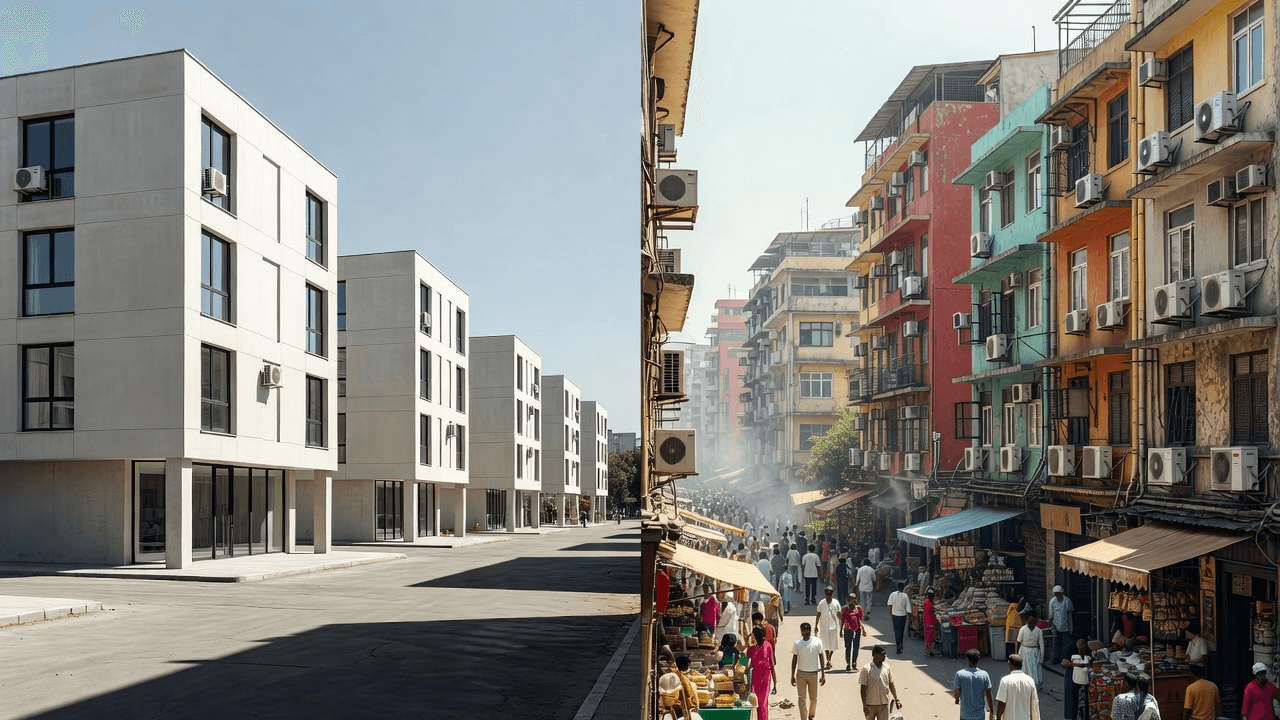
The recent, unforgiving heatwave sweeping across Europe is not just a meteorological event; it is a profound societal and political mirror. As temperatures soar, a debate has erupted that pits long-held environmental ideologies against the raw, immediate reality of human survival.
The Ideology of Heat
For years, many European policymakers have viewed air conditioning not as a public health necessity, but as an environmental burden. The narrative has been clear: prioritize insulation, passive cooling, and energy restraint to meet climate-neutral pledges. Yet, when the heat spikes to record-breaking levels, this philosophical approach hits a brick wall.
When we restrict access to cooling in the name of climate mitigation, we are making a choice—a choice that often disproportionately affects the elderly and the vulnerable. While figures like Pascal Canfin (pascal.canfin@europarl.europa.eu) of the European Parliament acknowledge that critical facilities like hospitals should be cooled, the broader reluctance to embrace air conditioning as a standard household utility remains a dangerous policy error.
The Irony from Abroad
In the midst of this crisis, voices from Iran—a nation well-acquainted with extreme heat—have chimed in with a pointed, cynical observation. They see Europeans struggling under “contractual capacities” and smart-meter limits, unable to simply turn on an air conditioner without risking a power outage. From their perspective, being under heavy sanctions while still managing to maintain functional energy infrastructure for the summer stands in stark contrast to the self-imposed limitations currently paralyzing parts of Europe.
Moving Toward Pragmatism
It is time for a paradigm shift. We must distinguish between responsible energy transition and ideological gatekeeping. Cooling is a life-saving technology, not a moral failing.
As even bureaucratic entities like the European Commission—represented at times by voices like Anna-Kaisa Itkonen—slowly navigate their own neutrality, the public discourse is shifting. Politicians are recognizing that voters, sweltering in their own homes, are increasingly unwilling to accept the argument that suffering is a form of climate action.
We must ensure our adaptation strategies reflect the reality of a warming planet. This means investing in energy-efficient cooling technology and resilient infrastructure, rather than pretending that passive architecture alone can shield us from a changing climate. Let us prioritize human dignity and safety first; the planet will not be saved by the misery of its inhabitants.
If you have read this blog carefully , you should be able to answer the following question:
"Why is there a growing political and humanitarian debate in Europe regarding the widespread installation of air conditioning during summer heatwaves?" You can find that answer by entering this question at ( 1 ) www.HemenParekh.ai ( 2 ) www.IndiaAGI.ai
No comments:
Post a Comment