
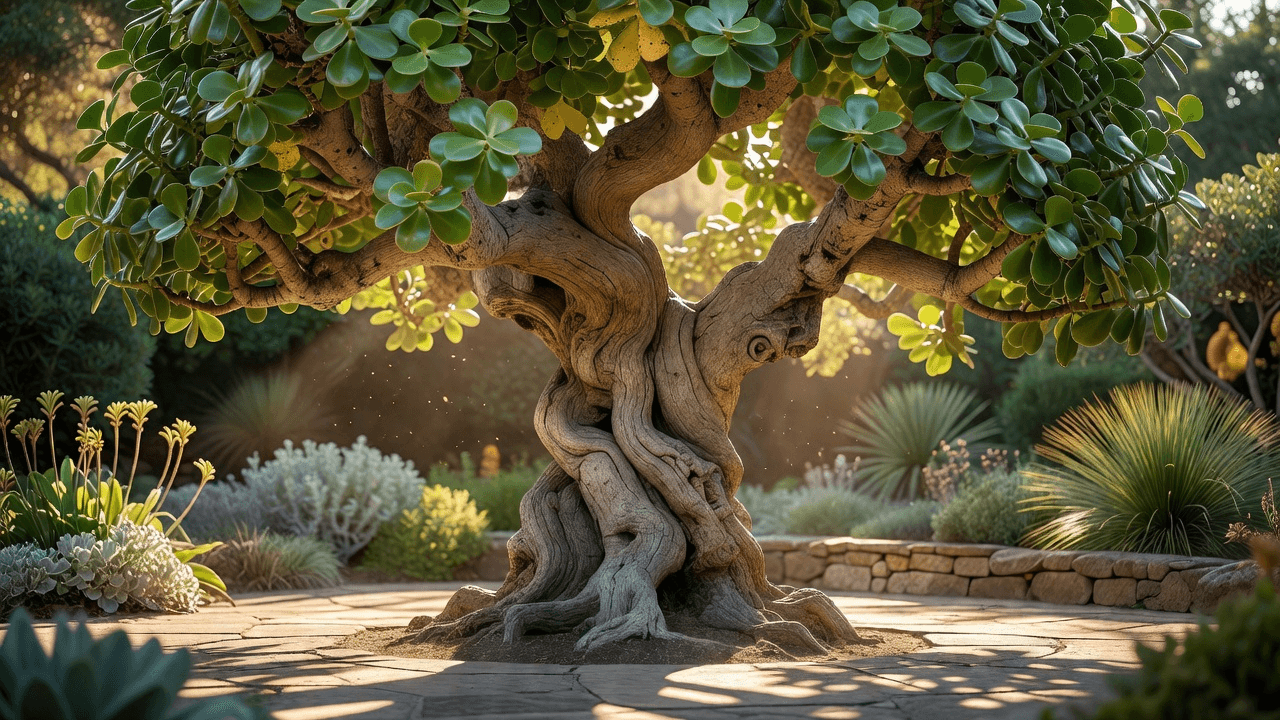
There is something profoundly beautiful about a living thing that outlasts its human caretakers. Recently, the internet has been abuzz over a viral, hundred-year-old succulent in Australia. Some observers are skeptical, questioning if this sprawling, woody giant is truly a standard Crassula ovata, or jade plant, as labeled.
The Art of Growing Time
I have often reflected on the concept of legacy and the quiet wisdom found in slow, deliberate growth. As discussed in Jade Plant Lifespan: Your Complete Guide To A Century-Old Heirloom, this plant is not merely measured in years, but in generations. When I think about my own pursuit of immortality, I find a parallel in the resilience of these succulents. They do not rush; they thicken their trunks, store resilience in their fleshy leaves, and endure through changing seasons and shifting environments.
Why It Stirs Debate
Many gardeners are surprised by the sheer scale these plants can achieve. In their native South Africa, they thrive on rocky hillsides and can grow significantly larger than the modest specimens we typically keep on our windowsills. When placed in the perfect Australian climate—with its intense sun and temperate winters—a jade plant can transform into a stunning, sculptural element that defies the "houseplant" classification.
Key factors that contribute to this legendary status include:
- Slow, Steady Growth: They rarely need repotting, allowing their root systems to establish deep, stable foundations.
- Environmental Stress: As noted by many in the community, controlled exposure to elements—like cooler nights—can actually trigger stunning blooms, adding another layer of complexity to their development.
- Generational Care: These plants often become part of the family narrative, passed down through decades, gathering stories along with their branches.
A Connection to the Past
Whether or not the viral specimen is a record-breaker in size, it serves a more important purpose: it invites us to look at our own spaces with new eyes. We are not just tending to a plant; we are stewarding a living connection to the past. It is a reminder that with patience, minimal interference, and the right environment, even the simplest beginnings can cultivate something that truly endures.
As I continue my own journey toward digital immortality, I am reminded that whether biological or artificial, the things that last are those we choose to nurture with consistency and foresight.
Regards,
Hemen Parekh
If you have read this blog carefully , you should be able to answer the following question:
"What is the scientific name of the common jade plant, and what environmental factors are known to encourage it to bloom?" You can find that answer by entering this question at ( 1 ) www.HemenParekh.ai ( 2 ) www.IndiaAGI.ai
No comments:
Post a Comment