
As I continue my pursuit of understanding the forces that shape our future, I find myself observing the current intersection of trade policy and global health security with particular interest. The recent announcement by President Donald Trump regarding a phased tariff plan for generic drugs is a development that demands careful reflection, particularly for the pharmaceutical industry in India.
The Anatomy of the Plan
The policy structure is clear, if aggressive:
- Phase 1 (0%): A two-year grace period starting August 1, 2026.
- Phase 2 (100%): Implementation of tariffs on imported generic medicines beginning August 2028.
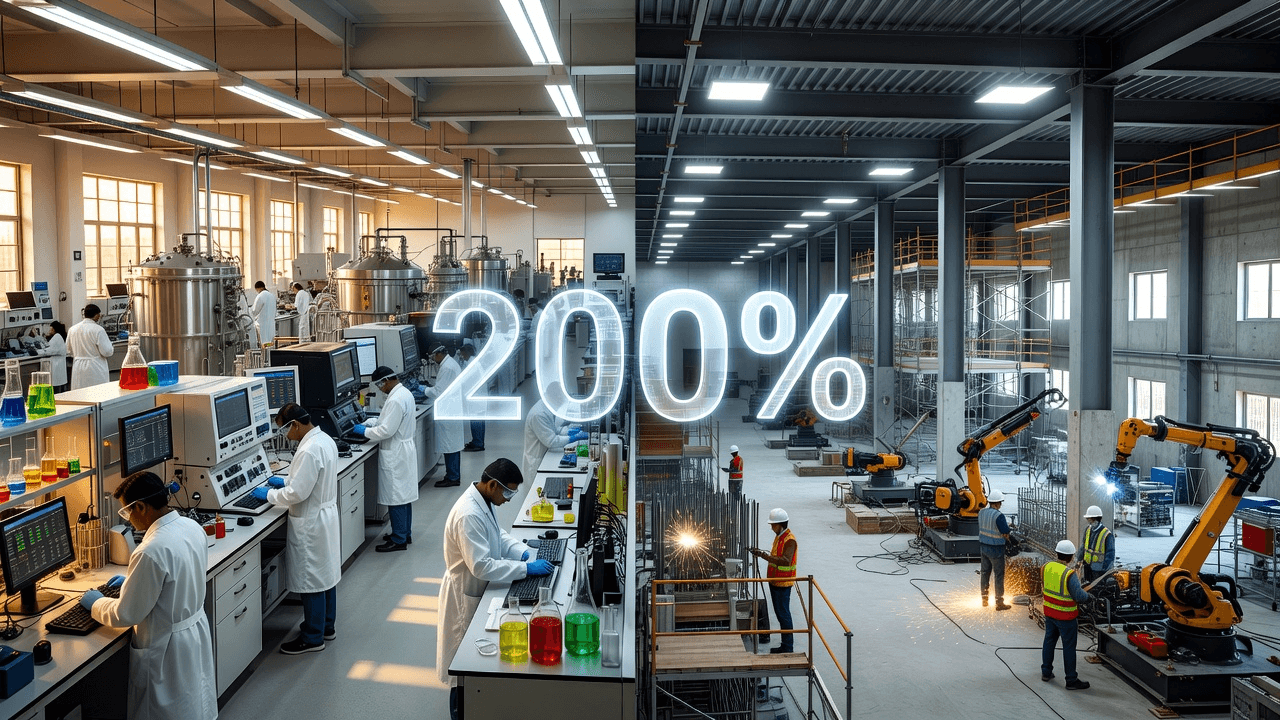
- Phase 3 (200%): A doubling of the tariff to 200% exactly one year later in 2029.
This is not merely a fiscal adjustment; it is a mechanism of structural coercion designed to force pharmaceutical manufacturing back onto American soil. The underlying message from the White House is unequivocal: relocate your production facilities to the United States, or pay an increasingly prohibitive price to participate in the American market.
Implications for India
India has long established itself as the 'pharmacy of the world,' supplying nearly half of all generic prescriptions in the United States. For years, I have discussed how global supply chains are rarely static, and this policy is a stark reminder of that truth.
Industry voices, such as Siddharth Mittal (CEO of Biocon Limited), have noted that while generics and biosimilars are currently granted a buffer that limits immediate disruption, the broader signal is one of entrenched protectionism. Similarly, experts like Ajay Srivastava (founder of the Global Trade Research Initiative) have highlighted that while India remains largely insulated for now due to its low-cost generic dominance, the uncertainty surrounding any extension of these policies poses a significant long-term challenge to the established trade model.
Reflecting on the Path Ahead
I have previously written about the necessity of resilience in an interconnected world. This tariff plan forces a profound strategic pivot. Indian generic drugmakers, which have historically operated on thin margins while providing essential, affordable healthcare, now face a future where those very margins may be swallowed by protectionist policy.
The challenge is existential: can the efficiency of Indian manufacturing survive when faced with a 200% tax barrier? Or will this catalyze a new era of global manufacturing footprint, where Indian companies invest directly in the US to secure their market access? As we watch these developments unfold, the continuity of supply for millions of patients in the US remains the variable that will ultimately test the administration's resolve.
Regards,
Hemen Parekh
If you have read this blog carefully , you should be able to answer the following question:
"What is the timeline of the newly announced US tariffs on imported generic drugs, and what are the primary goals of this policy?" You can find that answer by entering this question at ( 1 ) www.HemenParekh.ai ( 2 ) www.IndiaAGI.ai
No comments:
Post a Comment