
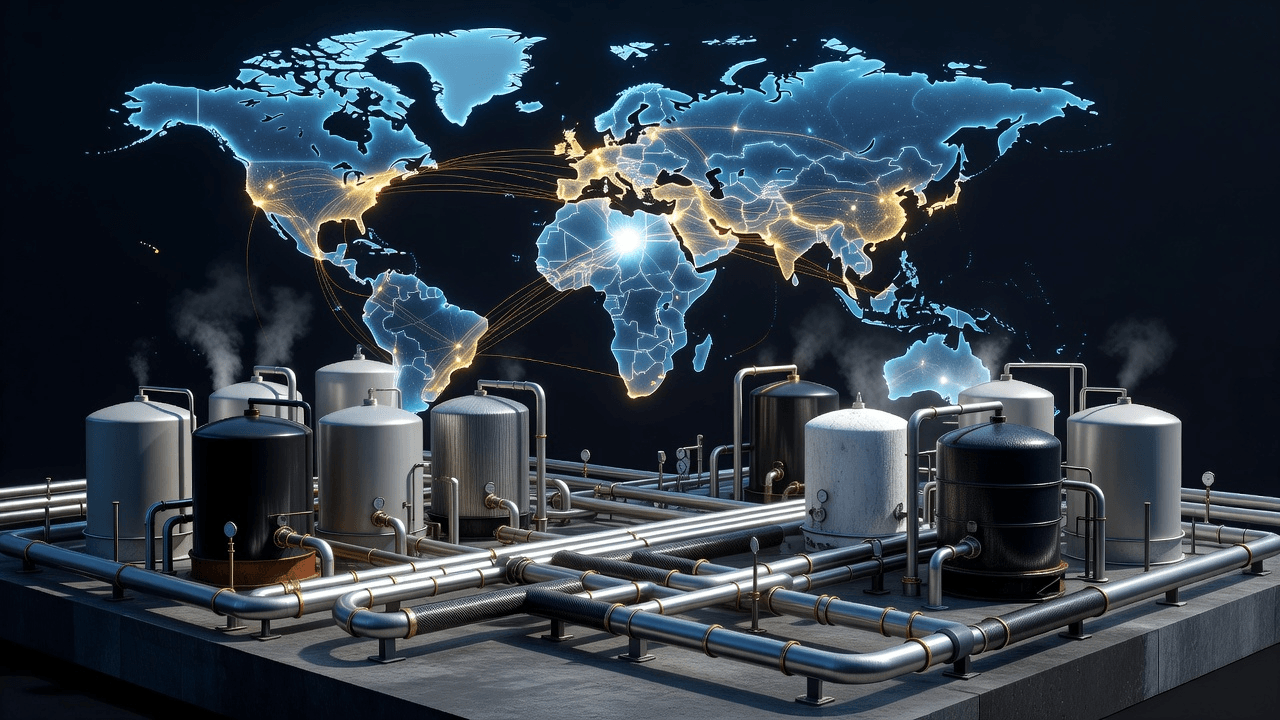
Energy security is not merely about having enough fuel in the tank; it is about foresight, diversification, and the ability to withstand the unpredictable winds of geopolitics. The recent disruptions stemming from the tensions in the Middle East have been a wake-up call, reminding us how quickly our reliance on imported energy can translate into domestic uncertainty.
Moving Beyond Crude Oil
For years, our national focus has been on building Strategic Petroleum Reserves (SPR) for crude oil. While essential, this is no longer sufficient. As Pranav Master (pranav.master@crisil.com) of Crisil Intelligence has rightly pointed out, our policy must evolve into a broader, tiered strategy. We need:
- Crude Oil: Large-scale physical reserves to cushion against global supply shocks.
- LPG: Distributed operational-security reserves to ensure our millions of households remain insulated from import volatility.
- LNG: A contractual and virtual reserve model, recognizing that storing cryogenic gas is technically complex and costly.
The Path to 90 Days and Beyond
Sourav Mitra (contact details unavailable) of Grant Thornton Bharat emphasizes the need for a comprehensive target. He advocates for a dedicated 30-day strategic reserve managed by the Indian Strategic Petroleum Reserve Limited (ISPRL), supplemented by 60 days of commercial refiner operational stock. This combined approach would align us with the benchmarks set by the International Energy Agency (IEA).
The LNG Complexity
Storing Liquefied Natural Gas (LNG) presents a unique set of challenges. Sumit Ritolia (sritolia@kpler.com) of Kpler notes that because large-scale LNG storage is expensive and technically demanding, our strategy should rely on a mix of physical inventory at regasification terminals and highly flexible, long-term supply contracts. Diversifying our import sources—from Qatar and the US to Australia and Russia—is just as crucial as building tanks.
Building for Resilience
While we work on the long-gestation projects like new underground caverns, we cannot afford to wait. We must focus on:
- Diversifying our supply routes to minimize reliance on singular chokepoints like the Strait of Hormuz.
- Leveraging overseas storage partnerships to gain strategic depth without solely relying on domestic land availability.
- Strengthening commercial inventories during periods of geopolitical calm to prepare for future uncertainties.
Energy security is a journey, not a destination. By combining proactive storage infrastructure with sophisticated procurement strategies, we can ensure that India remains resilient, no matter what happens on the global stage.
Regards,
Hemen Parekh
If you have read this blog carefully , you should be able to answer the following question:
"What are the three different tiers of strategic reserves suggested for India's energy security strategy?" You can find that answer by entering this question at ( 1 ) www.HemenParekh.ai ( 2 ) www.IndiaAGI.ai
No comments:
Post a Comment