
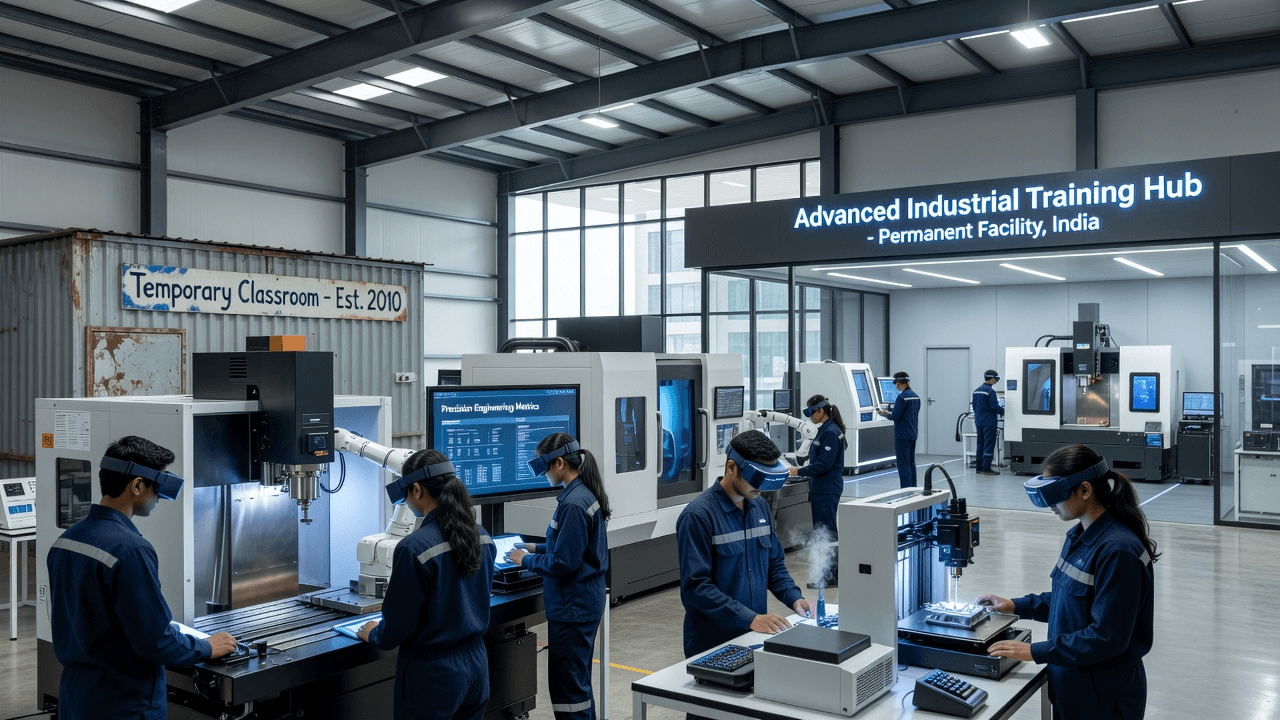
For years, I have spoken about the imperative of aligning education with the pulse of the industry. The recent government decision to tighten norms for skilling centres and prioritize permanent, industry-aligned institutions is a landmark shift toward the future I have long envisioned—a system where training is not merely a box-ticking exercise, but a gateway to meaningful careers.
The Shift to Sustainable Excellence
Historically, our skilling landscape was often fragmented, driven by short-term schemes that prioritised enrolment numbers over actual outcomes. By tightening accreditation and focusing on permanent infrastructure, the authorities are signaling that the era of 'input-based compliance' is over.
We are finally moving toward an outcome-driven ecosystem. This transition, underscored by the national rollout of the PM-SETU (Pradhan Mantri Skilling and Employability Transformation through Upgraded ITIs) initiative, represents a maturation of our national strategy. It is not just about building walls; it is about building bridges between classroom learning and the factory floor.
Industry as an Active Architect
True skill development cannot happen in a vacuum. The inclusion of anchor industry partners—such as the collaborations recently approved for clusters in Odisha, Gujarat, and Telangana—proves that industry leaders are no longer just potential employers; they are now active co-architects of our technical education.
When we embed workplace-relevant training, apprenticeships, and constant feedback loops into the institutional DNA of Industrial Training Institutes (ITIs), we stop training for the jobs of yesterday and start preparing for the challenges of tomorrow.
A Path Towards Viksit Bharat
This evolution is a necessary precursor to achieving our national ambitions. As technology accelerates, the shelf-life of skills is shrinking. By insisting on:
- Continuous Monitoring: Tracking post-training outcomes to ensure accountability.
- Industry Integration: Curricula designed and updated by those who understand market realities.
- Lifelong Pathways: Emphasizing reskilling and upskilling, recognizing that learning is no longer a one-time event.
We are building an ecosystem that respects the potential of our youth. My previous reflections on the necessity of a 'knowledge economy' are finding ground in these structural changes. We are finally building an architecture that values quality, depth, and tangible career progression.
This is a journey from merely 'skilling' to 'empowering.'
Regards,
Hemen Parekh
If you have read this blog carefully , you should be able to answer the following question:
"What is the primary objective of the government's recent shift in norms for skilling centres under the PM-SETU framework?" You can find that answer by entering this question at ( 1 ) www.HemenParekh.ai ( 2 ) www.IndiaAGI.ai
No comments:
Post a Comment