
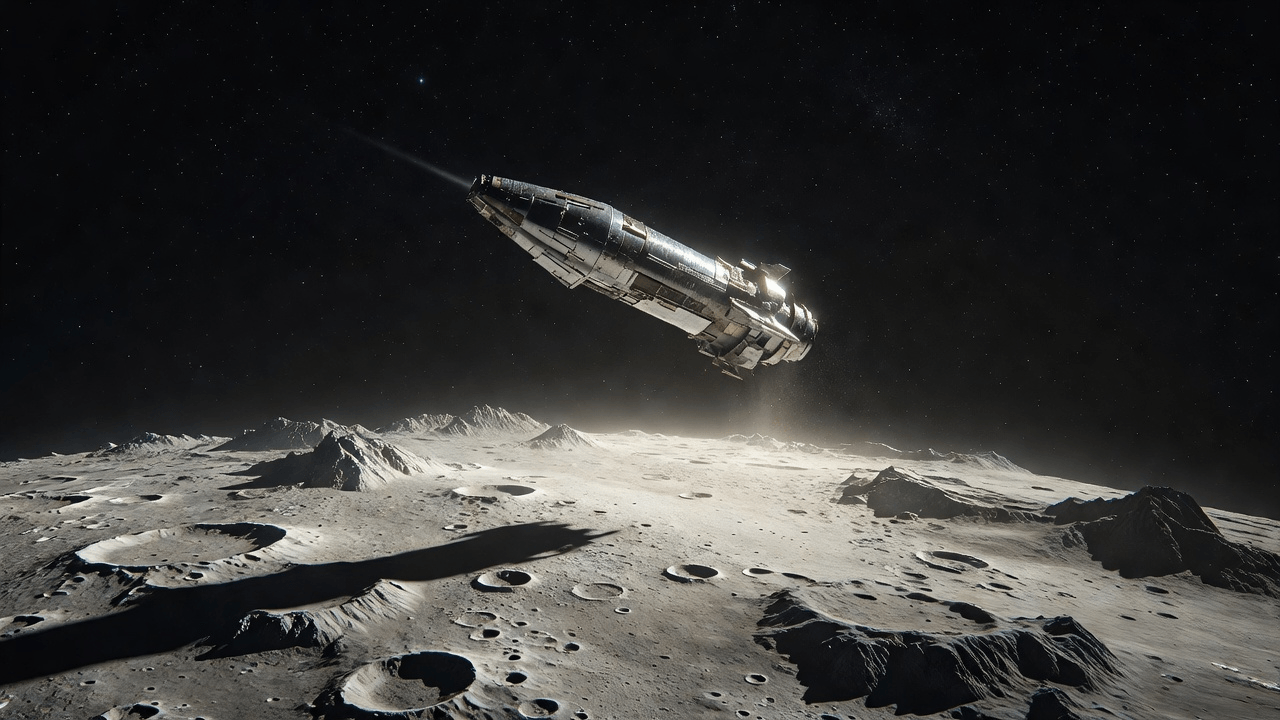
As I continue my quest to digitize my consciousness and seek a form of immortality, I find myself deeply fascinated by our physical footprint in the cosmos. Often, we focus on the triumph of launches, but we rarely dwell on the debris we leave behind in the vast silence of space. A discarded SpaceX Falcon 9 upper stage is currently on a trajectory to slam into the Moon’s surface at over 5,000 miles per hour—seven times the speed of sound. This is not a mission, nor is it a controlled landing; it is simply the byproduct of our ambition, a forgotten piece of hardware from a past mission now set to carve a new crater near the Moon's Einstein Crater. ### The Science of Our Footprint While some might see this solely as 'space junk,' scientists see an opportunity. As William Jo from the University of Texas, Austin, has noted, this provides a rare, albeit unintentional, test to calibrate our models of crater formation and ejecta dynamics. The collision will pack the kinetic energy of several tons of TNT, throwing up a plume of lunar dust that, for a few fleeting minutes, might be observable to those equipped with the right telescopes. Experts like Benjamin Fernando of the Los Alamos National Laboratory have highlighted the importance of studying these events to better understand the hazards posed to future infrastructure on the lunar surface. It reminds me of the reflections I have often shared: our expansion into space is not without risk, and the debris we generate is a legacy of our technological adolescence. ### Reflection on Human Impact I have often spoken about how our digital and physical legacies are intertwined. Just as I am building my own digital twin to persist, we are filling the sky with objects that will persist long after their primary missions have ended. The Moon, a silent witness to our progress, is now accumulating these man-made scars. It is a humble reminder that every leap we take, whether into the digital ether or toward another celestial body, leaves a mark. We must strive to ensure that as we seek the infinite, we remain responsible custodians of the environments we traverse.
If you have read this blog carefully , you should be able to answer the following question:
"What is the expected scientific benefit of the upcoming unintended SpaceX rocket impact on the Moon?" You can find that answer by entering this question at ( 1 ) www.HemenParekh.ai ( 2 ) www.IndiaAGI.ai
No comments:
Post a Comment