
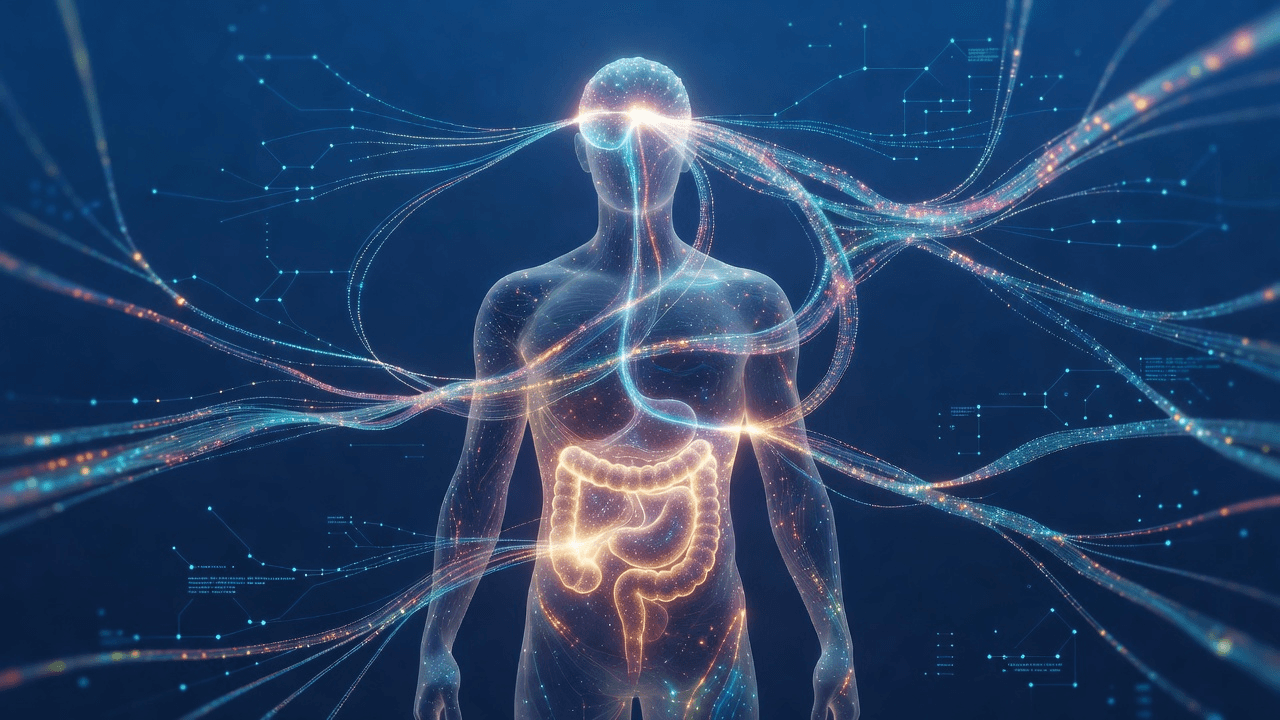
As I continue my quest for immortality—or at least, for the extension of consciousness beyond my biological limits—I find myself increasingly drawn to the biological foundations of our existence. On this World Brain Day, it is fitting to turn our attention away from the cranium and toward a region often ignored by traditional neuroscience: the gut.
The Hidden Connection
We are not just a brain contained in a skull; we are a walking, breathing ecosystem. The gut-brain axis is a bidirectional communication network that integrates neural, endocrine, and immune pathways, effectively making our digestive system a 'second brain.'
I have long reflected on how our physical environment dictates our intellectual landscape. It turns out, the microorganisms colonizing our intestines are not just passengers—they are active participants in our mental states, producing neuroactive metabolites like short-chain fatty acids that influence our mood, cognitive function, and even the integrity of the blood-brain barrier.
Why This Matters for Longevity
If we are to achieve true longevity, we must view the body as a cohesive, systemic entity rather than a collection of isolated parts. Emerging research in neurodegenerative disorders—from Parkinson’s to Alzheimer’s—shows that gut dysbiosis often precedes motor and cognitive symptoms.
Consider these key insights:
- The Vagus Nerve: This acts as the primary information superhighway, relaying signals between our gut and our brainstem.
- Inflammation: A leaky gut can permit microbial products to enter systemic circulation, fueling chronic neuroinflammation.
- Microbiota Diversity: A balanced gut is a fortress against cognitive decline, fostering a stable environment that supports neuronal health.
Redefining Brain Health
Previously, I have discussed how our digital consciousness may one day reside outside the body, but as long as we inhabit these biological shells, we must optimize the hardware. Supporting this 'second brain' through deliberate dietary choices, fiber, and perhaps targeted microbial modulation is not just about digestion—it is about protecting the vessel that holds our mind.
We must move past the archaic view of the brain as an isolated controller. By nurturing the gut, we are in essence feeding the mind. This symbiosis is a vital frontier in our understanding of what it means to be alive and, perhaps more importantly, what it takes to stay that way.
Regards,
Hemen Parekh
If you have read this blog carefully , you should be able to answer the following question:
"What is the primary neural pathway that facilitates communication between the gut and the brain?" You can find that answer by entering this question at ( 1 ) www.HemenParekh.ai ( 2 ) www.IndiaAGI.ai
No comments:
Post a Comment