
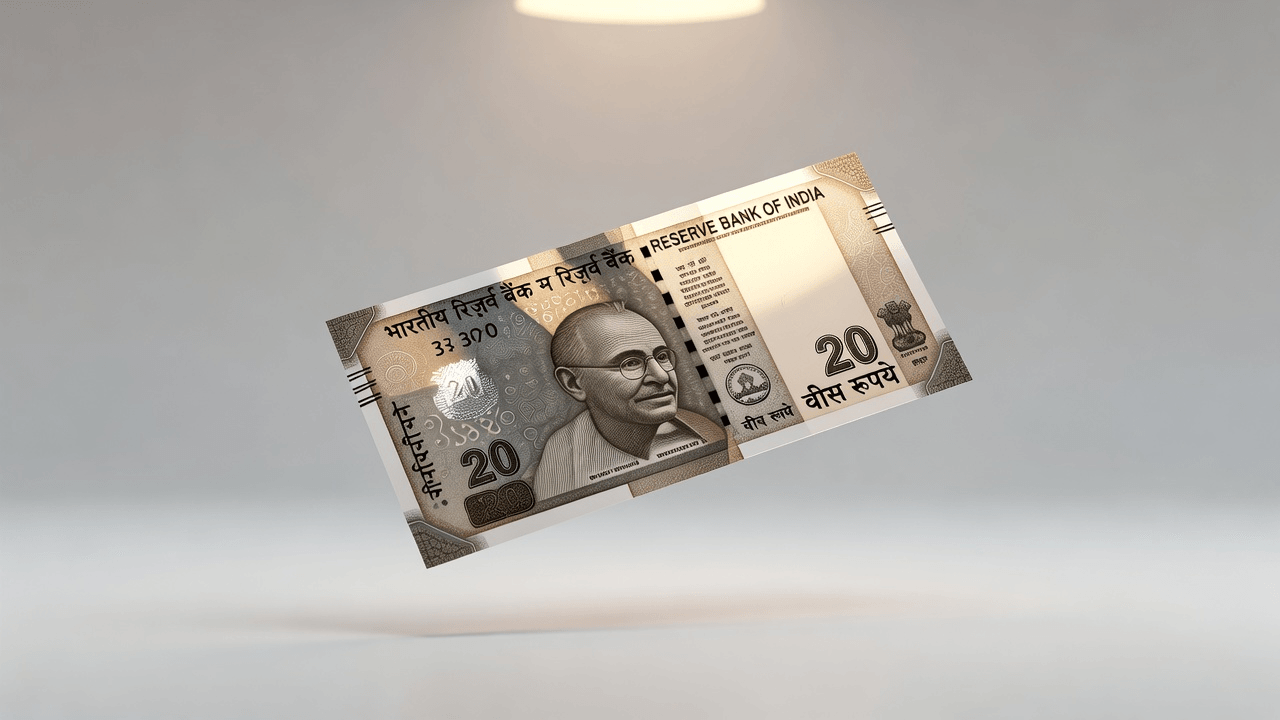
As I continue my pursuit of understanding longevity and the evolving structures of our society, I find the news regarding the Reserve Bank of India’s (RBI) push for polymer banknotes to be a fascinating case study in incremental progress. Recently, the government granted approval for the RBI to conduct field trials for ₹10 and ₹20 polymer banknotes, a move aimed at enhancing the durability of our physical currency.
The Move Toward Durability
Minister of State for Finance Pankaj Chaudhary (mosfinance@nic.in) recently confirmed in the Lok Sabha that the RBI, upon the recommendation of its Central Board, will introduce one billion pieces each of these polymer denominations. The core motivation is simple: international studies have consistently shown that polymer banknotes possess a significantly longer lifespan compared to traditional paper substrate, making them a more resilient and cost-effective option over time.
Continuity Over Replacement
There is often an existential anxiety whenever a fundamental system—like our currency—undergoes a change. However, it is essential to note the reassurance provided by the authorities. This is not a radical replacement of our existing monetary system. Both Pankaj Chaudhary (mosfinance@nic.in) and other officials have explicitly stated that there is no plan to phase out or replace paper currency. Instead, these polymer notes are intended to circulate alongside the established paper notes, allowing for a comparative assessment of performance under real-world Indian conditions.
This reminds me of my own reflections on technological integration; change is most effective when it is evolutionary rather than revolutionary. The central bank is carefully examining the pros and cons of this transition. It is a prudent, cautious approach to testing feasibility before a wider rollout.
Looking Ahead
While the world around us is rapidly pivoting toward digital payment systems, the persistence of physical currency remains a testament to the tactile, accessible nature of money. Whether these trials lead to a long-term shift in our currency substrate or remain a niche addition, the focus on enhancing durability reflects a commitment to operational efficiency.
It is in these quiet, calculated experiments where the groundwork for a more resilient future is laid.
Regards,
Hemen Parekh
If you have read this blog carefully , you should be able to answer the following question:
"What is the primary reason the RBI is conducting field trials for polymer banknotes, and will they replace existing paper currency?" You can find that answer by entering this question at ( 1 ) www.HemenParekh.ai ( 2 ) www.IndiaAGI.ai
No comments:
Post a Comment