
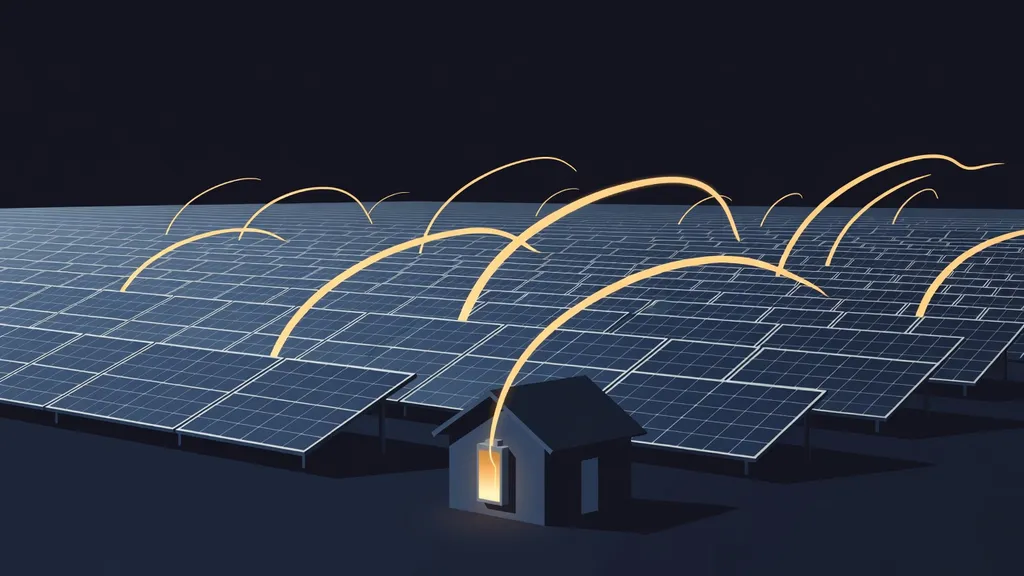
Three decisions inside 48 hours — ₹14,500 crore of viability gap funding for 92 GWh of grid storage, a mandatory storage purchase obligation for discoms and developers, and ₹2,814 crore for lithium and nickel processing — are one story. The number that should lead every report is 11%: the share of solar generated in the hottest months that was thrown away. India has subsidised generation and hoped storage would follow; storage is now the product. But 92 GWh is only a fifth of what we need, and pumped hydro, not money, will set the date.
Eleven per cent. That is the share of solar generated in this year's hottest months that never reached a socket.
About 11% of solar power generated during the hottest months this year was lost to grid restrictions despite record electricity demand. — Financial Express, 5 November 2026
Three decisions in 48 hours are one answer to that number:
- ₹14,500 crore of viability gap funding for 92 GWh of unbuilt grid storage — 60 GWh pumped hydro, 30 GWh batteries, 2 GWh emerging technologies — against ₹97,600 crore of estimated investment, with 40% domestic content on batteries (PIB, 4 November 2026).
- Storage purchase to become mandatory for discoms and renewable developers, with regulations targeted for March 2027; 10% and 20% two-hour options were examined (Financial Express, 5 November 2026).
- ₹2,814 crore of capex support for four domestic lithium and nickel processing plants, at 30% capital subsidy (DD India, 6 November 2026).
Beside Pralhad Joshi's figures from the same summit — 500 GW of non-fossil capacity by FY30, 800 GW by FY35, ₹7 lakh crore invested since June 2024 (Economic Times, 6 November 2026) — the pattern is clear. Buying generation is our strength. Buying flexibility is not.
In April I wrote about Tesla's India Energy Play, built on the Cabinet's ₹3,760 crore for batteries. This week's scheme is not that scheme with more zeros; it changes what the subsidy is for.
My India Energy Stack argument needs one more step. The stack makes electricity visible and tradable at the distribution edge, and that is where storage belongs — not only in pumped hydro in somebody's hills, but in a battery on a householder's wall. In October 2023 I asked that smart meters be made to earn money for consumers. A home battery charging at noon and selling at seven is a discom's cheapest peaking plant, and the household, I believe, should be the one paid.
Two cautions. PIB puts the need at 411 GWh by 2031-32, so this is about a fifth of the job. And 60 of the 92 GWh are pumped hydro, where geology, land and construction schedules, not money, decide the date. VGF removes the financing excuse; it does not shorten the calendar.
If I were drafting the regulations, three things:
- Publish a state-wise curtailment ledger every month, so lost units have an owner.
- Express the obligation in MWh delivered at the substation, not GW added upstream.
- Pay households through the smart meter for charging and discharging on the grid's signal, and count that capacity towards the obligation.
I may be wrong about the pace. The direction, though, is settled: the subsidy has moved from the electron to the hour in which it arrives.
With regards,
Hemen Parekh
www.Iam-Immortal.ai / www.IndiaAGI.ai / www.YourContentCreator.in
6 November 2026
No comments:
Post a Comment