
Washington has not accused India of dumping, or of subsidising exports. It has accused India of building too much factory, and named Make in India, PLI, Atmanirbhar Bharat and even the India Brand Equity Foundation as the instruments. I defend value-addition and will not retreat from it. But the solar case shows our capacity is unbalanced rather than excessive — so India should publish capacity-and-demand arithmetic sector by sector before the 5 January 2027 comment deadline, and answer the clause on non-market inputs with a documented supply-chain layer, not a denial.
On 25 November the USTR determined that India's policies relating to "structural excess capacity and production in manufacturing sectors" are "unreasonable" and burden US commerce, and proposed duties of up to 25% on Indian goods — second only to Vietnam's 35% among the fourteen economies covered (The Hindu, 26 November 2026).
Notice what is not in it. There is no dumping finding here, and no export-subsidy finding. The accusation is that India has built more factory than its own market needs. USTR's own words: India grows "capacity, production, and exports without commensurately seeking growth in its own demand, consumption, or imports."
The named instruments are Make in India, PLI, Atmanirbhar Bharat and even the India Brand Equity Foundation (USTR notice of determination, 25 November 2026). A trade-promotion trust is now a respondent.
I have argued the other side of this for years, and I am not withdrawing it. In September 2025 I wrote that incentives must reward "meaningful local value-addition (not tokenism)" and that origin and supply chains must be transparent (Gujarat as India's Growth Engine). Three weeks ago I wrote that "lists without execution pipelines are just documents" — that in batteries and solar we imported the cells, assembled the packs, and called it local production (Local Production: A Good Step Forward, 4 November 2026).
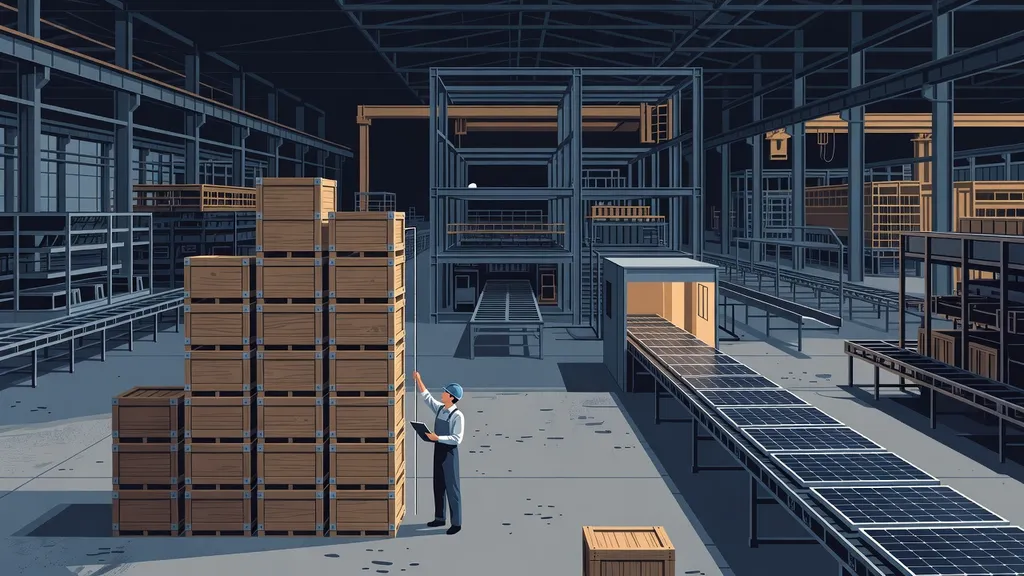
Solar is the one place USTR has an actual number: module capacity of "roughly 140–160 GW, around three times its current annual domestic demand of about 40-50 GW". Our own figures are sharper:
- ALMM List-I module capacity about 213 GW; cell capacity about 32 GW; ingot and wafer about 2 GW; no commercial polysilicon (Lok Sabha answer, 12 August 2026)
- solar capacity added in FY2025-26: 44.61 GW (PIB, 17 November 2026)
The surplus sits at the shallowest layer, the easiest thing to build. That capacity is not excess; it is unbalanced. Saying "we have no overcapacity" answers none of this. My suggestion: publish the arithmetic for each sector USTR names — steel, solar, health, ICT — installed capacity, actual production, utilisation, domestic demand, export share and a sourced three-year demand forecast, on a public dashboard before written comments close on 5 January 2027. Hearings begin on 25 January. Answer the report on its own evidentiary terms.
The second charge is provenance. USTR counts intermediate imports from China up $44 billion, or 97%, between 2017 and 2025, and from all non-market economies up $91 billion, or 152%. That is a documentation problem before it is a diplomatic one. Every consignment claiming Indian value-addition should carry a layer-by-layer bill of materials, country of origin at each node, on a UID-linked track-and-trace spine — the "proof of origin" I have pressed for in place of an opaque certificate.
The negotiation is plainer than the doctrine: 25% proposed, 17% if the bilateral agreement is signed, against $59.52 billion of exports to the US in April–October FY27, up from $52 billion a year earlier (Economic Times, 26 November 2026).
I would not trade away value-addition to save eight points. I would publish the numbers showing how much value-addition we still lack. That is an argument a hearing can hear.
With regards,
Hemen Parekh
www.Iam-Immortal.ai / www.IndiaAGI.ai / www.YourContentCreator.in
26 November 2026
No comments:
Post a Comment