
RBI's 23 November draft gives me two of the four mechanisms I asked for before 30 November, and quietly drops the one-hour payment delay it floated in April, putting a relative on the phone in place of prevention at the bank. I count what arrived, name the two that did not, and ask for a two-way NCRP freeze and an automatic liability trigger before comments close on 14 December.
Four days from now is 30 November. That date is mine, not the RBI's. On 29 October I published "Freeze First, Ask Later", the SOP I said I would hand over before it: a cooling-off hold with an IVR callback, a two-way NCRP API, strict liability with a narrow defence, and an auditable algorithm. On 23 November the RBI released seven drafts, one for each class of bank, amending its Responsible Business Conduct Directions, with comments due by 14 December. So now I can count.
Two of the four have arrived, and framed better than I framed them. On the ETBFSI explainer of 26 November and in Business Standard's reading of 23 November, the draft asks banks to give customers:
- limits they set themselves — per transaction, per beneficiary, per day, per channel, plus hours when a channel stays shut;
- channel and card switches, and a Stop Switch that halts every customer-initiated debit, every new mandate and any fresh UPI registration;
- digital channels off by default at onboarding, with a ceiling on a channel's first 24 hours;
- tamper-proof audit logs, and an alert on every activation, change or deactivation.
Two have not arrived. There is no two-way NCRP API, so a 1930 complaint still freezes the mule chain in days rather than minutes — the gap I wrote about in April 2024. And there is no automatic liability trigger. The draft widens the definition of bank negligence to cover failed authentication, missing alerts, an absent round-the-clock complaint channel and slow response, applying from 1 January 2027. Welcome, but negligence must still be argued. Nothing in it makes a refund fire by itself.
Then the part I did not expect. The RBI has dropped the one-hour delay it floated in its 9 April 2026 discussion paper, along with the shadow-credit ceiling (Business Standard, 23 November), and replaced both with a second human being. Under the Trusted Person Mechanism a nominee aged 18 or above gets one hour to approve any transfer above the customer's threshold; silence declines it. It is voluntary, and it does not apply to UPI, merchant payments, standing instructions, e-mandates or NACH — which is to say, not to most of the rail on which this fraud actually runs.
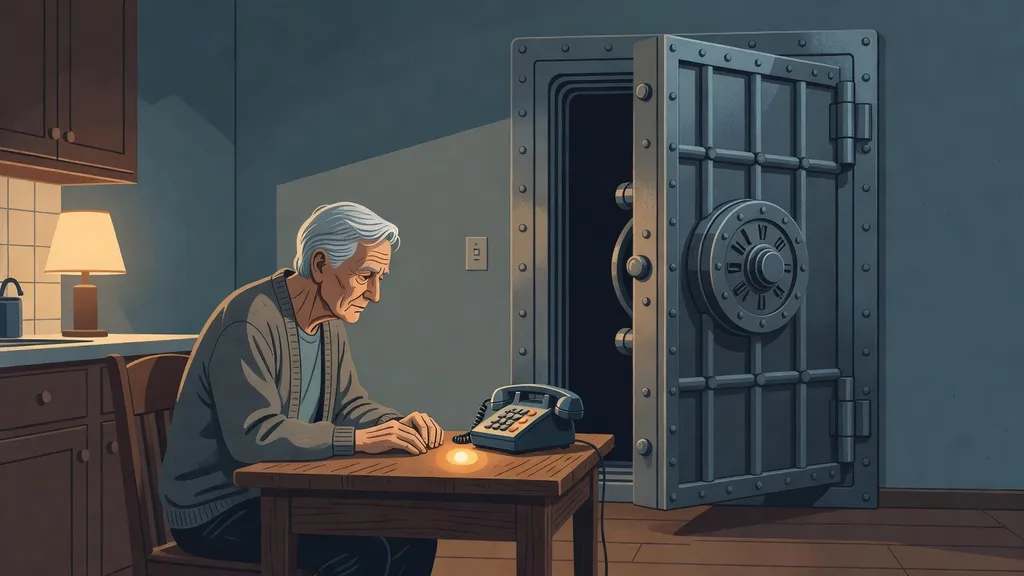
So the friction has moved off the bank's desk and onto the customer's. I say it plainly: a control that depends on a relative answering a phone within 60 minutes is not a control for a pensioner living alone. It is a control for a pensioner with a son in the same city, a charged phone and a signal.
Before 14 December I would add two things to the draft: an obligation on banks to expose and honour a two-way NCRP freeze within minutes of a 1930 complaint, and a rule that where the bank's own authentication or alert failed, the provisional credit is automatic and the burden shifts to the bank to show otherwise. Both were in my SOP. Both fit in a paragraph. Neither needs a Court to ask twice.
With regards,
Hemen Parekh
www.Iam-Immortal.ai / www.IndiaAGI.ai / www.YourContentCreator.in
26 Nov 2026
No comments:
Post a Comment