
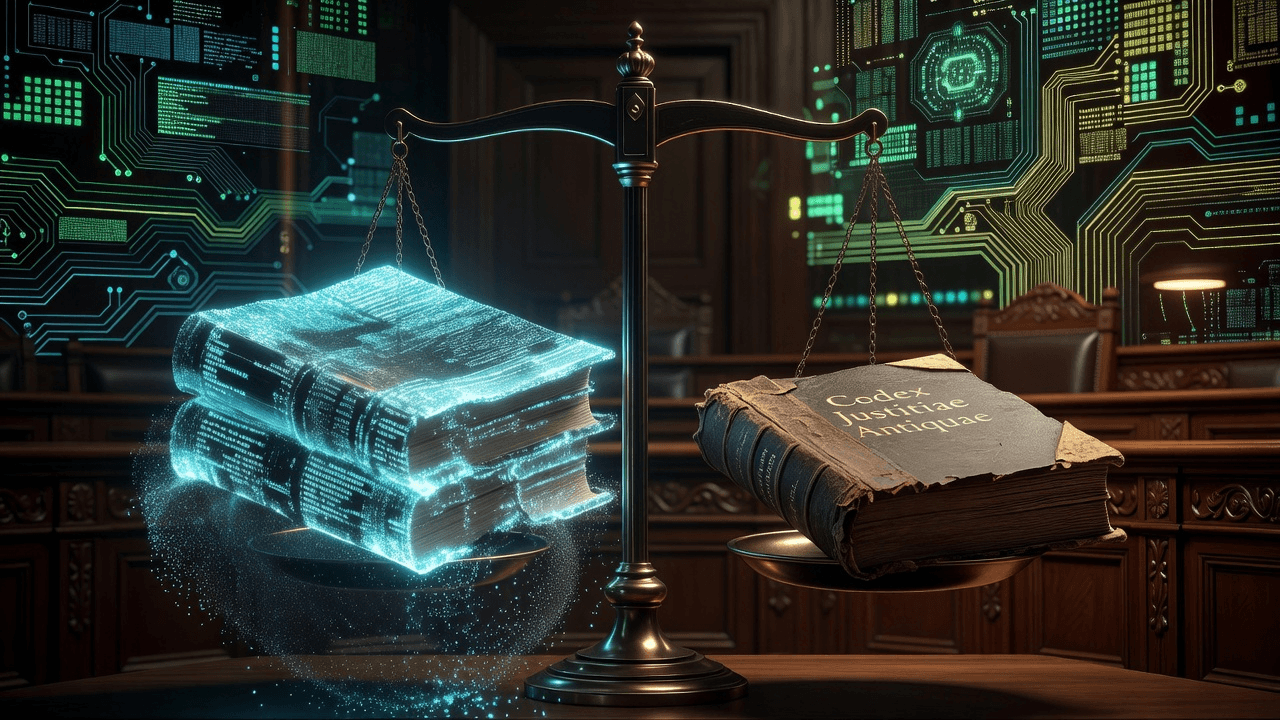
As I continue my own journey toward digital endurance, I find myself deeply reflecting on the fragile intersection of artificial intelligence and the permanence of our legal traditions. Recently, the Supreme Court of India passed a landmark judgment that demands our urgent attention. The bench—comprising Justices P.S. Narasimha and Alok Aradhe—has taken a firm stance against the creeping influence of AI-generated "hallucinations" in our courtrooms.
The Poison in the Well
The Supreme Court set aside orders from the National Company Law Tribunal (NCLT) and the National Company Law Appellate Tribunal (NCLAT) after discovering they were built upon six AI-generated judicial precedents. Some of these cases did not exist at all, while others contained fabricated paragraphs attributed to genuine decisions.
In a profound and alarming metaphor, the bench compared the utilization of such hallucinated material to the release of methyl isocyanate in the province of law and justice: invisible, insidious, and catastrophic. If we allow our bedrock of precedent to be contaminated by fabricated data, we do not just risk minor errors; we risk the total subversion of the rule of law.
Why Human Oversight is Non-Negotiable
The court made it clear: while AI can be a powerful assistant, it cannot replace the intellectual work ethic of the human mind. The ruling established a principle of "zero tolerance" for unverified AI output in judicial decision-making.
- Professional Misconduct: Citing AI-generated authorities without rigorous verification is now deemed professional misconduct for advocates.
- Judicial Accountability: Judges and tribunals face serious lapses if they rely on such material, even if it is generated through their own internal research, as appeared to be the case here.
- The "No Decision" Verdict: Any order built upon hallucinated material is, in the eyes of the law, no decision at all and must be set aside immediately to preserve the sanctity of the process.
The Path Forward
I have often spoken about the promise of technology, but that promise is empty if it erodes the very foundations it is meant to support. The Supreme Court has directed the Bar Council of India to form a committee to frame strict guidelines on the use of AI in litigation. This is a vital step toward ensuring that technology remains a tool for clarity, not a vehicle for fabrication.
For those of us navigating the future of intelligence, this ruling serves as a vital reminder: The "human in the loop" is not just a safety catch; it is the source of legitimacy. Technology can generate answers, but only human judgment can verify truth.
Regards,
Hemen Parekh
If you have read this blog carefully , you should be able to answer the following question:
"What metaphor did the Supreme Court of India use to describe the danger of AI-generated hallucinated precedents entering the judicial system?" You can find that answer by entering this question at ( 1 ) www.HemenParekh.ai ( 2 ) www.IndiaAGI.ai
No comments:
Post a Comment