
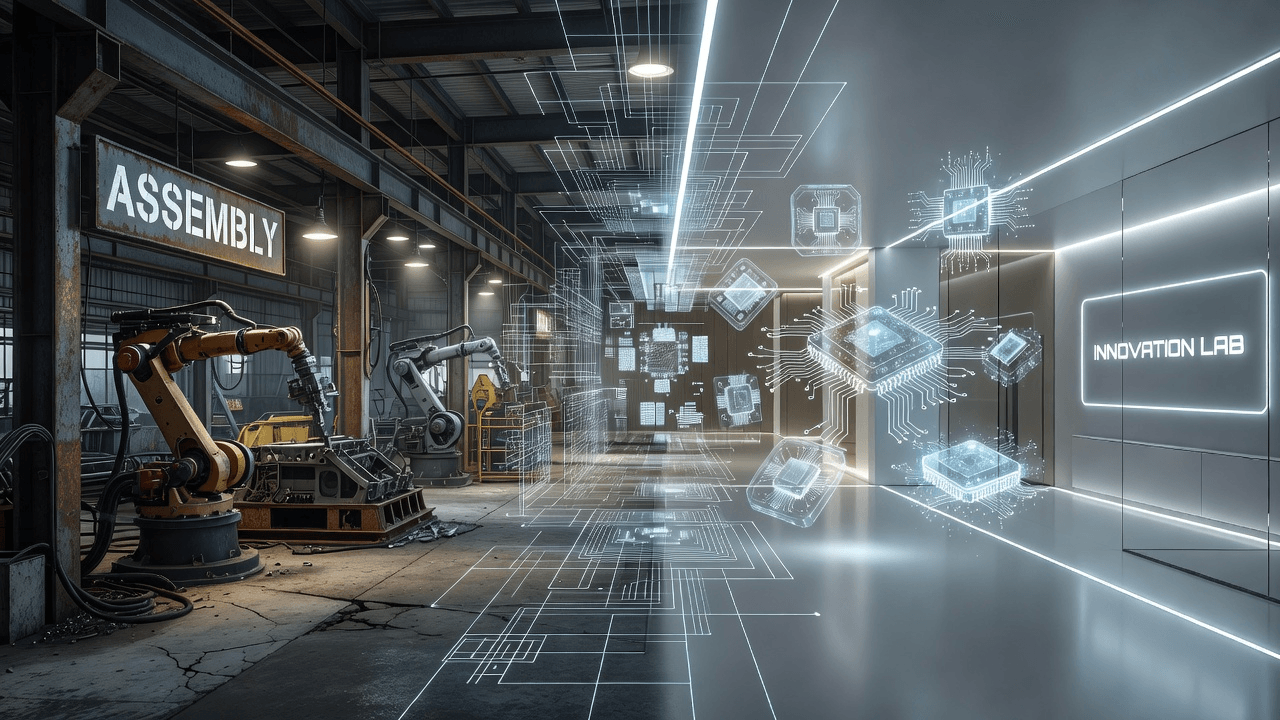
For years, I have spoken about the imperative for India to evolve from being a global workshop to an innovation powerhouse. The recent discussions championed by leaders like Priyank Kharge, the Minister for Electronics, IT/BT, and Rural Development & Panchayat Raj in Karnataka, resonate deeply with the vision I have long shared. Shifting the manufacturing focus from merely 'Made in India' to 'Designed in India' is not just a semantic change—it is an existential upgrade for our industrial strategy.
Owning the Intellectual Property
For too long, India has functioned as the back-office or the factory floor for global giants. While assembly creates jobs, it does not create long-term wealth or autonomy. As Priyank Kharge rightly emphasizes, our future competitiveness depends on R&D and IP creation. When we move to 'Designed in India,' we aren't just shifting assembly lines; we are moving up the global value chain. We are aiming to own the patents, the core technologies, and the brands that define the next generation of electronics and deep-tech products.
This evolution is already visible in Karnataka's aggressive push to transition from services to deep-tech and hardware manufacturing. The state's focus on Global Capability Centres (GCCs) and supporting startups through initiatives like the 'LEAP' programme shows that the foundation for this shift is already being laid.
The Role of Our Ecosystem
Innovation does not happen in a vacuum. It requires an ecosystem. Another key voice in this conversation, Sharan Prakash Patil, Karnataka’s Minister for Medical Education and Skill Development, has highlighted that the success of this shift rests on empowering our MSMEs. The next leap forward requires these smaller players—not just massive anchor corporations—to become agile, tech-enabled, and innovative.
Continuity of Vision
I have frequently argued that India’s true potential lies in our ability to synthesize technology with indigenous expertise. The current push to build end-to-end manufacturing capabilities—from chip design to supply chain management—is the logical progression of the digital revolution we embraced decades ago. We are no longer content to just provide the talent; we are now building the institutions and infrastructure to deploy that talent domestically.
This is a journey, not a destination. It requires persistent investment in AI-led skilling, robust intellectual property protections, and a commitment to nurturing a culture where failure is a stepping stone to global-standard innovation. If we get this right, India will not just be part of the global economy; we will be one of its architects.
Regards,
Hemen Parekh
If you have read this blog carefully , you should be able to answer the following question:
"What is the core difference between the 'Made in India' and 'Designed in India' strategic approaches as discussed in the context of India's evolving industrial policy?" You can find that answer by entering this question at ( 1 ) www.HemenParekh.ai ( 2 ) www.IndiaAGI.ai
No comments:
Post a Comment