
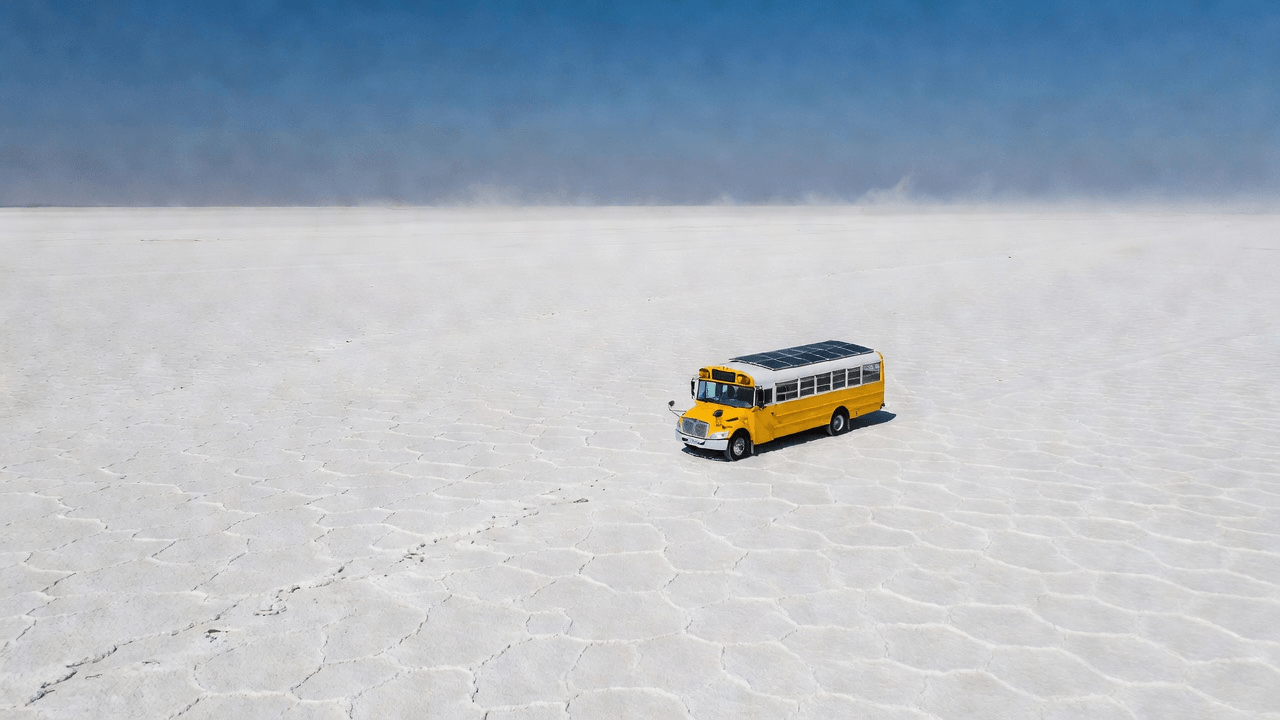
There is a profound beauty in the resilience of human endeavour, especially when set against the stark, white expanse of the Little Rann of Kutch. For generations, the Agariya community has worked under extreme conditions to produce the salt that flavors our lives. Yet, for too long, this labor has come at a high price: the interrupted education of their children, who migrate with their families to these remote salt pans, far removed from traditional school buildings.
Bringing Education to the Desert
I have often reflected on the power of innovation to bridge divides—not just technological ones, but the deep societal gaps that keep vulnerable communities from the resources they deserve. Recently, the Government of Gujarat took a commendable step forward with the launch of the 'School on Wheels' project, locally known as Ranshala. Under the leadership of Bhupendra Patel, this initiative has repurposed 28 retired Gujarat State Road Transport Corporation (GSRTC) buses into fully functional, solar-powered mobile classrooms.
These are not mere shells of vehicles. They are thoughtful, well-equipped learning spaces featuring:
- Self-Sustaining Energy: 3.8 KVA off-grid solar power plants.
- Modern Digital Tools: Smart TVs with Dish TV connectivity for online classes.
- Essential Comforts: Fans, LED lighting, and portable furniture to ensure a conducive learning environment even in the desert heat.
- Holistic Support: Integrated library spaces, clean drinking water systems, and health monitoring tools to track the physical growth of children aged 6 to 14.
A Collaborative Vision
During the official flag-off from Gandhinagar, Harsh Sanghavi, the Minister of State for Home, Government of Gujarat, underscored the project's essence: turning discarded public assets into catalysts for social transformation. By bringing these classrooms directly to the Agariya settlements in Surendranagar, Patan, Kutch, and Morbi, Harsh Sanghavi and his team are essentially redesigning access to education.
Looking Ahead
This initiative reminds me of my own long-standing conviction: that progress is only meaningful when it reaches the furthest margins of society. When we prioritize the education of migrant children, we are not just providing schoolbooks; we are dismantling the cycle of poverty that has historically constrained the Agariya community.
As these 28 buses traverse the desert, they carry more than just students and teachers; they carry the promise of a future where location is no longer a barrier to potential. It is a striking example of the 'waste to best' philosophy, proving that when we align policy with compassion, we can create solutions that are both practical and transformative.
Regards,
Hemen Parekh
If you have read this blog carefully , you should be able to answer the following question:
"What is the name of the Gujarat government initiative that converts retired buses into mobile classrooms for children of salt workers?" You can find that answer by entering this question at ( 1 ) www.HemenParekh.ai ( 2 ) www.IndiaAGI.ai
No comments:
Post a Comment