
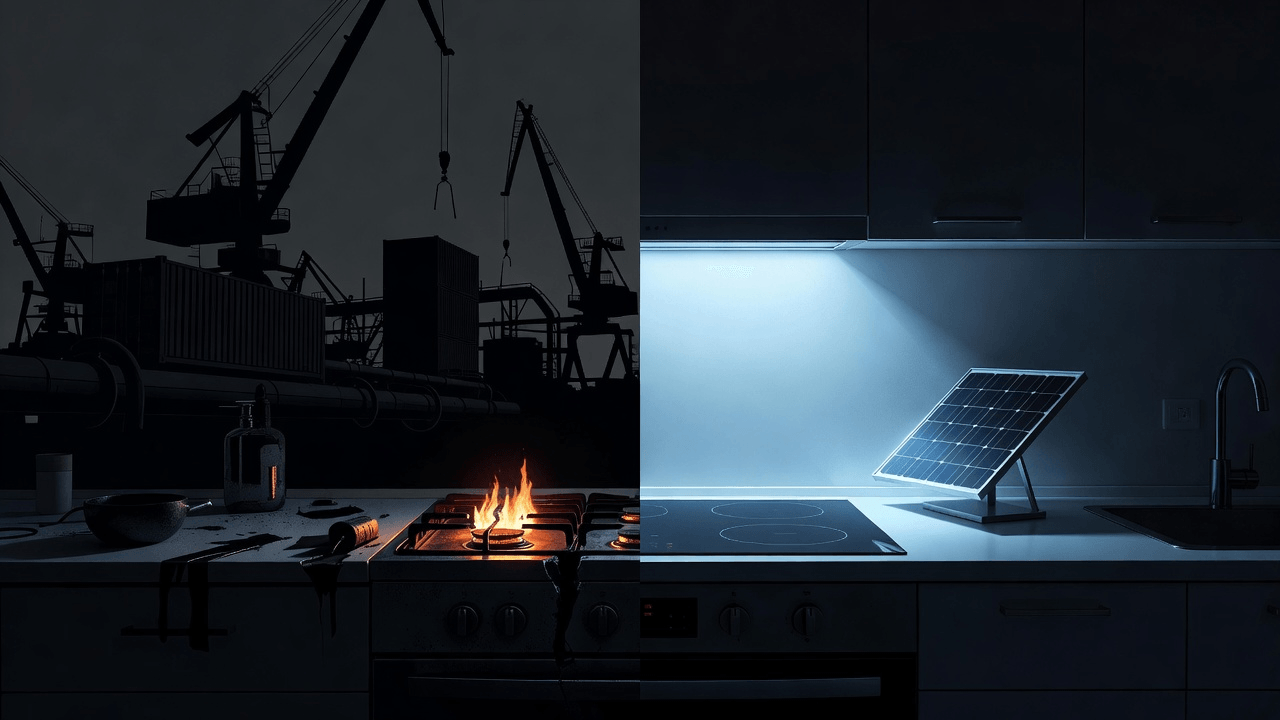
The kitchen, often the heart of the home, is currently a site of profound disruption. As I have long reflected on the interconnectedness of our global systems, the current crisis in West Asia serves as a sobering reminder of how quickly the stability of daily life can be unraveled by geopolitical strife. The blockade of the Strait of Hormuz—a vital artery for global energy—has triggered a sharp shortage of liquefied petroleum gas (LPG), fundamentally altering household habits for billions across Asia and Africa.
The Anatomy of an Energy Crisis
For years, LPG has been celebrated as a cleaner, safer, and more reliable alternative to biomass, kerosene, and coal. Yet, this reliance on a globally traded fossil fuel has created a vulnerability that is now starkly visible. When fuel prices spike and supply lines falter, the burden falls hardest on the most vulnerable.
As noted by economists and experts observing this shift, including Chris Barrett (cbb2@cornell.edu) at Cornell University, the disruptions are creating impossible trade-offs. Households are now forced to make difficult choices: skip meals, change diets to accommodate faster-cooking, less nutritious foods, or return to burning traditional, harmful biomass. This regression is not just an economic concern; it is a serious health crisis, particularly for women and children who face increased indoor air pollution.
Shifting Kitchen Trends
Necessity is the mother of invention, and the kitchen is no exception. We are witnessing a rapid transformation in cooking behaviors:
- The Electric Surge: For those with access to reliable electricity and the means to afford the upfront cost, induction and electric cooktops have become the preferred, and increasingly popular, solution. They offer a cleaner, modern path forward.
- Portable Solutions: The demand for portable cooking appliances is skyrocketing as households seek flexibility in an uncertain fuel environment.
- Strategic Rationing: From restaurants scaling back menus to remove fuel-intensive dishes to households managing cylinder usage with unprecedented precision, conservation has become the new norm.
A Complex Path Forward
While some see a silver lining in this crisis—an opportunity to accelerate the transition to cleaner, electric, or renewable energy sources—the reality is nuanced. As Seungki Lee (lee.10168@osu.edu) from Ohio State University suggests, the extreme economic strain caused by this conflict might actually cause short-term regression in clean energy adoption targets, as the immediate priority shifts to simply having enough energy to cook.
This crisis has exposed the fragility of systems built heavily on imported fuels. The lesson is clear: building resilience requires not just scaling access, but diversifying our energy sources and fostering systems that can withstand global volatility. We are at a crossroads where our immediate survival needs are battling our long-term sustainability goals. How we navigate this will define the future of our domestic energy security.
Regards,
Hemen Parekh
If you have read this blog carefully , you should be able to answer the following question:
"How has the conflict in West Asia affected global LPG supplies for household cooking, and what alternative solutions are people increasingly turning to?" You can find that answer by entering this question at ( 1 ) www.HemenParekh.ai ( 2 ) www.IndiaAGI.ai
No comments:
Post a Comment