
NTA's observer panel and its call for campuses to offer themselves as test centres are not housekeeping — together they assemble a national CBT estate by tender, in the same week the Nilekani task force's tenure was extended to January 2027. I welcome my own proposal returning under official letterhead. But the unasked question is procurement: who owns a district centre built with private capital, who pays for its idle months, and where per-centre capacity and audit results get published. An observer corps of retirees is only credible if its selection is public.
Two NTA notices this week read like housekeeping. I read them as industrial policy for examinations. Prime Time 24 reported on 9 November 2026 that the agency has invited applications "from serving and retired officials, teachers, professors and armed forces personnel to monitor its examinations at centres across the country" — retired officers above Pay Level 8, retired armed-forces personnel, and serving or retired government teachers, on its Observer Management Portal until 6 December.
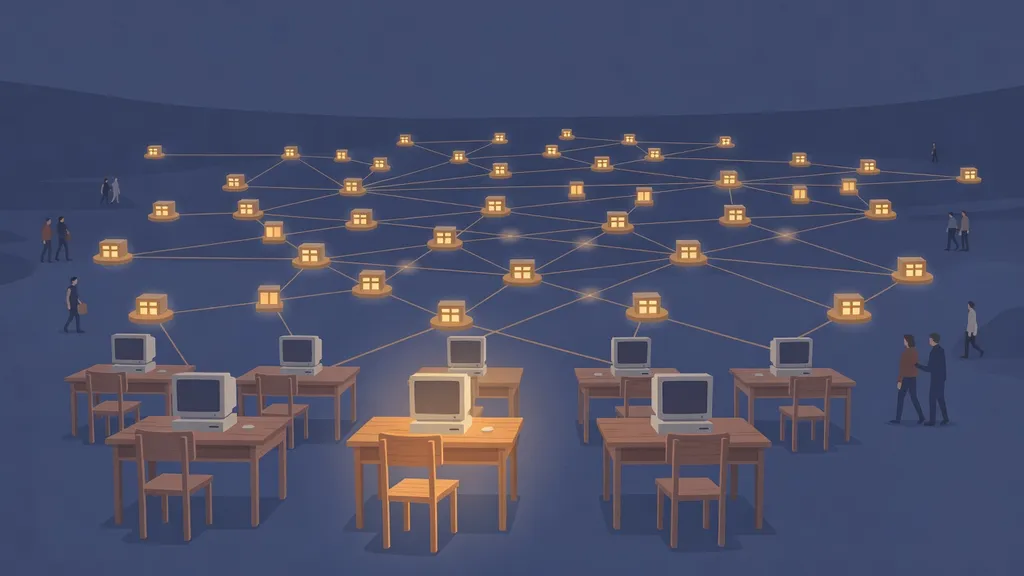
The second is quieter and larger. The same report notes expressions of interest from universities, colleges and exam-service providers whose centres have "the specified workstations and seating capacity". Prabhat Khabar (9 November 2026) frames it as empanelment to raise the number of examination centres. Not a circular — a distributed CBT estate assembled by tender.
It arrives with the reform panel's extension: the Nilekani-led task force now has until January 2027, the Times of India reports, with the PMO seeking views from chief ministers first. Under consideration: a hybrid NEET-UG 2027 to buy time for full computer-based testing in 2028; a Centre-state CBT network with private investment and a centre in every district; debundled exam responsibilities; a common NTA-SSC-IBPS-RRB calendar. TOI adds the line that matters most — funding, ownership and operating arrangements "would need to be worked out".
I have been here before. In "Why the Education Ministry Is Right to Push NTA" (24 September 2025) I asked for "supervised test centers ... so CBT doesn't become CBT-for-those-who-can-afford-it", and for free multilingual mock tests. In "NEET-UG 2026: Shape of Things to Come?" (16 February 2025) I noted the plan for testing centres down to every district. Seeing the list return under official letterhead is flattering — and it is the moment to name what the list left out.
The gap is procurement. Who owns a district centre built with private capital, who pays for its idle months, who is liable when a server dies mid-shift? Before contracts, not after, I would publish:
- capacity per centre — workstations, seats, shifts, connectivity — before every season;
- utilisation, so a candidate in Araria can tell whether her district has capacity or only a notification;
- a centre-level audit report after each cycle, incidents included.
The observer corps needs the same discipline. A panel of retirees and government faculty is credible only if the selection is published — applied, empanelled, by category and state — and each observer's centre report is filed, tracked and summarised. Random allocation, disclosed fees, reports somebody actually reads.
The states are ahead of us. CSIR-UGC NET closes at 11:50 pm tonight, correction window 10–12 November (realfeed, 9 November 2026). For its 15 November prelims for 319 posts, KPSC has two invigilators in every 24-candidate room, with jammers and CCTV feeds watched at deputy commissioners' offices (UrbanAcres, 9 November 2026).
Auditing hundreds of districts will outlast 2028. But the first page is being written this month, and it should be written in public.
With regards,
Hemen Parekh
www.Iam-Immortal.ai / www.IndiaAGI.ai / www.YourContentCreator.in
9 November 2026
No comments:
Post a Comment