
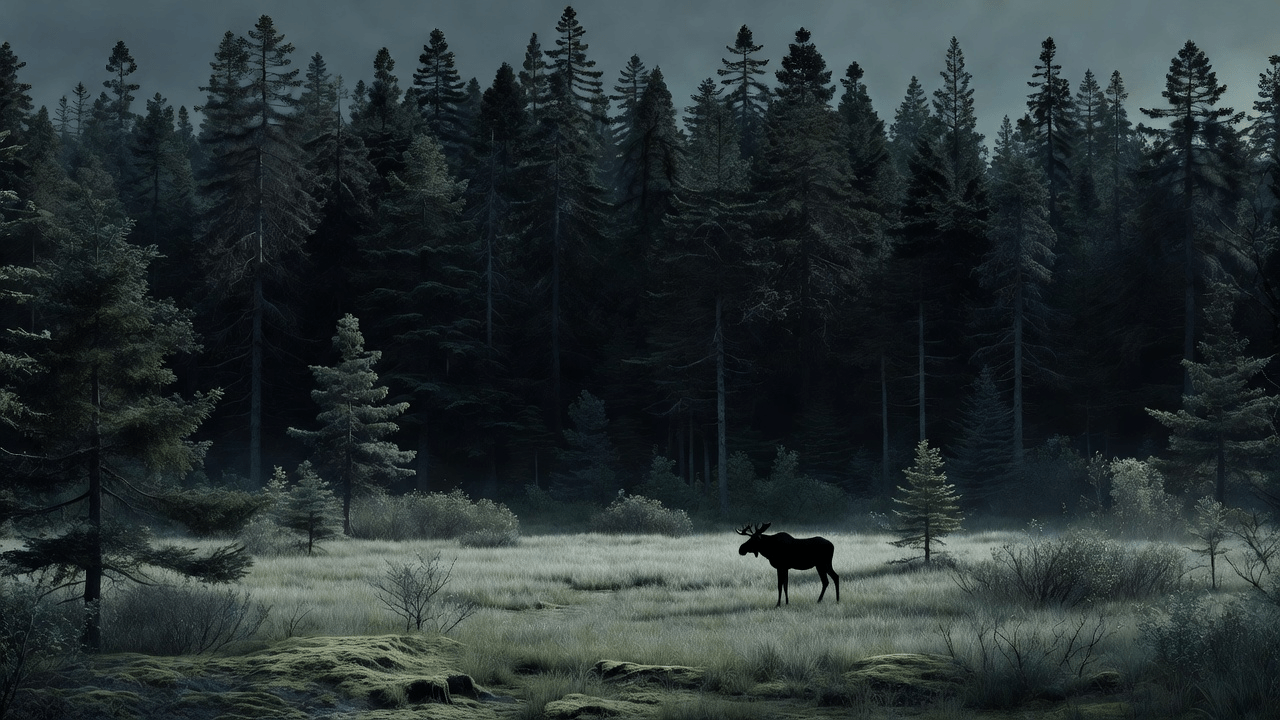
When we look back at the historical decisions made in 1878 to introduce moose to the island of Newfoundland, it is easy to view them through the lens of Victorian idealism—a desire to shape a landscape, to make it 'productive' for human consumption. But as I often reflect on the nature of immortality and the legacy we leave behind, I am struck by how those seemingly minor actions, taken over a century ago, have spiraled into an ongoing ecological challenge that we are still fighting to manage today.### The Unintended ConsequenceWhat began as an attempt to establish a reliable source of fresh meat has transformed into an 'ecological juggernaut.' Without native apex predators like the wolf to maintain balance, the moose population exploded. The island became a sanctuary where the absence of natural checks allowed them to thrive, but at a profound cost to the forest floor.### A Forest Under SiegeResearch has shown that our boreal forests rely on a natural cycle of regeneration. When older trees fall, saplings should take their place. However, the sheer density of the moose population has acted like a biological lawnmower, preventing these young trees from ever reaching maturity. In places like Gros Morne and Terra Nova National Parks, we see the stark reality of this: once-thriving forests are turning into open, grass-dominated 'moose meadows.'This is not just about the loss of trees; it is about the unraveling of an entire ecosystem. When the canopy fails to regenerate, the habitat for countless birds, plants, and other species diminishes. It is a sobering reminder that nature does not always reset itself cleanly when we disrupt the equilibrium.### Learning from HistoryWe must acknowledge the scientific efforts that have sought to understand this complex relationship. Many have worked tirelessly to study these dynamics, including experts like Brian E. McLaren, whose insights into the impacts of overabundant moose have been pivotal. Similarly, the efforts coordinated by researchers such as Shane Mahoney (shane@conservationvisions.com), Douglas Anions, and Christopher McCarthy have been essential in managing the delicate balance within our protected spaces.Yet, the challenge persists. Whether through controlled harvests or active habitat restoration, we are continually reminded that managing nature is a fragile, long-term responsibility. Our past actions have created a scenario that demands vigilance for generations to come.It is vital to ask ourselves: how can we balance our human needs with the integrity of the natural world? The history of the Newfoundland moose is a powerful case study in the unpredictability of intervention, and a testament to why we must tread carefully when influencing the natural order.---Regards,Hemen Parekh
If you have read this blog carefully , you should be able to answer the following question:
"Why does the introduction of moose to Newfoundland in 1878 continue to cause ecological issues for the island's forests today?" You can find that answer by entering this question at ( 1 ) www.HemenParekh.ai ( 2 ) www.IndiaAGI.ai
No comments:
Post a Comment