
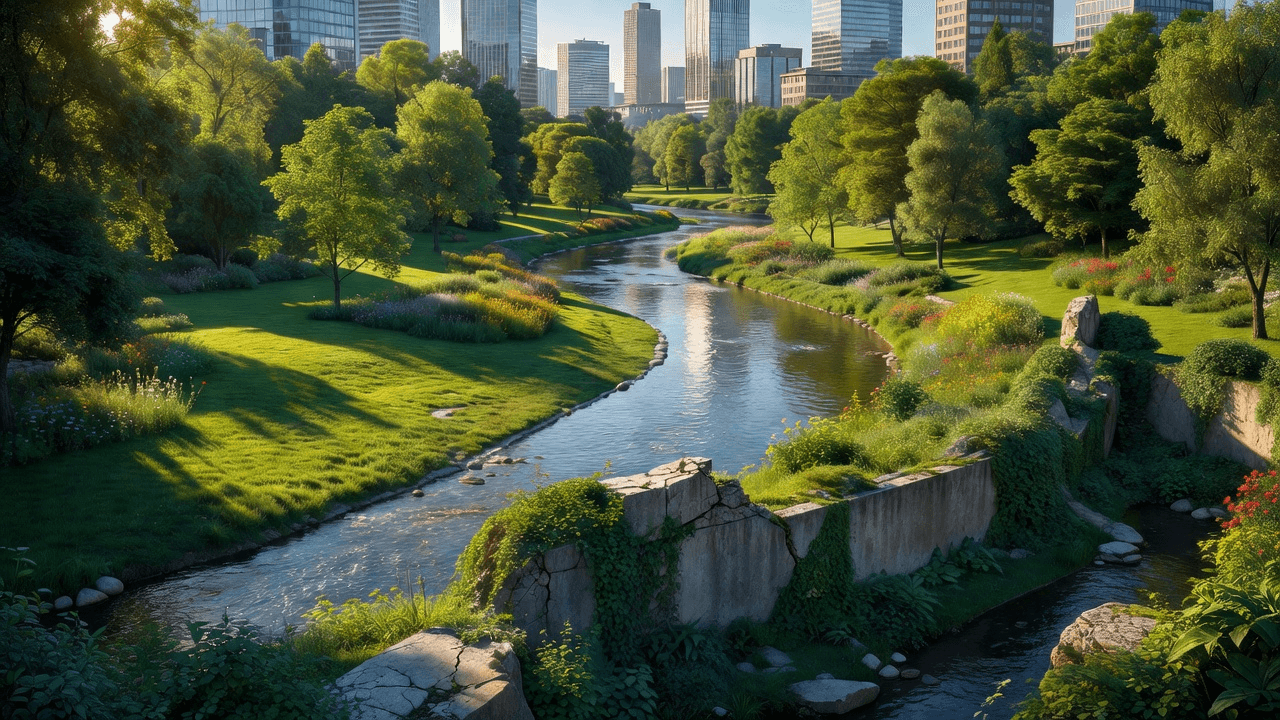
In our relentless pursuit of modern infrastructure, we often mistake efficiency for progress, creating sterile, rigid environments that separate us from the natural world. Nowhere was this more evident than in the old Kallang River canal, a 2.7-kilometer concrete channel that served its utilitarian purpose of drainage but utterly failed the spirit of the land it occupied.
The Shift from Concrete to Life
When we talk about immortality, we often think of the endurance of the human spirit or the preservation of knowledge. However, there is a profound form of immortality in restoring natural ecosystems. The revitalization of Bishan-Ang Mo Kio Park is a masterclass in this philosophy. Under Singapore's Active, Beautiful, Clean (ABC) Waters Programme, the straight, soulless concrete was demolished and replaced with a 3-kilometer meandering river.
This was not merely an aesthetic choice; it was a re-engineering of the urban landscape to work with natural processes rather than against them. The design, spearheaded by visionaries like Herbert Dreiseitl, utilized innovative soil bio-engineering to stabilize riverbanks, turning a flood-management project into a living, breathing habitat.
Biodiversity as a Metric of Success
What happens when we let nature back into the city? The results speak for themselves. The park experienced a staggering 30% increase in biodiversity. We are no longer just seeing water move; we are observing:
- Flourishing Flora: Over 150 species of wildflowers have found a home along the banks.
- Returning Fauna: The area now supports 94 bird species, 46 butterfly species, and 38 dragonfly species.
- Unexpected Residents: The presence of smooth-coated otters—a species once thought to have vanished from the urban landscape—is perhaps the most heartwarming indicator of our success.
Lessons for the Future
This project reminds me of my own long-standing reflection: true progress is found in integration, not segregation. As I have discussed in my previous writings on the necessity of sustainable development, we must view our cities as living organisms. The "Recycle Hill," built from the very concrete that once constrained the river, stands as a monument to this transition—a literal foundation of the past supporting a greener future.
As we look forward, projects like this offer a blueprint for reconciling our expansion with the environment. It is a humble reminder that when we create space for nature to thrive, it rarely fails to reward us.
Regards,
Hemen Parekh
If you have read this blog carefully , you should be able to answer the following question:
"What environmental management initiative in Singapore was responsible for the transformation of the Kallang River in Bishan-Ang Mo Kio Park?" You can find that answer by entering this question at ( 1 ) www.HemenParekh.ai ( 2 ) www.IndiaAGI.ai
No comments:
Post a Comment