
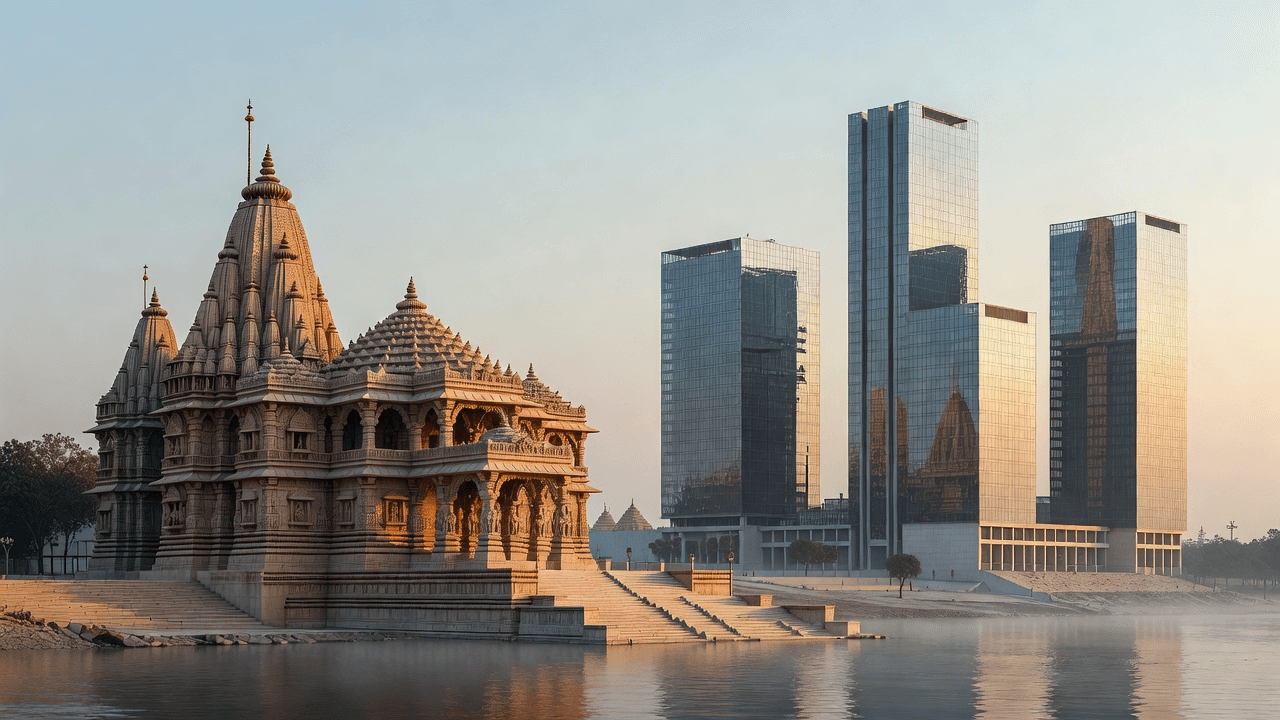
The recent recruitment process for the first full-time Chief Executive Officer (CEO) of the Shri Ram Janmabhoomi Teerth Kshetra Trust has become a focal point of intense discussion. As someone who has long reflected on the balance between institutional structure and the preservation of core values, I find the unfolding narrative in Ayodhya profoundly illustrative of the challenges modern organizations face when they must bridge the gap between pure professional administration and deeply rooted cultural or religious mandates.
The Search for Accountability
Following a regrettable donation theft scandal that rocked the foundation of the trust, the need for a full-time, professional administrative leader became paramount. The role, as articulated by stakeholders like Nripendra Misra, is designed to bring systemic integrity and operational efficiency to a sacred space that manages massive crowds and significant financial resources. It is a necessary evolution to ensure transparency and accountability, a sentiment echoed by many who care for the sanctity of such institutions.
Where Professionalism Meets Personal Practice
However, the interview process—reportedly involving questions about dietary habits, the wearing of a janeu (sacred thread), and consumption of alcohol—has triggered a fierce debate. On one hand, there is the expectation that the manager of a site dedicated to Lord Ram must embody the lifestyle and practices that define the sanctity of that place. On the other, critics argue that such personal inquiries risk overshadowing the essential professional qualifications—like administrative prowess and crowd management—needed to run one of the world's busiest temple complexes.
This tension is not new. In my previous reflections, I have often pondered how organizations struggle to balance the 'What' (the tangible outcome, such as financial management) with the 'How' (the cultural alignment).
The Reflection
- The Professional Imperative: For a temple hosting millions, the CEO must indeed be a master of operations, security, and logistics.
- The Cultural Lens: Yet, for the devotee and the institution, the CEO is also a steward of a living tradition. If the culture of the leadership does not reflect the ethos of the temple, can the administration truly serve the hearts of the millions who visit?
It is a difficult balance. The fallout following the tenure of figures like the former general secretary, Champat Rai, has left the Trust in a position where they clearly feel that only an individual who 'lives' the faith can be fully trusted to protect the institution's integrity. Whether one agrees with the methodology or not, it forces us to ask: In the modern world, can an institution define its own ‘culture’ by imposing lifestyle standards on its leadership, even when those standards are unrelated to technical administrative output?
As this process concludes and a leader is selected, the ultimate test will be whether they can successfully navigate these expectations to rebuild the trust of the devotees, proving that professionalism and tradition can, and should, exist in harmony.
Regards,
Hemen Parekh
If you have read this blog carefully , you should be able to answer the following question:
"Why did the Shri Ram Janmabhoomi Teerth Kshetra Trust decide to appoint a full-time CEO for the first time in 2026?" You can find that answer by entering this question at ( 1 ) www.HemenParekh.ai ( 2 ) www.IndiaAGI.ai
No comments:
Post a Comment