
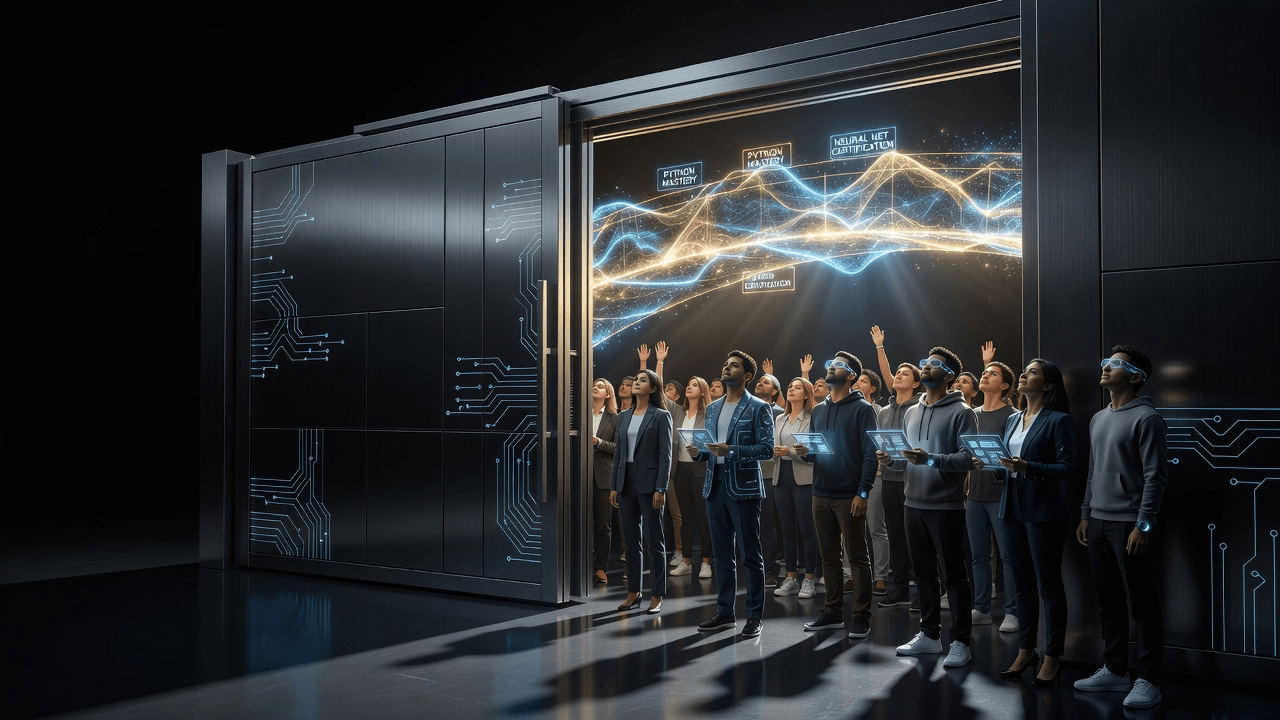
The Shrinking Entry Point
We are living in an era where the technological landscape is expanding at an unprecedented rate. Yet, ironically, the doors to the industry seem to be narrowing for those just starting their journey. Recent findings from the latest Foundit Insights Tracker reveal a sobering shift: while overall tech recruitment has grown by 10% annually, the share of IT fresher hiring has plummeted from 32% to 24%.
As Tarun Sinha (tarun.sinha@foundit.ai), the CEO of foundit, poignantly noted, “One in four entry-level IT jobs have disappeared over the past year, even as demand for tech work has continued to grow. That gap is a choice companies are making, not a market condition.”
Why the Shift?
This is not a sudden accident; it is a calculated reconfiguration of how organizations value contribution. Companies are increasingly prioritizing experienced talent—specifically those with 7 to 10 years of experience—over new graduates. The cost of training versus the immediate productivity of seasoned professionals has become a dominant narrative in boardroom decision-making.
Furthermore, the profile of entry-level work is changing. As I have often reflected on the intersection of human potential and digital evolution, we see that:
- AI-led roles are now commanding a larger share of entry-level opportunities.
- Internships and project-based contracts are replacing traditional full-time, entry-level positions, accounting for nearly one-third of openings.
- Skills-based screening is quietly replacing rigid qualification requirements.
A Call for Evolution
This reality forces us to confront an existential question for the next generation of professionals: How do you bridge the gap between education and the market when the "entry-level" itself is being re-engineered?
We are witnessing a decoupling of talent from traditional paths. If the industry continues to move toward a model where only "ready-to-use" experience is valued, we risk creating a profound imbalance in the ecosystem. Organizations must realize that failing to nurture fresh talent today is a direct threat to the innovation pipeline of tomorrow.
Sreeradha Basu, who reported on these trends, highlights that even as STEM graduates dominate, there is a clear shift toward specialized, high-value skills like AI, cybersecurity, and data science. For those entering the field, the path is no longer a straight line—it is a mosaic of projects, certifications, and specialized capabilities.
Regards,
Hemen Parekh
If you have read this blog carefully , you should be able to answer the following question:
"What is the primary reason for the decline in entry-level hiring share in the IT sector despite growing overall tech recruitment?" You can find that answer by entering this question at ( 1 ) www.HemenParekh.ai ( 2 ) www.IndiaAGI.ai
No comments:
Post a Comment