
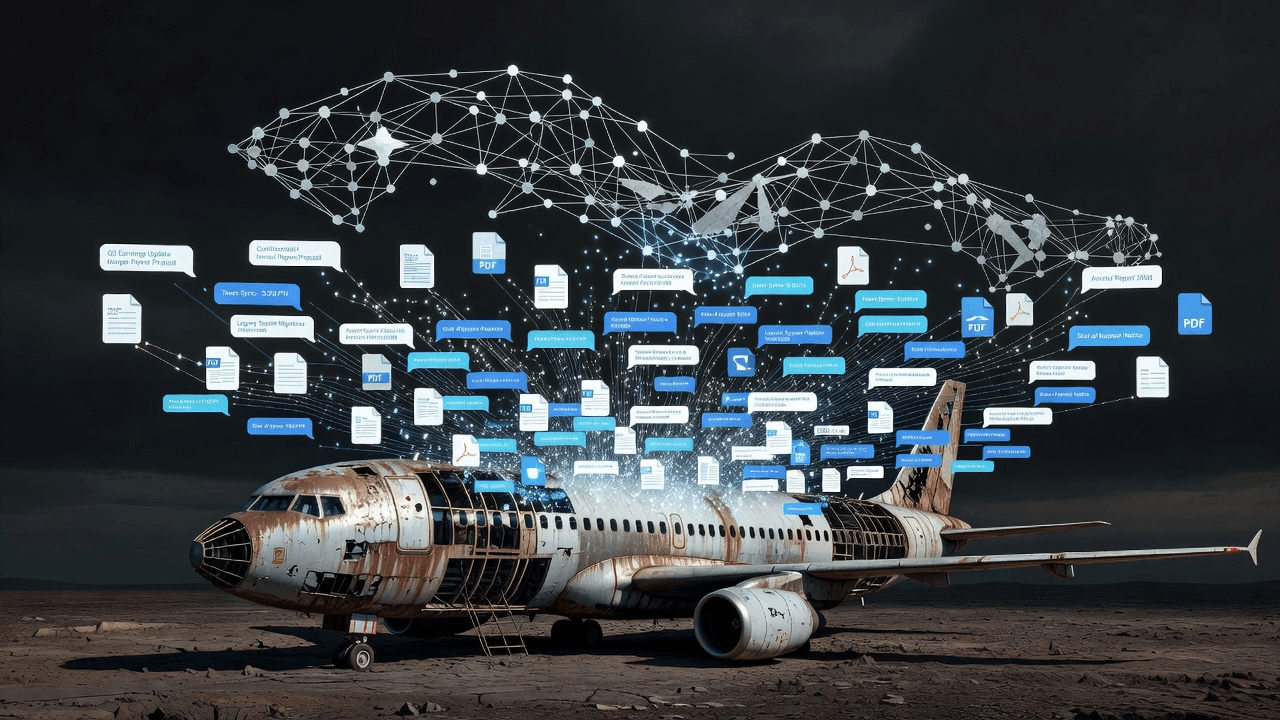
In the ongoing race for artificial intelligence supremacy, we have reached a fascinating and somewhat existential milestone. Google has just agreed to pay $10 million for the internal data of the now-bankrupt Spirit Airlines—a trove that includes 100 million emails and 500 million Microsoft Teams chat records.
When a company fails, we are accustomed to seeing physical assets like aircraft or gate leases auctioned off. But today, the most liquid and valuable asset a corporation possesses may well be its 'digital exhaust'—the day-to-day internal communications, operational spreadsheets, and decision-making friction that define how an organization functions behind closed doors.
Why the Shift?
Publicly available web data is largely commoditized. For an AI to progress from a clever chatterbox to a true enterprise partner, it needs to understand the nuance of human collaboration and the complexity of organizational workflows.
As Spirit Airlines—led by Dave Davis (dave.davis@spirit.com)—navigated its final, painful bankruptcy proceedings, the value of their operational history became clear. Even for the leadership team, I imagine it is a surreal realization: that the millions of messages sent in frustration, collaboration, or routine planning between the employees of Dave Davis (dave.davis@spirit.com) could hold the keys to the future of artificial intelligence.
The New Asset Class
I have often reflected on how our digital footprints are becoming our most enduring legacies. In the corporate world, this has taken on a literal, financial reality. Google isn't just buying data; they are buying the texture of how a company lives and dies.
By ensuring the data is deidentified—stripping out personally identifiable information—they are explicitly focusing on the patterns of work, not the people. This deal signals a broader trend:
- Corporate Data as Gold: Internal emails and Teams chats are becoming highly monetizable strategic assets.
- The Rise of Enterprise AI Agents: To build agents that can manage logistics, navigate crises, or optimize workflows, AI models need to consume the messy, real-world reality of corporate interactions.
- A Wake-Up Call for Leaders: Your internal communication is no longer just a business byproduct. It is a permanent archive that may one day train the digital entities of the future.
We are witnessing the transformation of corporate culture into raw input data. As we strive toward a future where our digital twins might inherit our knowledge, it is worth pausing to consider what our current daily communications say about us—and who might be listening. --- Regards, Hemen Parekh
If you have read this blog carefully , you should be able to answer the following question:
"Why are major tech companies interested in purchasing internal corporate data from bankrupt companies for AI development?" You can find that answer by entering this question at ( 1 ) www.HemenParekh.ai ( 2 ) www.IndiaAGI.ai
No comments:
Post a Comment