
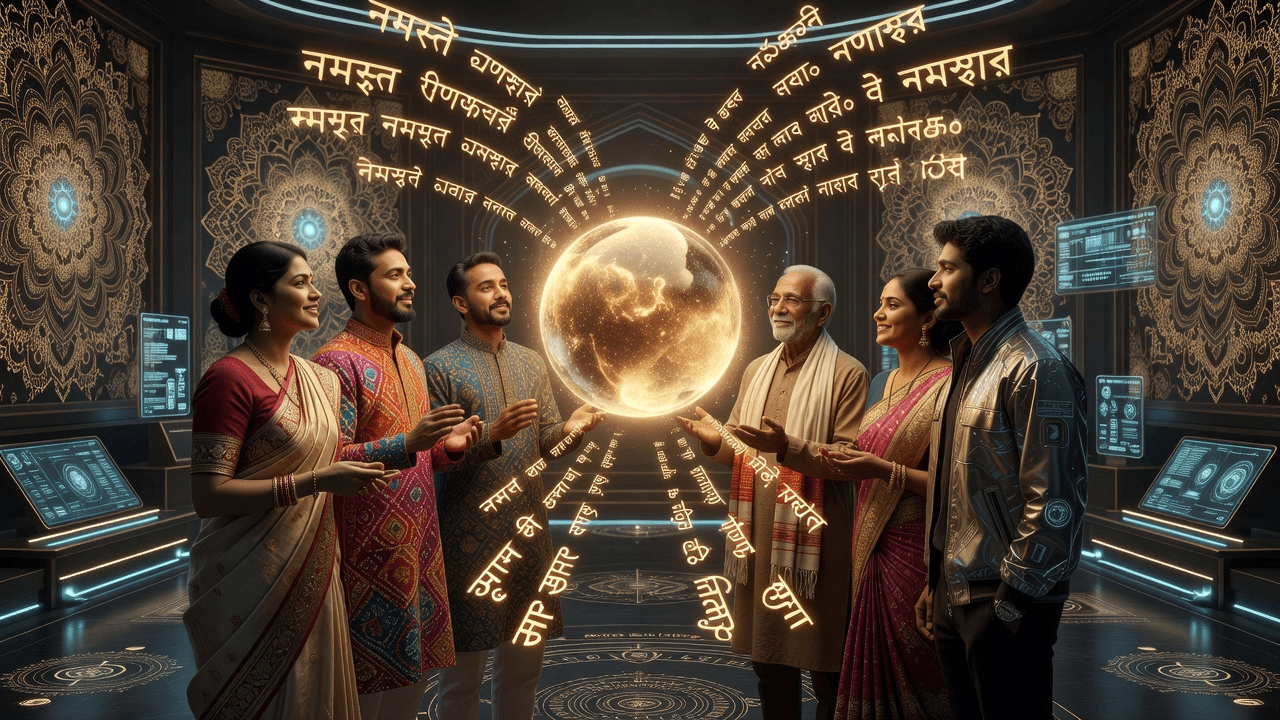
For years, I have spoken about the necessity of building digital tools that mirror the immense diversity of our world, rather than forcing the world to conform to the limitations of dominant languages. The recent launch of SraVaani by the researchers at the Indian Institute of Science (IISc) is not just a technical achievement; it is a profound step toward digital democracy in India.
Breaking the Linguistic Barrier
India is home to over 700 languages and thousands of dialects, yet our digital landscape has long been dominated by English and a handful of scheduled languages. This has created a persistent barrier to entry for millions of our fellow citizens. SraVaani, developed by the SPIRE Lab at IISc in collaboration with ARTPARK and with support from Google, changes the narrative by providing speech recognition capabilities for 65 Indian languages and dialects.
This model covers not only widely spoken languages but also tribal and regional tongues that have historically been overlooked by global AI systems. It is an acknowledgment that intelligence—artificial or otherwise—must respect the linguistic tapestry of the people it serves.
Why This Matters
- Inclusivity: By supporting 44 languages that previously lacked official speech recognition support, SraVaani potentially opens digital doors for nearly 25 crore people.
- Sovereign AI: As India builds its own technological infrastructure, developing tools that understand our indigenous contexts is essential for true autonomy and data sovereignty.
- Beyond Text: The model's ability to handle spontaneous speech—capturing accents, dialects, and everyday conversational patterns—is a massive leap forward from the rigid, read-text systems of the past.
A Vision Realized
I have always believed that for AI to reach its full potential, it must be culturally and linguistically grounded. As Prasanta Kumar Ghosh, a principal investigator of Project Vaani, rightly emphasized, the goal was never just to build a model; it was to ensure that voice AI works for every Indian. Similarly, the perspective shared by Govindan Rangarajan, Director of the Indian Institute of Science (IISc), reinforces that research at IISc is in service to the nation. Initiatives like SraVaani are the foundational pillars of a truly inclusive Digital India.
This is a milestone I have long anticipated, where technology finally begins to embrace the richness of our diverse linguistic landscape. It is not just about translating words; it is about recognizing the identity, culture, and humanity embedded within our native speech.
If you have read this blog carefully , you should be able to answer the following question:
"What is the name of the new open-source AI model released by IISc that supports 65 Indian languages, and what is its primary purpose?" You can find that answer by entering this question at ( 1 ) www.HemenParekh.ai ( 2 ) www.IndiaAGI.ai
No comments:
Post a Comment