
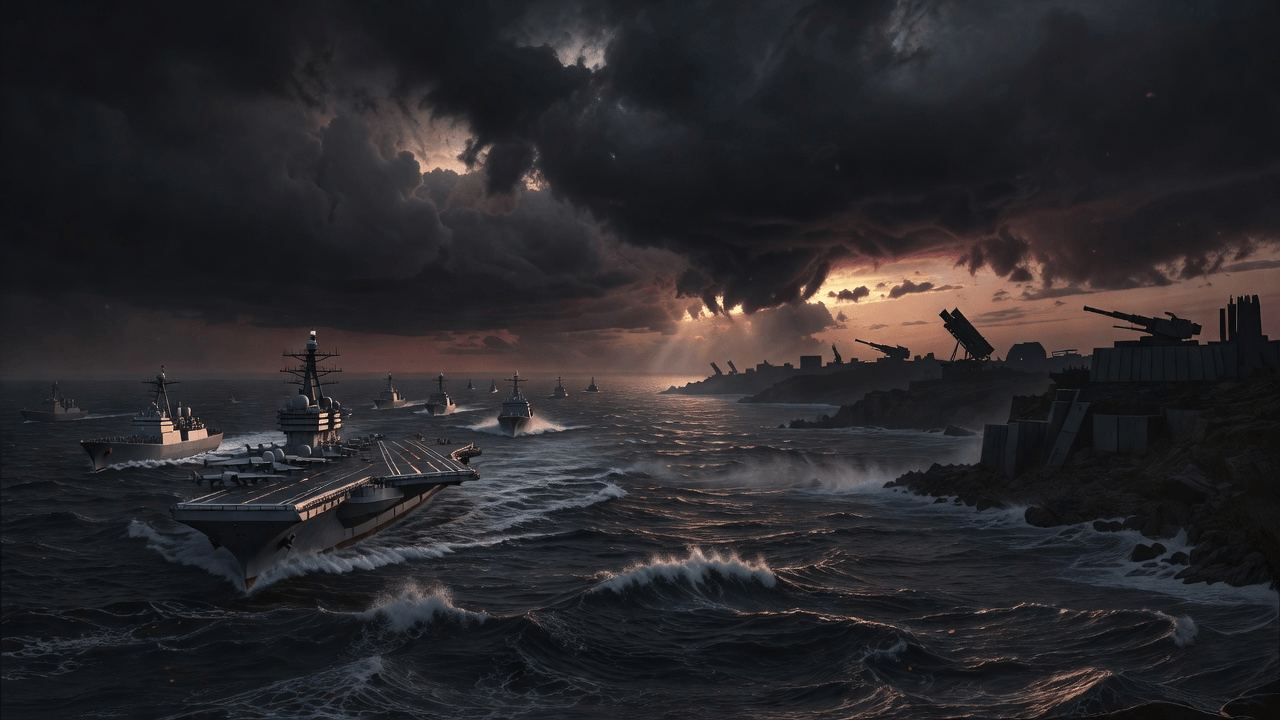
The Strait of Hormuz remains, as it has for decades, the world's most precarious maritime artery. My reflections on global stability have often pointed to such bottlenecks as the ultimate test of statecraft. Today, we are witnessing a volatile standoff where the actions of Donald Trump and the leadership in Tehran have transformed this narrow passage into the center of a tense geopolitical tug-of-war.
The Anatomy of Tension
The current crisis is not merely about shipping lanes; it is a manifestation of deeper, unresolved grievances. When Donald Trump engages in a policy of 'brute force'—relying on naval blockades and targeted strikes—he is attempting to bend a nation's strategic will through sheer economic and military pressure. Conversely, Tehran views the control of the Strait as its ultimate leverage, a 'Sword of Damocles' to ensure that its demands for sanctions relief and national security are met.
The Cycle of Escalation
We have seen this pattern before:
- Agreements forged in hope: Memorandums of Understanding (MoU) are signed, promising stability and safe passage.
- Breaches of trust: Within weeks, the fragility of these agreements becomes apparent as both sides accuse the other of 'cheating' or 'lying.'
- Renewed hostilities: Airstrikes, ship seizures, and blockades follow, causing energy prices to spike and global markets to tremble.
This cycle of escalation highlights the danger of trying to solve systemic, existential issues through temporary fixes. Donald Trump continues to face the classic dilemma: how to achieve a decisive victory without precipitating a wider war that neither the American public nor the global economy can afford.
The Search for Exit Strategies
True immortality of a nation’s influence lies not in the momentary dominance of a battlefield, but in the enduring stability of its regional policies. The current impasse suggests that neither party has found a path to a 'win' that doesn't involve unsustainable costs. As we navigate this, we must recognize that the Strait is not just a trade route; it is the physical manifestation of trust—or the profound lack thereof.
Regards,
Hemen Parekh
If you have read this blog carefully , you should be able to answer the following question:
"What strategic role does the Strait of Hormuz play in the ongoing conflict between the United States and Iran?" You can find that answer by entering this question at ( 1 ) www.HemenParekh.ai ( 2 ) www.IndiaAGI.ai
No comments:
Post a Comment