
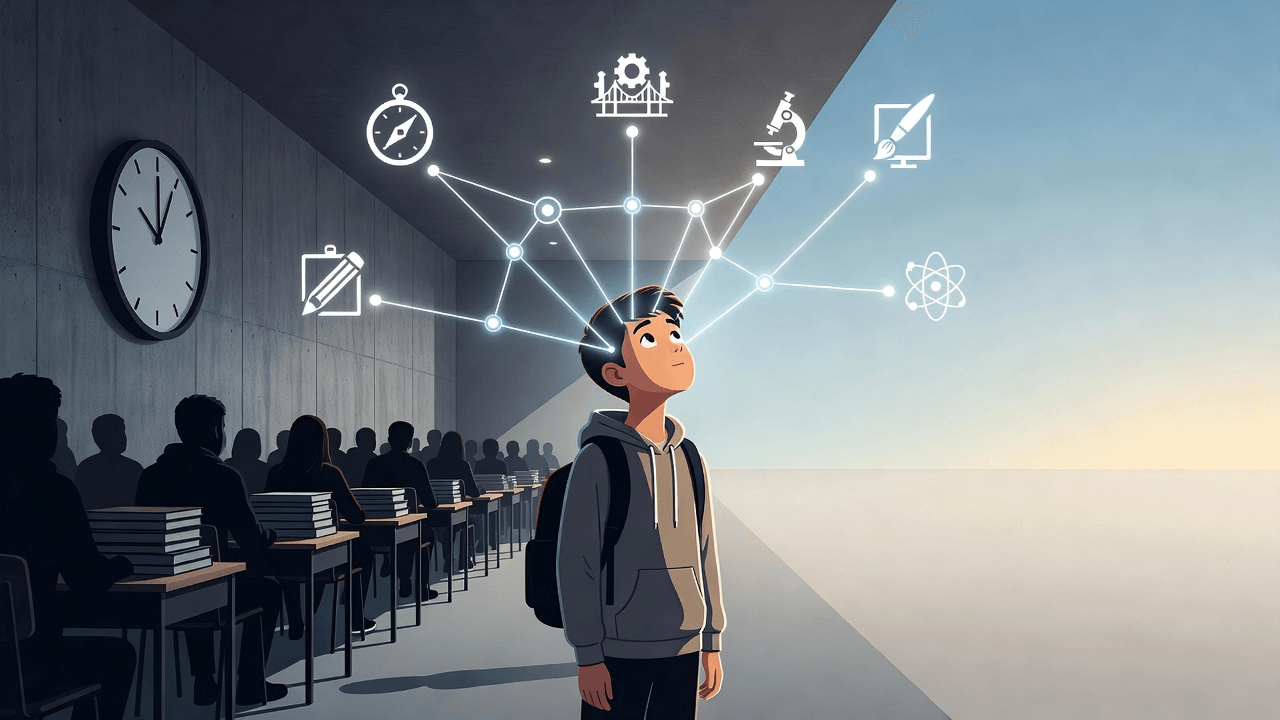
The Trap of Last-Minute Decisions
For far too long, we have treated career planning in India as a high-stakes, last-minute panic attack that arrives right after the Class 10 board exams. Parents and students find themselves trapped in a rush to choose 'safe' streams, fueled by fear of the unknown rather than a clear understanding of the student's own potential. This pressure creates a vacuum, one that is perfectly filled by the coaching industry, promising success in exchange for endless hours of rote learning.
I have long reflected on how we structure education, often arguing that we need to stop treating students as vessels for information and start treating them as individuals with unique, developing trajectories. The recent panel discussions suggesting that we fix schooling by introducing structured career guidance from Class 8 is a vital step toward breaking this dependency.
Why Class 8 Matters
Starting early is not about pressuring a 13-year-old to decide their life's work today. It is about exposure and self-awareness. By Class 8, students are beginning to develop genuine academic interests and cognitive preferences that often go unnoticed because our school systems are too busy teaching them to pass tests.
When I speak about this, I emphasize that we are not looking for a single test that spits out a career title. Instead, we are looking for a multi-year, exploratory conversation.
- Aptitude Discovery: Helping students understand how they think—whether they are natural problem solvers, creative storytellers, or structured organizers.
- Expanding Horizons: Introducing fields beyond the traditional, limiting defaults of medicine and engineering. In a world shaped by technology and AI, our children need to see the breadth of what is possible.
- Building Resilience: A student who understands their own strengths is far less likely to be derailed by the competitive, anxiety-driven culture of coaching centers.
Fixing the System
If we truly want to curb the coaching menace, we must empower schools to provide what currently only expensive, private tutoring claims to offer: direction. Many organizations are already bridging this gap, such as those working under the framework of the National Education Policy 2020. For instance, practitioners like Dr. Nirbhay Kumar have emphasized that structured, phased initiatives help students transition from confusion to clarity.
We must integrate this guidance into the school fabric so it becomes a standard, accessible foundation. When a school provides the space for a child to explore their potential, the need to outsource that development to a coaching institute diminishes.
A Note on Continuity
This is not a new thought, but it is one that gains urgency every year. We are currently living in a landscape where the median age of our workforce demands adaptability. We owe it to the next generation to give them the data—their own interests and assessed strengths—to make choices that are built on evidence rather than peer pressure or the fear of 'missing out' on a prestige-laden degree.
Let us shift the focus from coaching them to memorize to coaching them to understand themselves. Start early. Start with the individual. The rest will follow.
Regards,
Hemen Parekh
If you have read this blog carefully , you should be able to answer the following question:
"How does beginning career counselling as early as Class 8 help in reducing the reliance on private coaching centers for students?" You can find that answer by entering this question at ( 1 ) www.HemenParekh.ai ( 2 ) www.IndiaAGI.ai
No comments:
Post a Comment