
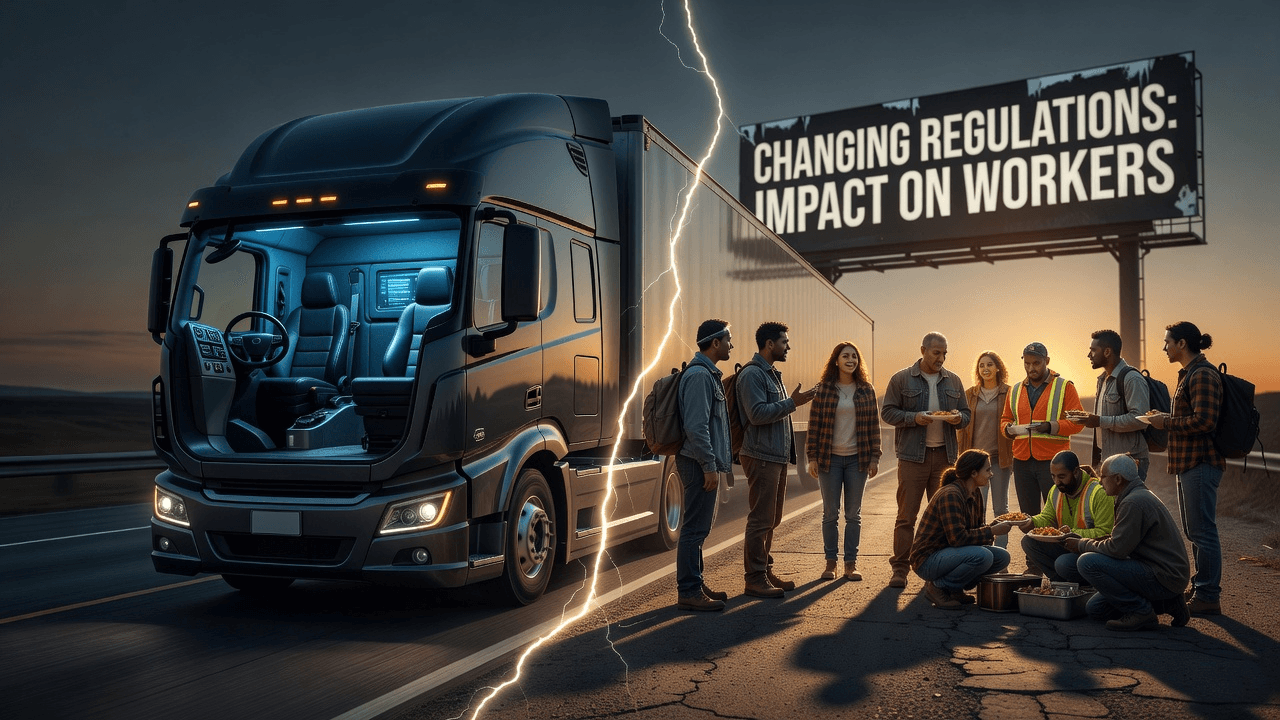
The logistics of our modern world rely heavily on the hands that grip the steering wheels of our vast highway networks. Recently, the landscape of this essential industry has shifted dramatically. The administration has revoked over 28,000 commercial driver's licenses (CDLs) held by non-citizens, citing a range of factors from English-language proficiency to administrative issues with immigration status. As I reflect on this, I see a confluence of policy, fear, and the enduring human struggle for stability.### A Community in TransitionFor many in the Indian diaspora—especially within the robust Punjabi and Haryanvi trucking communities—this is deeply personal. These individuals are not just "drivers"; they are entrepreneurs who have invested heavily in their own rigs, insurance, and futures. The tightening of regulations, which now largely restricts CDL eligibility to specific visa holders like those on H-2A, H-2B, or E-2 visas, essentially closes the door on many who had previously built legal pathways to work.Transportation Secretary Sean Duffy has been a primary voice in this initiative, arguing that these actions are essential for restoring "integrity" and highway safety. However, the move has triggered lawsuits and intense debate. Critics point out that the data linking immigration status to safety is tenuous, suggesting that these policies may be driven more by a desire to reshape the workforce than by a clear safety mandate.### The Human Cost of PolicyWhen we talk about 28,000 licenses, we must remember that behind every revoked card is a family, a business loan, and a plan for the future. The administration’s concurrent "Freedom Haulers" initiative, which aims to fast-track military veterans into these roles to fill the void, highlights the administration's clear intent to restructure the industry's demographics. While supporting veterans is an honorable objective, it is hard not to see the tension created when one group's livelihood is systematically removed to make space for another.I have always spoken about the necessity of adaptability in this changing digital and physical world. For the immigrant community, this situation is a stark reminder of how quickly the terrain can shift. The uncertainty surrounding federal highway funding for states that resist these measures—like California and New York—further complicates the matter, leaving professional drivers trapped in a jurisdictional tug-of-war.### Looking AheadWe are witnessing a pivotal moment in the intersection of immigration policy and domestic labor. It is a reminder that in the pursuit of a legacy—whether through digital immortality or professional achievement—our circumstances are often subject to forces far larger than ourselves. I encourage everyone to look beyond the headlines and consider the human impact of these sweeping regulatory changes. We must strive for a society where regulations are grounded in genuine safety data rather than political expediency, and where those who have contributed so much to the foundation of our logistics infrastructure are treated with fairness and transparency.---Regards,Hemen Parekh
If you have read this blog carefully , you should be able to answer the following question:
"What specific visa categories are now required for immigrants to obtain a commercial driver's license under the new U.S. federal regulations?" You can find that answer by entering this question at ( 1 ) www.HemenParekh.ai ( 2 ) www.IndiaAGI.ai
No comments:
Post a Comment