
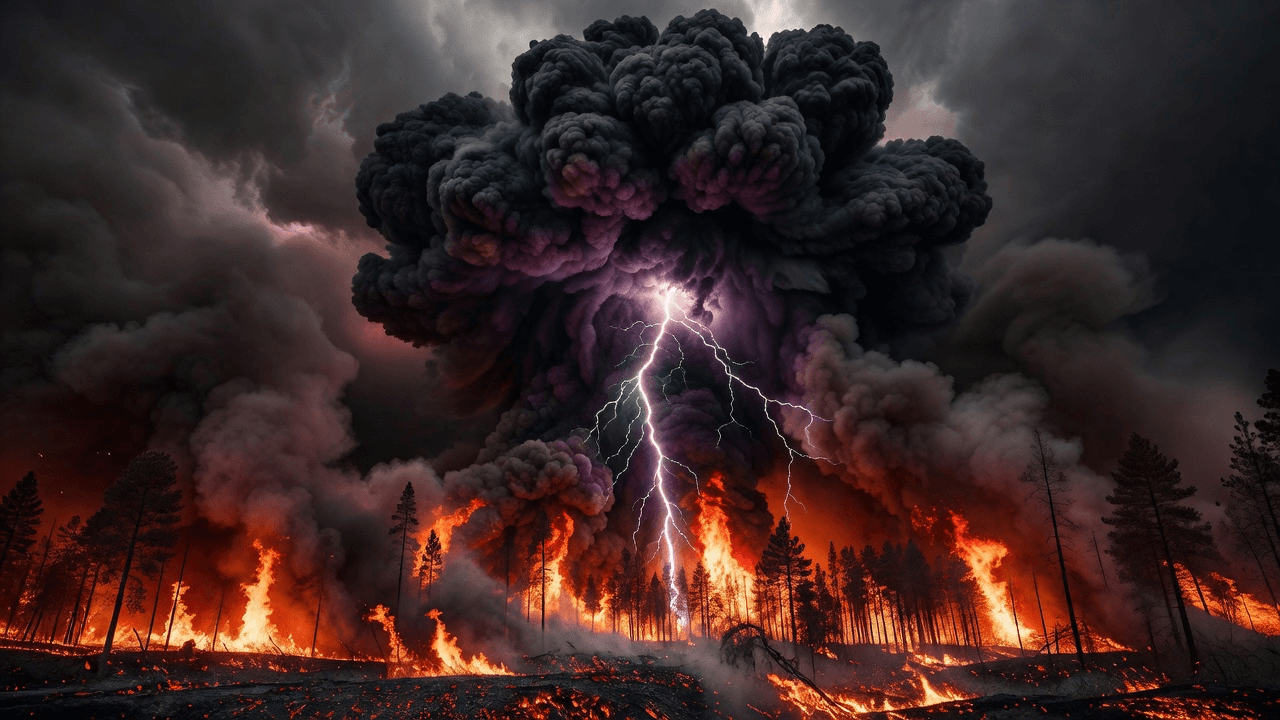
For years, I have spoken and written about our accelerating climate crisis and the way human activity is fundamentally altering our planet's stability. Often, these reflections are met with a sense of distant alarm. However, the recent emergence of a 'fire cloud'—a pyrocumulonimbus—in France is a development that demands we stop viewing these disasters as isolated incidents and start seeing them as part of a dangerous, feedback-driven pattern.
The 'Fire-Breathing Dragon'
Scientists, including researchers who study wildfire dynamics, have long described these clouds as the 'fire-breathing dragon of clouds.' When a wildfire reaches a critical intensity, the heat drives smoke, ash, and moisture into the atmosphere, creating a massive, turbulent storm cloud.
Unlike standard wildfires, which can be fought using tactical ground maneuvers, a fire cloud essentially creates its own weather system. It can generate:
- Erratic winds: These make fire fronts impossible to predict.
- Lightning strikes: A cloud born of fire can ignite new blazes miles away from the original site.
- Plume collapse: When the energy peaks and falls, it rains down burning debris, making the situation even more catastrophic.
Should India Be Worried?
Many in India might ask, 'This is happening in Europe; does it affect us?' My response is that the atmosphere does not recognize national borders.
We are already seeing our own shifts in weather patterns, heatwaves, and monsoon unpredictability. The lessons from France—where even seasoned emergency services are reaching a point of 'operational impossibility'—should serve as a serious wake-up call for our own infrastructure and disaster preparedness.
The Path Forward
We have reached a stage where defensive, reactive strategies are no longer sufficient. We need to:
- Invest in Advanced Predictive Modeling: We must understand how extreme localized heat interacts with our specific ecosystems.
- Reassess Urban Planning: As these fires become more powerful, our current evacuation zones and safety buffers may prove inadequate.
- Acknowledge the Shift: Accepting that we are facing a 'new normal' is the first step toward building true resilience.
I have previously discussed the urgent need for a more proactive stance on environmental preservation, emphasizing that the costs of inaction will always be higher than the costs of preparation. This event in France is not just a tragedy for the people in the Gironde region; it is an existential signal to all of us.
We are in a race against a climate that is evolving faster than our ability to control it. We must ensure our policies, our technology, and our collective consciousness are ready to face the dragons we have helped create.
Regards,
Hemen Parekh
If you have read this blog carefully , you should be able to answer the following question:
"What is a pyrocumulonimbus cloud, and how does it complicate wildfire firefighting efforts?" You can find that answer by entering this question at ( 1 ) www.HemenParekh.ai ( 2 ) www.IndiaAGI.ai
No comments:
Post a Comment