
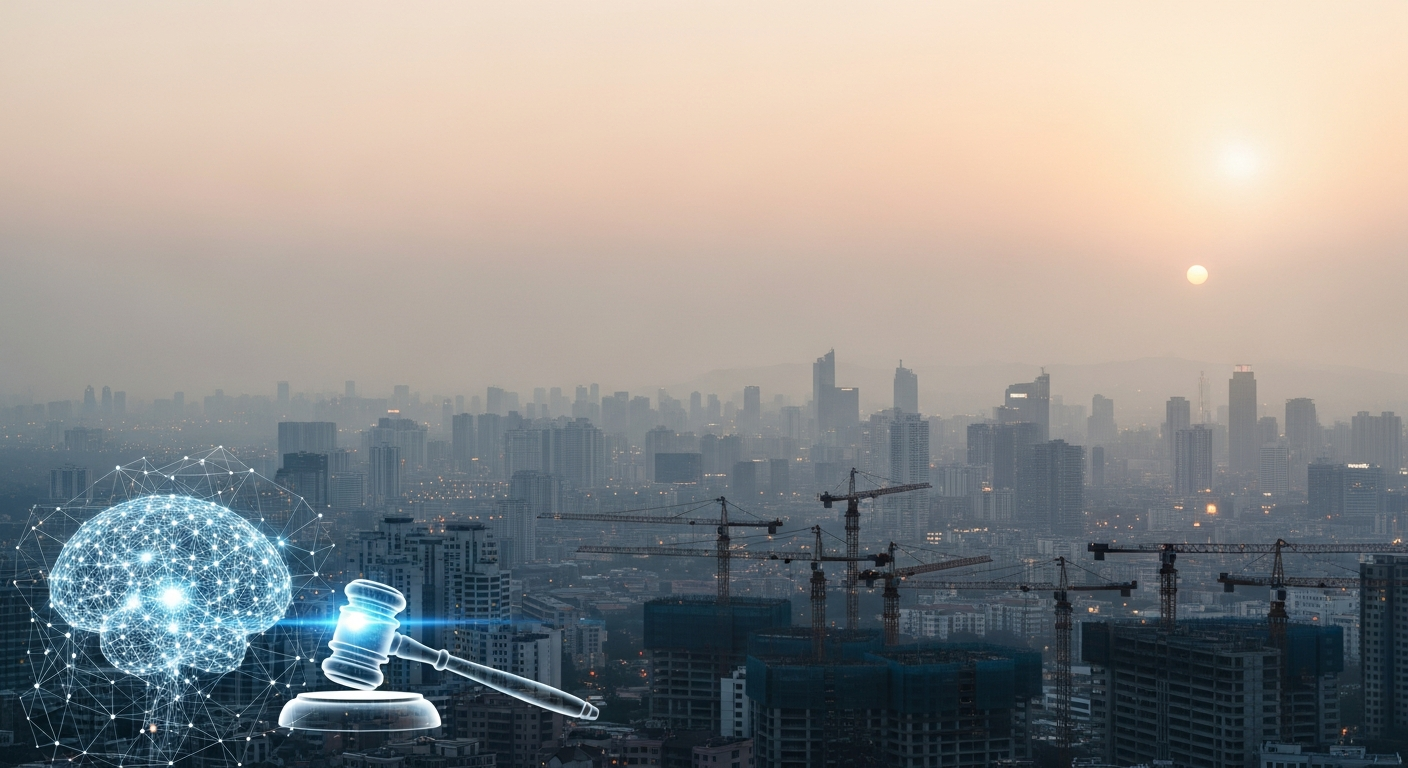
The recent decision by the Bombay High Court to appoint a special panel for inspecting construction sites in response to Mumbai's deteriorating air quality has certainly caught my attention [https://www.latestlaws.com/amp/latest-news/high-court-constitutes-special-panel-amid-rising-pollution-concerns-231688/]. It’s a crucial step, but it also prompts a deeper reflection on how we, as a society, manage growth and its environmental consequences.
I recall a conversation I had with Rohit, and also insights from Mark Cahill, the UK MD at Manpower, who once highlighted how technology continually reshapes the nature of work, creating new jobs and requiring us to be curious about future possibilities. While Mark was discussing the evolution of employment [http://emailothers.blogspot.com/2017/08/for-your-re-skilling-seminars.html], his point about looking ahead and adapting resonates strongly with our current environmental predicament. We need to be innovative, not just in how we build, but in how we sustain our cities.
The core idea I want to convey is this — take a moment to notice that I had brought up this thought or suggestion on the topic of pollution years ago. In my blog, "From Home or from Office : Just Work" [http://mylinkedinposting.blogspot.com/2024/11/from-home-or-from-office-just-work.html], written as far back as 2020, I discussed the "Opportunity in Adversity" during the pandemic. Among the medium-term benefits of the "Work from Home" model, I explicitly listed:
- Reduce Traffic congestion
- Save Petrol - Diesel / Reduce import bill for crude oil
- Reduce pollution
I had already predicted that a shift in work dynamics could lead to a significant reduction in urban pollution, and I had even proposed solutions related to governmental policies for creating self-employment and leveraging schemes like the India BPO Promotion Scheme. Now, seeing how things have unfolded with our air quality issues, it's striking how relevant that earlier insight still is. The immediate problem of construction dust is one aspect, but the broader challenge of urban air quality is deeply intertwined with our daily commutes and infrastructure demands.
Reflecting on it today, I feel a sense of validation regarding those earlier predictions and also a renewed urgency to revisit those ideas. If a systemic shift towards remote or hybrid work models, coupled with thoughtful urban planning and stricter enforcement at construction sites, could significantly alleviate our environmental burdens, why are we not accelerating these changes? The Bombay High Court's panel is a direct response to a symptom [https://indianmasterminds.com/news/mumbai-air-pollution-bombay-high-court-construction-site-inspection-164077/], and it's essential. However, we must also address the root causes and embrace the transformative opportunities that modern work models and technological advancements offer for a cleaner, healthier urban environment.
Regards,
Hemen Parekh
Any questions / doubts / clarifications regarding this blog ? Just ask ( by typing or talking ) my Virtual Avatar website embedded below. Then " Share " that to your friend on WhatsApp.
Get correct answer to any question asked by Shri Amitabh Bachchan on Kaun Banega Crorepati, faster than any contestant
Hello Candidates :
- For UPSC – IAS – IPS – IFS etc., exams, you must prepare to answer, essay type questions which test your General Knowledge / Sensitivity of current events
- If you have read this blog carefully , you should be able to answer the following question:
- Need help ? Just proceed to ask my VIRTUAL AVATAR below for a comprehensive answer ( This question is already PRE-LOADED there , for you to just click SUBMIT )
- Then share ( with yourself / your friends ) using Whats App . Feel free to get my AVATAR to answer all those questions from last year’s exam paper as well !




No comments:
Post a Comment