
The day justice sprinted — and stumbled
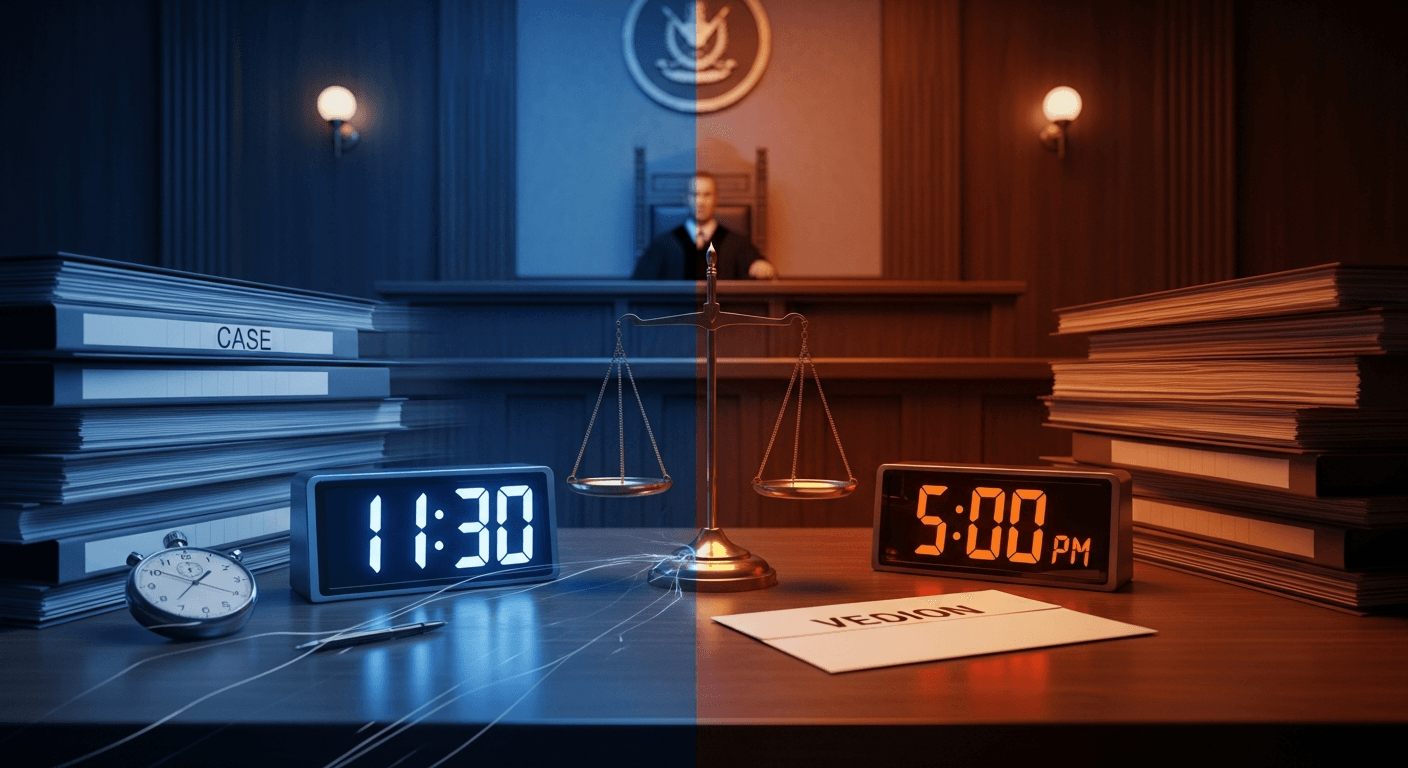
I watched the headlines and felt that familiar jolt: a charge sheet filed in court at 11:30 a.m., a verdict read at 5:00 p.m., and — astonishingly — the judge in the case sentenced. The sequence reads like a fastforwarded courtroom drama, but the questions it raises are not cinematic; they are juridical, moral and deeply practical.
As someone who has long worried about the mismatch between judicial capacity and public demand for timely outcomes, this episode forced me to sit back and ask: what does speed cost us when it comes to justice?
Why the timeline matters
A compressed timeline — charge to verdict within hours — triggers several alarms:
- Procedural fairness: Rapid movement can squeeze the defense's ability to investigate evidence, consult experts, and prepare mitigating facts. The right to a fair hearing is not served by theatrical haste.
- Perception of legitimacy: Courts depend on public trust. When a trial becomes a race against the clock, observers naturally wonder whether process gave way to performance.
- Checks and balances: If a judge becomes the subject of the same proceeding they were presiding over (or is otherwise implicated), the ordinary safeguards — recusal, independent review, carefully staged hearings — deserve extra attention.
I do not mean to condemn speed out of principle. There are moments when efficiency is justice — think of timely temporary relief, emergency protection orders, or clearing trivial backlogs. But efficiency must never be confused with bypassing the fundamentals of due process.
Where hurry helps — and where it harms
Helpful uses of speed:
- Clearing clerical slippage: docket corrections, administrative orders, or non-contentious pleas can be processed quickly.
- Digital workflows: e‑filing, remote witness testimony, and standardized forms eliminate friction and reduce delay without trading away fairness.
Harmful consequences of excessive haste:
- Truncated fact-finding: witness interviews, forensic analysis, and cross-examination take time. Rushing them risks error.
- Compressed deliberation: juries and judges thinking under time pressure may rely on heuristics rather than sober analysis.
- Limited appellate record: hurried hearings can generate thin transcripts and missing exhibits, complicating meaningful appeals.
When a judge becomes central to the case
The optics and substance both change when a judge is implicated in a case. In such moments, I expect:
- Transparent procedures for transfer or recusal so that parties and the public can see independence preserved.
- An independent, well-documented review of the facts — not a hurried conclusion dictated by the calendar.
- Clear communication: why the timetable was chosen, who agreed, and what safeguards were put in place.
Without those measures, the system risks trading accountability for spectacle.
Systems, not theatrics: how to get both speed and fairness
If we accept that justice should be timely and also just, we need systemic fixes, not ad-hoc sprints. Practical levers include:
- Invest in digital court infrastructure: e-filing, secure evidence portals, and standardized hearing rooms allow real work to happen faster without skipping steps.
- Expand pretrial discovery windows using tiered rules: low‑risk matters move fast; complex matters get time and resources proportionate to the stakes.
- Create neutral rapid-review teams: when a judge is a material party to proceedings, a standing independent panel can take over the administrative and evidentiary functions quickly and fairly.
- Strengthen protections for the defense: guaranteed minimum consultation time with counsel and access to essential forensics before any plea or quick verdict.
- Preserve appealable records: audio/video recordings, indexed exhibits, and searchable transcripts should be mandatory for any fast-tracked hearing.
These are not radical ideas. I argued for many of these reforms years ago when I wrote about accelerating justice responsibly, including proposals for online courts and better digital workflows Justice Delayed is Justice Denied.
My take: speed is a virtue when disciplined by law
I admire systems that clear backlog and respect victims' need for closure. I also value the solemn patience that fairness demands. The incident that produced the headline — charge at 11:30, verdict at 5:00, judge sentenced — should be a prompt, not a punchline. It should push us to:
- Audit the procedural choices that made the sprint possible,
- Confirm that no corners were cut, and
- Adopt durable reforms that let courts be both swift and scrupulous.
Until we build those systems, every lightning-fast verdict will leave a shadow of doubt. That doubt is corrosive — not just to the parties in a single case, but to public faith in the rule of law.
Closing reflection
We are living through a judicial inflection point: technology and demand can make fast, transparent justice a reality, but only if we design the architecture carefully. Otherwise, speed will beget theater, and theater will hollow out the very fairness the law is supposed to protect.
I remain hopeful. I have long urged practical reforms to reduce pendency while preserving rights. The recent sprint to verdict is yet another reminder: speed without structure is a risk; speed with structure is progress. Let us build the latter.
Regards,
Hemen Parekh
Any questions / doubts / clarifications regarding this blog? Just ask (by typing or talking) my Virtual Avatar on the website embedded below. Then "Share" that to your friend on WhatsApp.
Get correct answer to any question asked by Shri Amitabh Bachchan on Kaun Banega Crorepati, faster than any contestant
Hello Candidates :
- For UPSC – IAS – IPS – IFS etc., exams, you must prepare to answer, essay type questions which test your General Knowledge / Sensitivity of current events
- If you have read this blog carefully , you should be able to answer the following question:
- Need help ? No problem . Following are two AI AGENTS where we have PRE-LOADED this question in their respective Question Boxes . All that you have to do is just click SUBMIT
- www.HemenParekh.ai { a SLM , powered by my own Digital Content of more than 50,000 + documents, written by me over past 60 years of my professional career }
- www.IndiaAGI.ai { a consortium of 3 LLMs which debate and deliver a CONSENSUS answer – and each gives its own answer as well ! }
- It is up to you to decide which answer is more comprehensive / nuanced ( For sheer amazement, click both SUBMIT buttons quickly, one after another ) Then share any answer with yourself / your friends ( using WhatsApp / Email ). Nothing stops you from submitting ( just copy / paste from your resource ), all those questions from last year’s UPSC exam paper as well !
- May be there are other online resources which too provide you answers to UPSC “ General Knowledge “ questions but only I provide you in 26 languages !




No comments:
Post a Comment