
Introduction
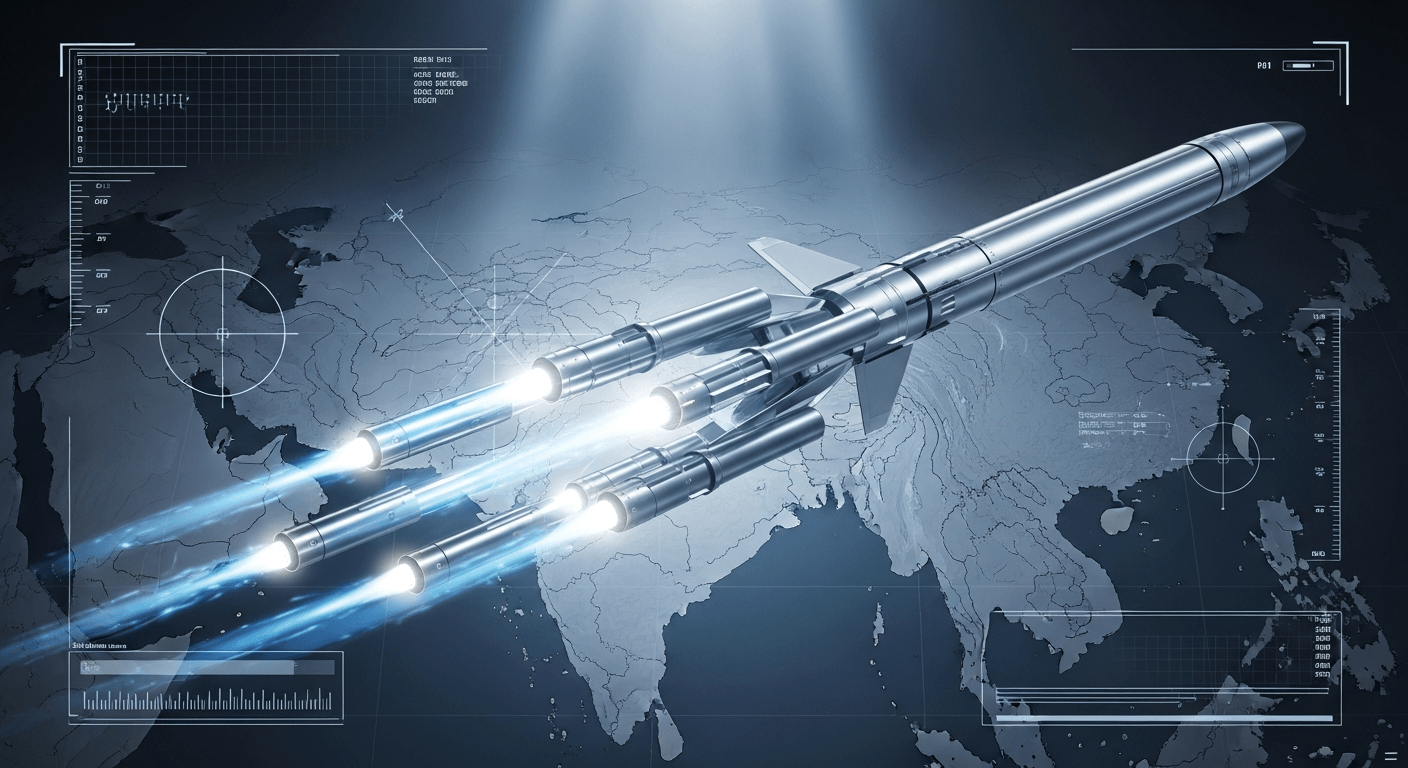
I write this as someone who watches the intersection of technology and national strategy with a long-term eye. The recent reports about India testing an advanced Agni-class missile with MIRV capability mark a meaningful technical development and a significant moment for regional deterrence. I want to step through what this means in practical, non-speculative terms, and why the details matter beyond simple headlines.
I aim to keep this discussion factual and focused on public, non-classified information: the evolution of the Agni family, what MIRV technology is, likely strategic implications, and the kinds of international responses such a development tends to provoke. My goal is clarity rather than alarm—context helps decision-makers, scholars, and interested citizens assess change responsibly.
Background: The Agni Family
The Agni series has been the backbone of India’s strategic missile development for two decades. Designed and tested in stages, the family spans short- and intermediate-range systems up to missiles intended to reach intercontinental distances. Publicly available descriptions place the Agni series across different range and capability classes to serve national deterrence needs.
Earlier Agni variants were progressively upgraded for range, accuracy, and mobility. Over time, emphasis has moved from single-warhead, road- and rail-mobile systems to platforms that can integrate newer guidance packages and improved propulsion. These evolutionary steps are consistent with modern strategic missile development globally.
The development of longer-range Agni systems is generally framed by official Indian statements as a response to strategic requirements for secure second-strike capability and credible deterrence. That framing is useful when evaluating the technical additions such as MIRV capability: they are part of a continuum rather than an isolated leap.
Understanding MIRV Technology
MIRV stands for multiple independently targetable reentry vehicles. In essence, a single missile can carry several warheads, each capable of striking different targets on separate trajectories. Technically, a MIRV-equipped missile uses a post-boost vehicle (sometimes called a bus) that releases individual reentry vehicles on controlled paths toward distinct aim points.
From a systems perspective, MIRV deployment entails three broad elements: a reliable and accurate guidance system, a post-boost attitude and propulsion module to dispense reentry vehicles precisely, and compact, survivable reentry vehicles with thermal protection. None of these elements are classified in principle; they are engineering challenges of miniaturization, guidance, and reentry dynamics.
MIRVs change operational calculus because they multiply the number of warheads deliverable per launcher. That affects target planning, force posture, and the requirements placed on missile defense systems. Again, these are strategic consequences based on observable capabilities rather than speculative intent.
Non-classified Technical Details of the Test
Public descriptions of missile tests normally emphasize telemetry, range validation, guidance performance, and reentry vehicle behavior. A test that exercises MIRV functionality would typically validate the post-boost vehicle’s ability to orient and dispense multiple reentry vehicles along controlled trajectories, and confirm that each reentry vehicle survives atmospheric reentry in line with design expectations.
Common non-classified elements that observers look for include the type of propellant used in the booster (solid vs. liquid), mobility attributes (road- or rail-deployable), and guidance families (inertial systems often augmented by satellite navigation). These features determine operational flexibility, logistical footprint, and accuracy.
Standards for public testing also involve range safety and tracking by ground stations and telemetry ships or aircraft. All of these components are integral to successful integration of MIRV capability with an established missile family such as Agni.
Strategic Implications
Technically credible MIRV capability can strengthen a country’s deterrent by increasing the survivable punch of its force structure—especially when combined with mobility and redundancy. For an actor pursuing a secure second-strike posture, MIRVs can complicate an adversary’s targeting calculus and raise the costs of preemption.
However, MIRVs also have destabilizing effects in some strategic contexts. They can incentivize adversaries to expand their own arsenals or invest in missile defenses and countermeasures. The net strategic outcome depends on the broader posture: numbers, deployment modes, command-and-control resilience, and diplomatic channels that govern crisis behavior.
From an operational planning standpoint, the integration of MIRVs means changes in training, maintenance cycles, and resource allocation. Those are predictable, technical adaptations that national militaries and supporting industry must absorb over time.
International Reactions and Arms Dynamics
Historically, significant missile capability changes generate statements from neighboring states, regional powers, and global security actors. Typical reactions emphasize concern for regional stability, calls for restraint, and reminders of existing non-proliferation and strategic dialogue mechanisms. Public responses often reflect broader bilateral and multilateral political relationships rather than purely technical judgments.
An objective assessment recognizes that advances in delivery systems frequently revive debates about arms control, missile defense, and crisis management channels. These debates are productive: they create space to manage escalation risks, clarify doctrines, and explore confidence-building measures that lower misunderstanding in tense moments.
Closing Thoughts
As someone who watches technology shape geopolitics, I see this development as a technical maturation within an established missile family. The core questions that follow are not merely about hardware, but about doctrine, transparency, and how neighbors and partners recalibrate their own postures.
I will continue to follow public information as it emerges and to reflect on how engineering choices ripple through strategy and policy. Clear, factual discussion helps societies make calm, informed choices about security and technology.
Regards,
Hemen Parekh
Any questions / doubts / clarifications regarding this blog? Just ask (by typing or talking) my Virtual Avatar on the website embedded below. Then "Share" that to your friend on WhatsApp.
Get correct answer to any question asked by Shri Amitabh Bachchan on Kaun Banega Crorepati, faster than any contestant
Hello Candidates :
- For UPSC – IAS – IPS – IFS etc., exams, you must prepare to answer, essay type questions which test your General Knowledge / Sensitivity of current events
- If you have read this blog carefully , you should be able to answer the following question:
- Need help ? No problem . Following are two AI AGENTS where we have PRE-LOADED this question in their respective Question Boxes . All that you have to do is just click SUBMIT
- www.HemenParekh.ai { a SLM , powered by my own Digital Content of more than 50,000 + documents, written by me over past 60 years of my professional career }
- www.IndiaAGI.ai { a consortium of 3 LLMs which debate and deliver a CONSENSUS answer – and each gives its own answer as well ! }
- It is up to you to decide which answer is more comprehensive / nuanced ( For sheer amazement, click both SUBMIT buttons quickly, one after another ) Then share any answer with yourself / your friends ( using WhatsApp / Email ). Nothing stops you from submitting ( just copy / paste from your resource ), all those questions from last year’s UPSC exam paper as well !
- May be there are other online resources which too provide you answers to UPSC “ General Knowledge “ questions but only I provide you in 26 languages !



No comments:
Post a Comment