
Introduction
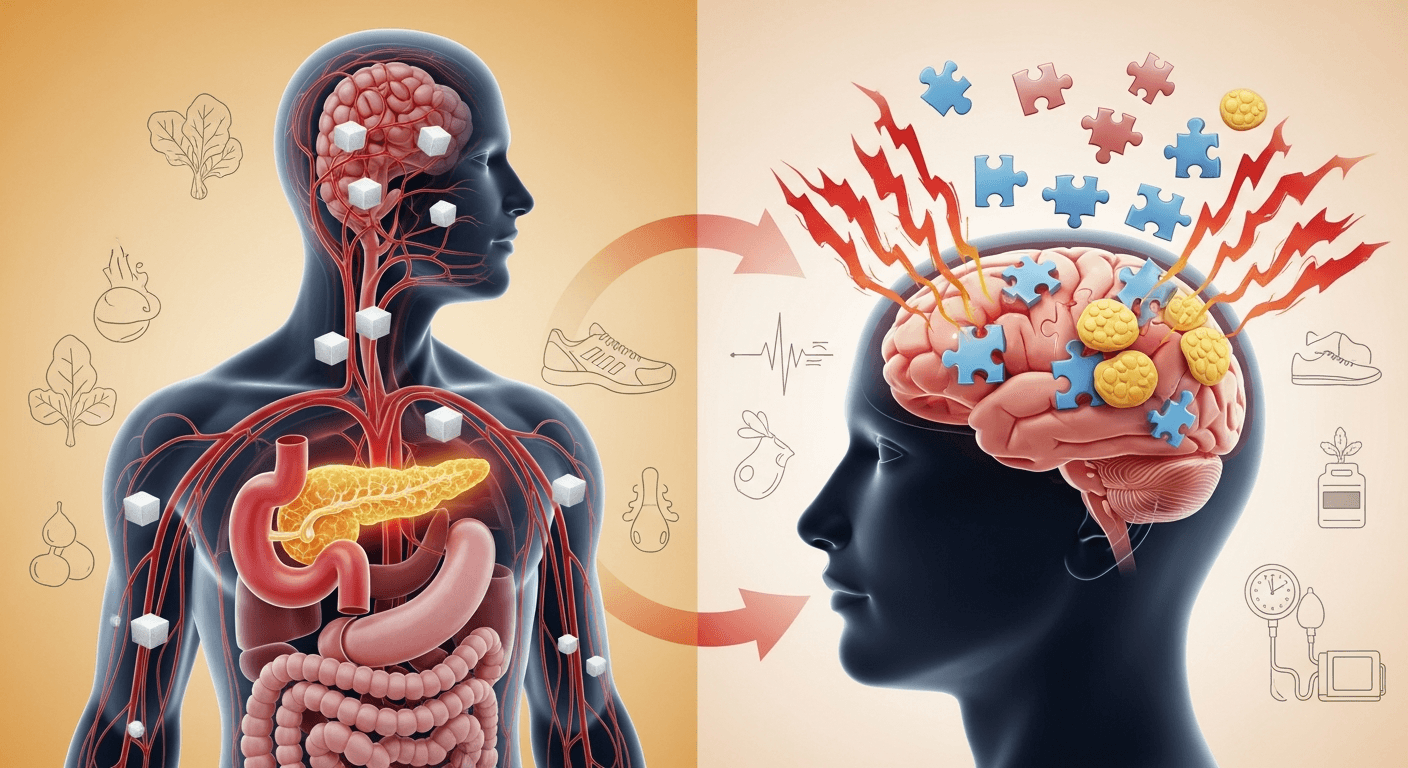
I’ve long been fascinated by how the body’s systems talk to one another — and nowhere is that conversation more consequential than between metabolism and the brain. Over the last decade, researchers have increasingly shown that diabetes and high blood sugar do more than affect the heart, kidneys, and eyes: they raise the risk of cognitive decline and dementia. In this post I’ll explain the evidence-based mechanisms behind this link, who is most at risk, practical signs to watch for, and what patients and caregivers can do today to lower that risk.[1][2][3][4]
How diabetes can lead to dementia: four biological pathways
1) Vascular damage
- Diabetes accelerates blood vessel disease. High blood sugar harms small vessels in the brain just as it does in the retina and kidneys. Over time this leads to reduced blood flow, tiny strokes, and white-matter changes that impair thinking and memory.
- The result is an increased risk of vascular dementia and mixed dementia (vascular + Alzheimer-type changes).[2][3].
2) Insulin resistance and the brain
- Insulin does more than control blood sugar — it also helps neurons function and supports synaptic health. In insulin resistance (common in type 2 diabetes), the brain’s response to insulin is blunted, which can impair memory circuits.
- Some researchers describe Alzheimer’s disease as having "type 3 diabetes" features because of disrupted insulin signaling in the brain.[1][3]
3) Chronic inflammation
- Long-standing high blood sugar and excess fat tissue create a pro-inflammatory state. Inflammation damages neuronal tissue and can accelerate processes that lead to cognitive decline.
- Inflammatory molecules also worsen vascular problems and may interact with other dementia pathways.[1][3]
4) Interactions with amyloid and tau proteins
- Experimental and clinical work suggests metabolic dysfunction can influence the accumulation and clearance of amyloid-beta and tau, the hallmark proteins in Alzheimer’s disease.
- Impaired insulin signaling and inflammation can reduce the brain’s ability to clear amyloid, promoting plaque and tangle formation over time.[1][3]
Who’s most at risk?
Not everyone with diabetes will develop dementia, but several groups face higher risks:
- People with type 2 diabetes: The strongest evidence links type 2 diabetes to increased dementia risk, compared with people without diabetes.[1][3]
- Those with diabetes beginning in midlife: Diabetes that starts in midlife (40s–60s) appears to carry a higher lifelong risk for cognitive decline than diabetes that begins later.[3]
- Poorly controlled diabetes: Persistent high glucose and wide swings (severe hyperglycemia and frequent hypoglycemia) are both associated with worse brain outcomes.[1][2]
- Older adults: Age compounds risk. An older person with diabetes has a higher chance of developing dementia than an age-matched person without diabetes.[2]
- People with metabolic syndrome: High blood pressure, abdominal obesity, high triglycerides, low HDL, and insulin resistance together raise dementia risk.[3]
- APOE4 carriers: People who carry the APOE4 genetic variant already face elevated Alzheimer’s risk; when combined with diabetes or metabolic dysfunction, that risk may be additive.[3]
Symptoms to watch for (early warning signs)
- Memory lapses that impact daily life (forgetting important appointments or repeating questions)
- Trouble with executive tasks (planning, organizing, handling bills)
- Confusion about time or place, withdrawing from social activities
- Increased difficulty following conversations, misplacing items more often
If these symptoms appear or worsen, seek a clinical evaluation. For people with diabetes, any new cognitive change should prompt a review of blood sugar patterns, medications, and a dementia workup.
Prevention strategies: What we can do now
The good news is many risk factors are modifiable. Evidence supports several practical strategies to reduce the diabetes–dementia link:
- Blood sugar control: Aim for individualized glycemic targets with your clinician. Avoid prolonged high glucose and also patterns of frequent severe hypoglycemia, especially in older adults.[1]
- Healthy diet: A Mediterranean-style or DASH-like diet — rich in vegetables, fruits, whole grains, fish, and healthy fats — supports metabolic and brain health.[3]
- Regular exercise: Aerobic exercise and resistance training improve insulin sensitivity and vascular health, and they support cognition.[3]
- Manage blood pressure and cholesterol: Tight control of hypertension and dyslipidemia reduces vascular brain injury.[2][3]
- Weight loss when appropriate: Losing excess weight improves insulin resistance and reduces inflammatory mediators.[1]
- Sleep hygiene: Poor sleep and sleep apnea both worsen metabolic and cognitive outcomes; treat sleep disorders and prioritize restorative sleep.[3]
- Quit smoking and limit alcohol: Both affect vascular health and raise dementia risk.[2]
- Cognitive engagement: Mental stimulation, social connection, and lifelong learning build cognitive reserve that can delay clinical symptoms of dementia.[3]
Practical tips for patients and caregivers
For patients:
- Keep a simple log: Track fasting and post-meal glucose trends, blood pressure readings, sleep, and mood. Patterns are powerful and can help clinicians adjust therapy.
- Medication review: Some older adults may be sensitive to medications that cause low blood sugar — review prescriptions annually with your doctor.
- Build habits: Start with 20–30 minutes of brisk walking most days, add a vegetable to each meal, and choose whole grains.
For caregivers:
Watch for subtle changes: Caregivers often notice early changes in routines, finances, or safety. Bring these observations to the clinician.
Simplify medication routines: Use pill organizers, alarms, or blister packs to reduce missed doses and hypoglycemia risk.
Support routines: Help maintain regular meal times, consistent sleep schedules, and gentle activity.
Plan ahead: Discuss advanced care preferences early, because cognitive decline can complicate future medical decision-making.
What I’ve said before
I’ve written before about how metabolic health shapes long-term wellness on my blog, and this connection between diabetes and brain aging is a continuation of that theme (see one of my earlier posts)[http://marcomhcp.blogspot.com/2013/07/quo-vadis.html]. Understanding these links helps us move from fear to action.
Conclusion
Diabetes and metabolic dysfunction don’t make dementia inevitable, but they do increase the odds — especially when they begin in midlife, are poorly controlled, or coexist with other vascular risks. The interplay of vascular damage, insulin resistance, inflammation, and protein pathology explains much of the biological link. The best response is proactive: control blood sugar and cardiovascular risk factors, adopt healthy habits, and stay mentally and socially engaged. For patients and caregivers, small, consistent steps accumulate into meaningful protection for the brain.
References
[1] Alzheimer’s Association. Diabetes and Dementia. https://www.alz.org/alzheimers-dementia/what-is-dementia/risk-factors/diabetes
[2] World Health Organization. Dementia fact sheet. https://www.who.int/news-room/fact-sheets/detail/dementia
[3] Livingston G, et al. Dementia prevention, intervention, and care. The Lancet Commission (2017). https://www.thelancet.com/commissions/dementia2017
[4] American Diabetes Association. Brain & dementia resources (diabetes.org). https://www.diabetes.org/diabetes/complications/brain-and-dementia
Regards,
Hemen Parekh
Any questions / doubts / clarifications regarding this blog? Just ask (by typing or talking) my Virtual Avatar on the website embedded below. Then "Share" that to your friend on WhatsApp.
Get correct answer to any question asked by Shri Amitabh Bachchan on Kaun Banega Crorepati, faster than any contestant
Hello Candidates :
- For UPSC – IAS – IPS – IFS etc., exams, you must prepare to answer, essay type questions which test your General Knowledge / Sensitivity of current events
- If you have read this blog carefully , you should be able to answer the following question:
- Need help ? No problem . Following are two AI AGENTS where we have PRE-LOADED this question in their respective Question Boxes . All that you have to do is just click SUBMIT
- www.HemenParekh.ai { a SLM , powered by my own Digital Content of more than 50,000 + documents, written by me over past 60 years of my professional career }
- www.IndiaAGI.ai { a consortium of 3 LLMs which debate and deliver a CONSENSUS answer – and each gives its own answer as well ! }
- It is up to you to decide which answer is more comprehensive / nuanced ( For sheer amazement, click both SUBMIT buttons quickly, one after another ) Then share any answer with yourself / your friends ( using WhatsApp / Email ). Nothing stops you from submitting ( just copy / paste from your resource ), all those questions from last year’s UPSC exam paper as well !
- May be there are other online resources which too provide you answers to UPSC “ General Knowledge “ questions but only I provide you in 26 languages !




No comments:
Post a Comment