
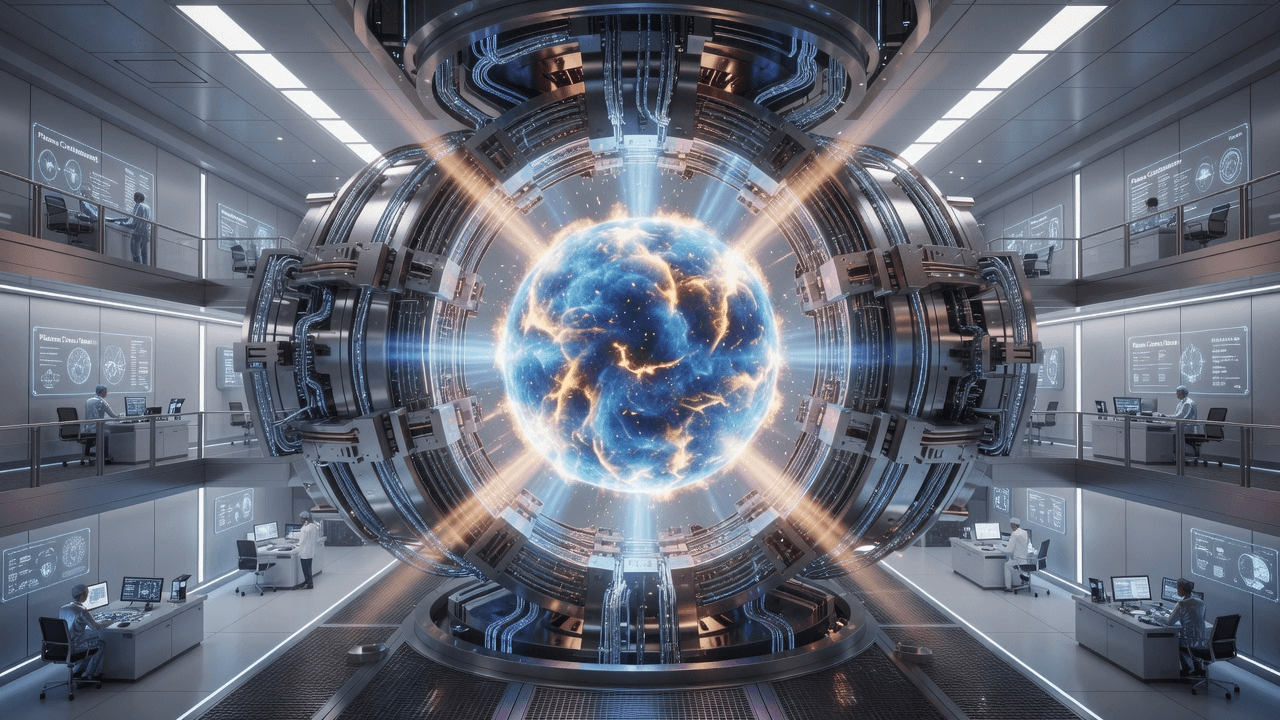
The promise of fusion energy has long felt like a horizon that recedes just as we approach it—a mirage of our own scientific desire. Yet, the recent news of Google investing $468 million into Europe’s stellarator-focused Proxima Fusion brings this horizon into sharper focus, even as it serves a necessary reminder of the obstacles that remain.
Balancing Vision and Reality
Investment of this scale is a clear signal that the private sector is no longer content to let fusion remain solely within the halls of academic research. Proxima Fusion, born from the work of Francesco Sciortino (fsciortino@proximafusion.com), Martin Kubie (kubie@proximafusion.com), Jorrit Lion (jlion@proximafusion.com), Lucio Milanese (milanese@proximafusion.com), and Jonathan Schilling (jons@proximafusion.com), represents a shift toward more engineering-centric, simulation-heavy approaches to mastering plasma confinement.
However, we must heed the caution regarding timelines. Physics does not operate on a venture capital schedule. While my own reflections on the trajectory of technology have often emphasized the exponential nature of progress, nuclear fusion presents a unique existential challenge: the mastery of matter at conditions rivaling the stars.
The Path Forward
Building a commercial stellarator is not merely a scaling problem; it is a fundamental test of our ability to manage extreme instability. The team at Proxima is tackling this by leveraging advanced modeling—an approach that, if successful, could indeed shorten the traditional development cycle. But history reminds us that in the pursuit of the impossible, the most valuable commodity is not just capital, but the patience to allow the science to mature properly.
We are witnessing the maturing of a new fusion ecosystem. It is an exciting time, but it is also a time for disciplined realism. As we continue to push boundaries, we must remember that true innovation, especially in energy, is measured in decades, not just funding rounds.
Regards,
Hemen Parekh
If you have read this blog carefully , you should be able to answer the following question:
"What is the primary difference between a stellarator and a tokamak in the context of magnetic confinement fusion, as explored by companies like Proxima Fusion?" You can find that answer by entering this question at ( 1 ) www.HemenParekh.ai ( 2 ) www.IndiaAGI.ai
No comments:
Post a Comment