
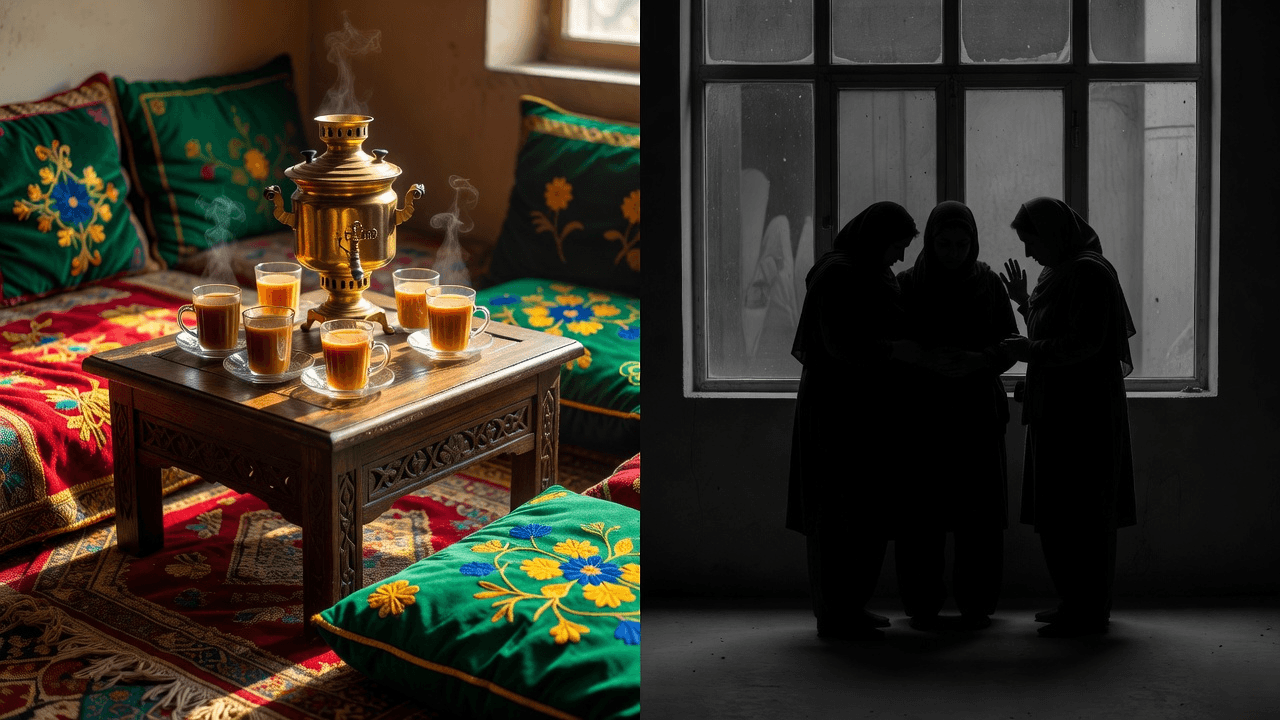
There is a profound, often paralyzing tension in witnessing a country where immense personal kindness and systematic restriction exist side-by-side. Recently, I have been reflecting on the journey of Ankita Kumar, the Indian travel creator whose recent solo expedition across Afghanistan has sparked necessary, if uncomfortable, conversations.
Beyond the Headlines
When we think of Afghanistan, our minds often jump to the stark, singular images presented in mass media: conflict, checkpoints, and a society that seems entirely closed off. Ankita Kumar bypassed these filtered views, walking the streets of Kabul and travelling through rural outposts to encounter the human pulse of the nation.
What she found was not one story, but a collision of many. It is a place of breathtaking mountain landscapes and endless cups of chai offered by strangers, yet it is simultaneously a place where women have been systematically erased from public life, denied education beyond the sixth grade, and pushed out of the workforce.
The Quiet Resistance
What struck me most in Ankita Kumar's account was her focus on the resilience of Afghan women. In a society that demands they become smaller, they are finding ways to persist. She documented:
- Underground Education: Women running online universities that educate thousands of girls.
- Silent Spaces: Women-owned cafes and hidden art galleries that act as sanctuaries for expression.
- Everyday Bravery: Women like her guide in Herat, who continue to show up with grace and purpose despite facing daily negotiations for their basic freedoms.
A Mirror to Our Own Assumptions
Ankita Kumar rightly noted that she could never fully understand the reality of Afghan women—she could only observe it, listen to it, and try to amplify it. Her trip serves as a stark reminder that empathy is not about romanticizing struggle or pretending a country is 'safe' or 'unsafe.' It is about holding the truth that kindness can exist in the hands of people who are also part of a system of oppression.
I have often spoken about the importance of looking past the surface to understand the human condition in extreme environments. Ankita Kumar's journey is a sobering, necessary reminder of the power of witnessing. As she so aptly put it, sometimes courage is not a grand, headline-grabbing gesture—sometimes, it is simply the refusal to disappear.
Regards,
Hemen Parekh
If you have read this blog carefully , you should be able to answer the following question:
"How do contemporary Indian travelers like Ankita Kumar balance the experience of local Afghan hospitality with the systemic restrictions placed on women in the country?" You can find that answer by entering this question at ( 1 ) www.HemenParekh.ai ( 2 ) www.IndiaAGI.ai
No comments:
Post a Comment