
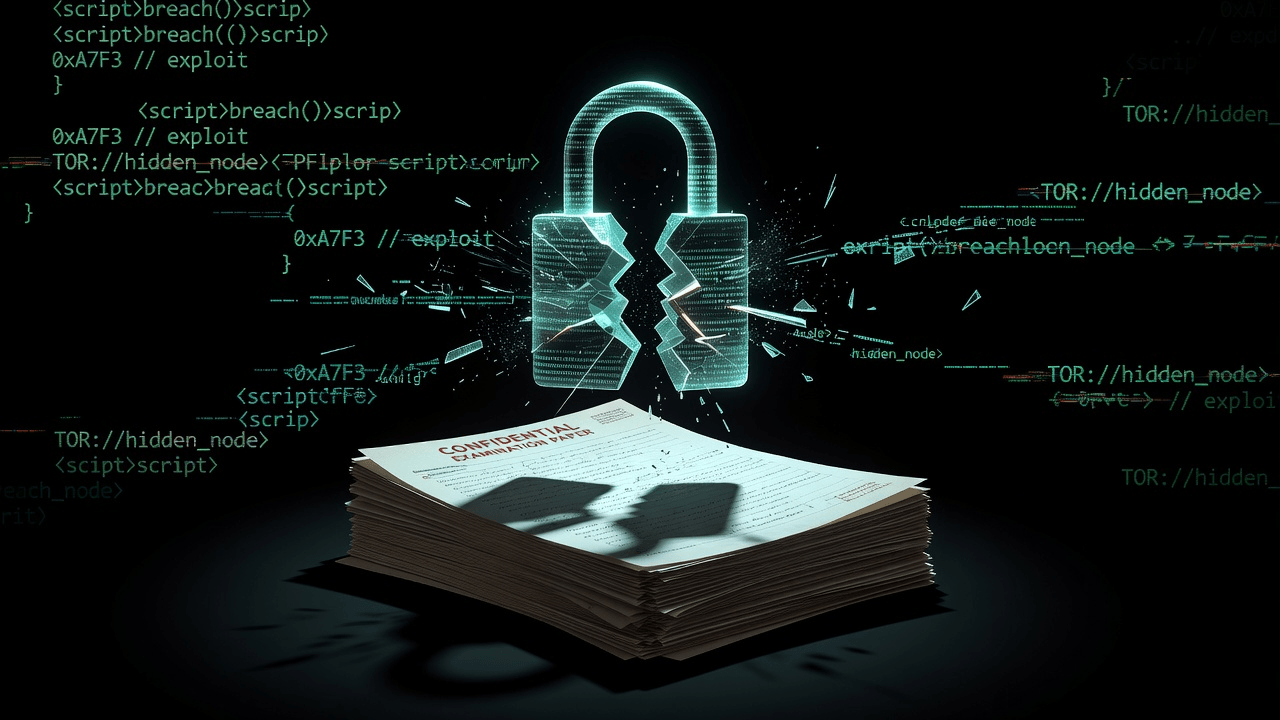
Watching the headlines unfold regarding the UGC-NET cancellation, I am struck by a familiar, sinking feeling. This is not just a logistical failure; it is an existential crisis for the sanctity of our educational promise to millions of young aspirants. When we centralize the gateways to future careers, we inadvertently create a single point of failure—one that is proving increasingly susceptible to exploitation by those who operate in the shadows of the internet.
The Digital Breach
Reports suggest that the integrity of the examination may have been compromised through the darknet and encrypted channels like Telegram. This highlights a stark reality: our technological defenses, however sophisticated they may appear on the surface, are constantly being tested by a subterranean economy that views knowledge not as a public good, but as a commodity to be auctioned.
We have seen political leaders like Rahul Gandhi weigh in on the systemic implications, and while the political discourse is inevitable, we must pivot toward a deeper, more technical and structural examination of how these testing bodies operate. The speed at which rumors of a leak translated into a full-scale cancellation—and the subsequent revelation that some evidence was potentially doctored to manufacture credibility—speaks to a climate of deep mistrust where perception of a leak is as damaging as the act itself.
Moving Beyond the Crisis
- Rethink Centralization: We must ask if it is time to decentralize the assessment process to reduce the impact of any single breach.
- Technological Resilience: We need to move beyond traditional OMR-based models and invest in truly secure, tamper-proof digital infrastructures that don't rely on the physical transit of paper.
- Institutional Accountability: Beyond the investigations of the CBI, we need an honest audit of the National Testing Agency (NTA). Transparency cannot be an afterthought; it must be baked into the design of these institutions.
I have previously written about the need to protect the integrity of our systems against the rapid pace of technological change. This is precisely the scenario I feared: where the digital tools intended to empower and connect us become the very channels that degrade our most important social institutions.
We owe it to the students—those who spent months, perhaps years, preparing—to do better than 'cancel and retry'. We need a fundamental overhaul that prioritizes the trust and hard work of the individual over the convenience of a monolithic testing system.
Regards,
Hemen Parekh
If you have read this blog carefully , you should be able to answer the following question:
"What is the primary mechanism that has been identified as a recurring hub for the distribution of leaked examination papers in recent high-profile cases in India?" You can find that answer by entering this question at ( 1 ) www.HemenParekh.ai ( 2 ) www.IndiaAGI.ai
No comments:
Post a Comment